
Chitkara University Champions Gender Equality in Digital Transformation via Engaging Radio Dialogue
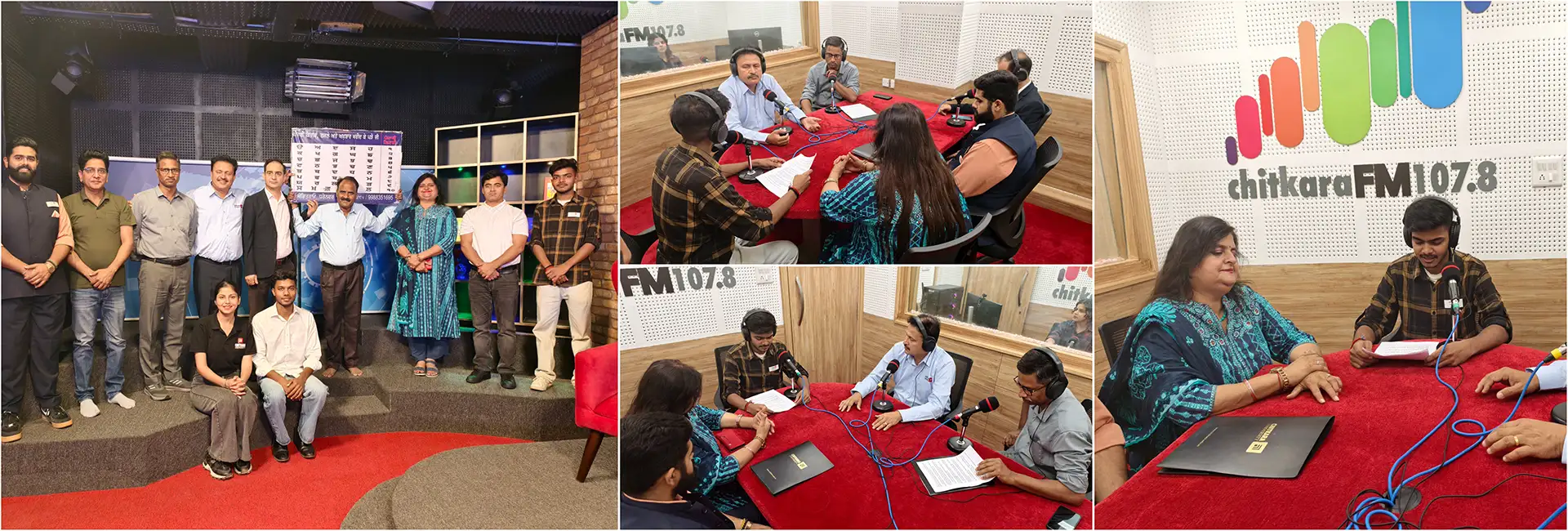
Chitkara University’s National Service Scheme marked World Telecommunication and Information Society Day with a thought provoking live radio broadcast on Radio Chitkara 107.8 FM. Anchored by Aadarsh’s poised moderation, the hour long session explored the critical question: why gender equality matters in the age of digital transformation. Bringing together expertise from media, technology, and policy, the panel included Ashutosh Mishra, dean of Mass Communication; Pawan Mehta, director of the Technology Procurement Group; and Tanuj Kumar, director of Information Technology at Chitkara University.
The discussion began by recalling an era when communication was limited by geography and social divides. Panellists described how early telecommunication tools opened new channels but still left many voices unheard—particularly those of women and marginalised communities. As the conversation shifted to today’s hyper connected world, it revealed a paradox: information now circulates at lightning speed, yet access remains unequal. Mishra emphasised that media literacy and representation must evolve alongside infrastructure, while Mehta outlined persistent technical barriers, from unreliable networks in rural areas to a lack of affordable devices. Kumar reminded listeners that digital platforms amplify existing social dynamics unless intentionally inclusive.
Rather than a lecture, the broadcast invited listeners into a shared dialogue grounded in everyday realities. The panel examined gaps in policy and practice, stressing that bridging them requires collective responsibility. They argued for designing systems that empower rather than exclude—where participation is a right, not a privilege. By foregrounding lived experiences, the session gave voice to those for whom digital transformation remains aspirational rather than actual.
As the programme drew to a close, a clear message emerged: progress cannot be measured solely by the number of connected devices. True advancement is defined by who holds the microphone, who shapes the narrative, and who can influence the digital landscape. The panel urged educational institutions, industry players, and policymakers to collaborate in creating equitable access and fostering a culture where every individual can contribute their perspective.
This radio initiative highlighted Chitkara University’s dedication to fostering dialogue that moves beyond mere awareness and catalyses real progress. The broadcast transmitted more than ideas—it conveyed a sense of purpose. By hosting this conversation, the university illustrated that true gender equality in the digital era hinges not only on technological tools but on clear vision, inclusive design, and steadfast commitment.