2-Year Program
Chitkara University’s MBA in Finance develops expertise in corporate finance, investment analysis, and related areas, financial markets, and risk management. The program emphasises analytical rigour and informed decision‑making for evolving financial environments, complemented by a future‑focused Minor in Artificial Intelligence in Business.
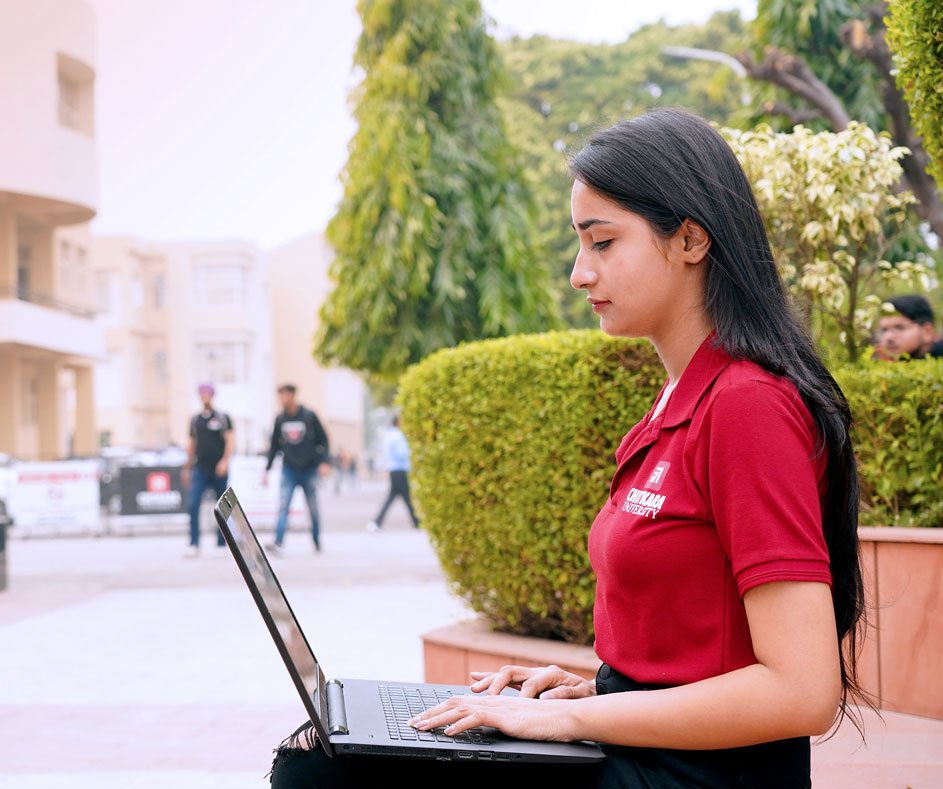
The MBA in Finance at Chitkara Business School is designed for a financial landscape shaped by global markets, regulatory change, and data-driven decision-making. As organisations place increasing emphasis on financial strategy, risk management, and investment planning, the demand for skilled finance professionals continues to grow across banking, financial services, and corporate sectors. This program builds a strong foundation in financial systems, capital markets, and corporate finance while developing critical thinking and analytical abilities. Offered by Chitkara University, the program combines academic depth with practical relevance, preparing graduates to operate confidently in both Indian and international financial environments.
The curriculum combines theory with application across areas such as Corporate Finance, Investment Strategies, Financial Modelling, Risk Management, Capital Budgeting, Mergers and Acquisitions, Financial Forecasting, and Portfolio Management. Students also study global market trends, regulatory frameworks, quantitative analysis, wealth management, and ethical financial practices. Through case studies, projects, and applied learning, the program strengthens the ability to interpret financial data and make informed decisions. The MBA in Finance at Chitkara Business School prepares graduates for diverse career opportunities in banking, financial services, consulting, corporate finance, and investment roles, equipping them to contribute from the outset and progress into leadership positions over time.
Our MBA in Finance course is a practice-led curriculum that helps students thrive through traditional classroom teaching, exposure to research, and experiential learning. We lay extensive focus on developing a wide perspective of global financial problems among our students and creatively applying theoretical knowledge while gaining an understanding of complex real-time issues.
Structurally, the MBA in Finance program is spread over four semesters, each lasting six months. The MBA in Finance syllabus follows a module-based teaching approach – each module consists of two subjects, with credits ranging from 2 to 3. Each credit represents 18 hours of study, including classroom teaching, projects, and assignments.

Chitkara Business School now offers a cutting-edge Minor in Artificial Intelligence in Business as part of all MBA specialisations. This five-course, 10-credit minor equips students with in-demand skills in AI and machine learning, generative AI tools, automation, and ethical AI usage. Through hands-on exposure to technologies like ChatGPT, Copilot, and AI agents, students learn to optimise processes, drive innovation, and make data-driven decisions across business functions.
Know MoreAn MBA in Finance opens up a world of career opportunities. Graduates excel in global roles, navigating financial challenges and driving business growth. A career in MBA in Finance can lead to exciting and lucrative roles such as:
*Fee for Educational Technology Services (ETS) payable at the time of Admission.
**Fee for Career Advancement Services (CAS) payable along with the 2nd Semester fee.
The fees for the above program is subject to revision.
To pursue MBA in Finance, students can start their application by:


















Chitkara University’s MBA in Finance program is a rigorous, future-ready program that combines core finance subjects with emerging technologies like Artificial Intelligence and Technology. Students gain hands-on exposure to financial modelling, portfolio management, and AI-driven tools such as ChatGPT and automation platforms. This program offers a unique blend of technical depth and business strategy, ideal for those pursuing a career in MBA Finance.
The Syllabus of MBA in Finance includes modules such as Financial Strategy, Risk Management, Investment Analysis, Equity Derivatives, Capital Budgeting, FinTech, Valuation, Big Data Analytics, and AI applications in Finance. The course also integrates global financial practices and hands-on learning using tools like Tableau, RPA, and Blockchain, delivering one of the most comprehensive finance MBA courses in India.
The Minor in AI in Business in this MBA Finance program equips students with skills in generative AI, machine learning, and automation, highly relevant in modern financial roles. From intelligent risk modelling to AI-enhanced forecasting, the program helps students apply AI for smarter decision-making in corporate finance, investment banking, and financial analysis roles.
Unlike a standard MBA in Finance program, Chitkara University’s version offers super specialisations in Investment Banking, Corporate Finance, and Wealth Management, all mentored by senior CXOs from leading global firms like JP Morgan, PwC, Deloitte, and ICICI Bank. The curriculum is industry-driven and focused on creating the next generation of finance leaders.
Graduates can pursue diverse MBA Finance career opportunities such as Financial Analyst, Investment Banker, Treasury Manager, Risk Consultant, Credit Analyst, Wealth Manager, or Corporate Finance Lead. These roles are in high demand across banks, consulting firms, fintech startups, and multinational corporations.
The MBA in Finance curriculum is spread across 4 semesters over 2 years. Each semester follows a modular structure, combining traditional classroom learning with case studies, simulations, and live industry projects. Credits are earned through classroom instruction, hands-on tools, financial research, and capstone internships.
Yes, the program includes a specialisation in Global Financial Market Operations covering international investment strategies, cross-border financial regulations, forex, and global risk management. Students are trained to operate across diverse markets and financial platforms, giving them an edge in global finance roles.
This unique MBA in Finance specialisation track includes:
These tracks are driven by real-world applications and are co-curated with industry leaders to make graduates job-ready.
Yes, the program begins with foundational subjects in financial theory and business strategy. Students from commerce, engineering, economics, or any other background can succeed with the program’s structured approach and practical training in tools, analytics, and AI integration.
The scope of MBA in Finance is growing rapidly with rising demand in corporate finance, fintech innovation, ESG investing, and global risk management. This program prepares students not just for current industry roles, but for emerging sectors driven by automation, data, and international regulations.
The MBA admission process at Chitkara University involves submitting an online or offline application form, followed by appearing in the Chitkara University Test (CUT), and participation in the Personal Interview rounds. The final selection is based on a holistic review of academic records, test performance, and interpersonal skills.
To apply for an MBA at Chitkara University, visit the official website, fill out the application form, upload scanned copies of your academic documents, and pay the application fee. You can also apply offline by submitting the form at the university campus. Applicants will need to appear for the Chitkara University Test (CUT) exam. Shortlisted candidates proceed to the Personal Interview rounds.
Yes, admission to Chitkara University’s MBA programs requires a valid score in national-level entrance exams like CAT, MAT, XAT, NMAT, or CMAT. Candidates without these scores may appear for the Chitkara University Test exam, followed by a Personal Interview. Final admission is subject to performance in all components.
Chitkara University MBA admissions generally open from December to March each year, with classes beginning around July or August. It is advisable to check the official website regularly for updated MBA admission timelines, important dates, and specialisation-specific deadlines to avoid missing application windows.
Work experience is not mandatory for applying to most Chitkara University MBA programs, although it may enhance your profile. Certain programs, especially those targeting industry professionals, value practical work experience during selection. Fresh graduates with strong academic and entrance exam performance are also considered for admission.
Yes, candidates can apply for multiple MBA specialisations (like Marketing, HR, Finance, BFSI, etc.) when submitting their application. Preferences must be marked clearly. Final allocation depends on eligibility, performance in entrance tests and interviews, and the availability of seats in the preferred specialisation.
The list of required documents includes academic transcripts (10th, 12th, graduation), entrance exam scorecards, identity proof (Aadhaar, passport, etc.), passport-size photographs, and work experience certificates if applicable. The original and photocopies must be presented at the time of document verification during final admission.
Candidates are selected through a comprehensive evaluation involving their entrance exam score, academic record, and performance in a Personal Interview. Chitkara University assesses the candidate’s communication skills, leadership potential, and career goals to ensure alignment with the MBA program’s objectives.
No, Chitkara University does not offer management quota seats for MBA admissions. All seats are allocated strictly based on merit and the official admission process. Paying extra fees or donations to book a seat is not permitted under any circumstances.
To be eligible for Chitkara University’s MBA programs, applicants must have completed a bachelor’s degree or equivalent from a recognised university with a minimum of 50% aggregate marks. Final-year students awaiting results may also apply, provided they meet the academic criteria at the time of admission.
Work experience is not mandatory for admission into Chitkara University’s MBA programs. However, candidates with prior experience may be given additional consideration during the selection process. Fresh graduates with strong academic backgrounds and relevant skill sets are equally encouraged to apply.
Yes, a valid score in CAT, MAT, XAT, CMAT, or any other national-level management entrance exam is typically required. Chitkara University may also conduct its own test or interview to evaluate candidates holistically beyond these test scores.
Yes, international students with equivalent qualifications and English proficiency can apply. They must submit translated academic records, a valid passport, and any other documents as prescribed by the admissions office. Additional requirements may vary based on the applicant’s country of origin.
While there is no fixed cutoff, a competitive score in recognised exams like CAT/MAT/CMAT improves the chances of selection. The university considers the overall profile, including academic history, communication skills, and interview performance during the final admission decision.
Absolutely. Students from any academic discipline — such as arts, engineering, science, or commerce — are eligible to apply, as long as they hold a bachelor’s degree with at least 50% marks. The program is designed to equip students with foundational business knowledge, regardless of their background.
No, lateral entry admissions are not applicable for MBA programs. All candidates must apply at the first-year level, regardless of previous postgraduate business studies or professional diplomas. The curriculum is structured to provide a complete two-year learning journey.
Yes, candidates who have completed their bachelor’s degree through a UGC-recognised distance learning program are eligible to apply, provided they meet the minimum marks and entrance exam criteria.
The MBA fee structure at Chitkara University is designed to be competitive and offers an excellent return on investment. While fees may vary by specialisation, students can expect transparent semester-wise fee breakdowns covering tuition, university charges, and registration. Additional details are shared during the official admission process.
Note: Fees may change without notice. Please check the latest details on our official fee page or contact the counsellor or the admissions team.
All Chitkara University MBA students pay the same fees. Chitkara University currently does not offer merit-based scholarships for MBA programs. However, the university ensures its MBA tuition is affordable and value-driven, especially when compared to other premier institutions. Students are encouraged to explore education loans or external funding opportunities if required.
Yes, Chitkara University supports students in applying for education loans through nationalised banks and NBFCs. While the university does not directly finance loans, it provides all necessary documentation, admission letters, and fee details required by financial institutions to process student loan applications smoothly.
Currently, there are no fee waivers or financial concessions offered under EWS or low-income categories. However, Chitkara University maintains a balanced and transparent fee policy to ensure deserving candidates from all backgrounds can access quality MBA education through structured payment options.
Yes, the university allows semester-wise instalment payments, making it easier for students to manage their academic expenses. Each semester’s fee must be cleared before registration deadlines, and students receive timely notifications and reminders for fee submission schedules.
Currently, there are no discounts offered for early admissions or referrals for MBA applicants. Chitkara University maintains a uniform fee policy to uphold fairness and transparency for all incoming students. All candidates are evaluated solely on their academic and entrance exam credentials.
No, Chitkara University maintains a transparent fee structure with no hidden costs. All charges — including examination fees, registration, library access, and other academic services — are communicated during the admission process to ensure full clarity for students and guardians.
Students can apply for government-sponsored scholarships like Post-Matric or Central Sector schemes if eligible. While Chitkara University itself does not administer these scholarships, it assists students by providing required affidavits, income certificates, and institutional verifications to complete the online application process.
Chitkara University offers diverse MBA specialisations to meet today’s industry demands. These include domains like Marketing, Finance, Human Resources, Data Science, Supply Chain, Public Health, Healthcare, Rural Management, and others. Each specialisation is designed with industry collaboration to provide relevant, future-ready business education.
The MBA curriculum is divided across four semesters, with a blend of core courses, electives, capstone projects, and internships. It is continuously updated to reflect current trends in business, analytics, and technology, ensuring students receive practical knowledge and leadership skills applicable across industries.
Chitkara University follows a Choice-Based Credit System (CBCS). Each course carries specific credit units based on its weight and learning hours. Students must accumulate the required total credits through core courses, electives, internships, and in some cases, a Minor specialisation to be eligible for graduation.
Not all MBA programs include a Minor. Selected MBA pathways, such as Marketing, Finance, HR, Healthcare, and Data Science, offer a Minor in Artificial Intelligence in Business, adding technical fluency to management. Other programs like Retail Marketing or Pharmaceutical Management follow a focused curriculum without a Minor.
Yes, the curriculum includes hands-on training with tools like analytics software, AI apps, HRMS, financial dashboards, and marketing platforms, based on specialisation. It is regularly updated as per industry trends and UGC guidelines.
Note: Curriculum is subject to change without prior notice. Please check with the admissions team for the latest updates.
The MBA syllabus is reviewed regularly in consultation with industry leaders, recruiters, and academic experts. Updates ensure the inclusion of emerging business trends, digital transformation modules, and real-world business cases to help students stay competitive and employable in a fast-changing global market.
Yes, Chitkara University provides students with a range of electives across domains like analytics, digital transformation, sustainability, entrepreneurship, and global business. This helps learners customise their MBA journey and gain deeper insights into their areas of interest beyond the core curriculum.
Absolutely. The curriculum integrates project-based and experiential learning through live case studies, business simulations, fieldwork, and internships. These components are designed to develop problem-solving, decision-making, and leadership skills, making students job-ready from day one.
Yes, Chitkara University offers significant industry exposure through live projects, corporate mentoring, industrial visits, and real-world case studies. Students engage with top industry professionals across sectors to gain insights into business practices, challenges, and innovations shaping today’s economy.
Yes, a compulsory internship is part of the MBA curriculum. It provides students with hands-on experience in real business environments, helping them apply classroom learning, build networks, and gain a competitive edge in placements. Internships typically last 8–12 weeks and are conducted after the second or third semester.
Leading companies across sectors, including FMCG, consulting, IT, healthcare, BFSI, and logistics, regularly recruit interns from Chitkara University. Organisations such as Deloitte, HDFC, ITC, EY, Nestlé, and Fortis have partnered with the university, offering students industry-relevant assignments during their internships.
Chitkara University’s dedicated Career Advancement Services (CAS) assists students in securing internships by coordinating with industry partners, organising recruitment drives, and preparing students through resume workshops, mock interviews, and mentorship. The CAS ensures students receive meaningful exposure aligned with their chosen specialisation.
Yes, Chitkara University includes industry mentorship as an integral part of its MBA programs. Students are paired with corporate leaders and alumni mentors who guide them on career planning, skill development, and leadership growth, fostering stronger industry-academia connections and practical learning.
Yes, students work on live industry projects and business simulations as part of their coursework. These projects involve solving real challenges faced by companies, offering students the opportunity to demonstrate critical thinking, innovation, and strategic planning abilities to future employers.
Depending on the specialisation, students may pursue industry-recognised certifications from platforms like Coursera, LinkedIn Learning, or directly from corporate training partners. These certifications enhance domain expertise and are aligned with sectors such as analytics, HR, marketing, finance, and supply chain management.
Students can expect a blend of industrial immersion, project-based learning, professional networking events, and expert-led masterclasses. These experiences ensure that Chitkara University MBA graduates are not just academically prepared but also industry-ready with relevant skills, experience, and exposure.
Chitkara University provides end-to-end placement support through its dedicated Career Advancement Services (CAS) team. From skill-building workshops and interview preparation to job fairs and corporate connect sessions, students receive personalised assistance to secure lucrative job offers across diverse industries.
Top recruiters at Chitkara University include Deloitte, EY, KPMG, Accenture, Nestlé, Infosys, HDFC, Zomato, ITC, Tech Mahindra, and many more. Companies across FMCG, consulting, healthcare, BFSI, logistics, and emerging tech sectors regularly participate in the placement process.
MBA graduates from Chitkara University receive competitive salary offers. The average CTC is around ₹11 LPA, with top performers securing packages of ₹12 LPA or higher, depending on their specialisation, industry, and experience level.
Note: Salary figures are subject to change. Please refer to the official website for the most updated placement statistics.
Chitkara University’s MBA programs focus on career readiness through domain-specific training, industry certifications, mentorship, internships, and real-time project exposure. Students develop strategic thinking, problem-solving, and leadership abilities, ensuring they’re equipped for high-growth roles in leading organisations.
Yes, many working professionals and career switchers use Chitkara University’s MBA to transition into new domains such as marketing, finance, HR, data science, healthcare, or supply chain. The combination of experiential learning and recruiter engagement supports successful career pivots.
Graduates step into roles such as Marketing Manager, HR Business Partner, Business Analyst, Product Manager, Financial Analyst, Data Consultant, Operations Manager, and more. The program aligns with real-world job market needs and emerging roles across sectors.
While the majority of placements are within India, select students with exceptional performance and global skillsets may be considered for international roles through Chitkara University’s corporate tie-ups and alumni network. Focus areas include Southeast Asia, the Middle East, and global consulting firms.
Chitkara University boasts a robust and supportive MBA alumni network, actively involved in career mentoring, referrals, and corporate collaborations. Alumni in leadership roles across companies often return as guest speakers or recruiters, enriching the career ecosystem for current students.
Chitkara University offers a vibrant campus life with state-of-the-art facilities, cultural events, entrepreneurship cells, and student-led clubs. MBA students enjoy a well-rounded experience that blends academics, networking, and personal growth, making it an ideal environment for future leaders.
Yes, MBA students can participate in a wide range of clubs, societies, and leadership forums focused on marketing, finance, HR, analytics, sustainability, and entrepreneurship. These platforms foster peer learning, creativity, and industry engagement beyond the classroom.
Chitkara University provides extensive support services, including academic mentoring, mental wellness counselling, career coaching, and skill development workshops. A dedicated student support team ensures that each MBA student receives personalised guidance and holistic development throughout the journey.
Yes, the university has a strong mental health and wellness framework offering professional counselling, stress management resources, and emotional support services. This ensures that MBA students maintain a healthy work–life balance during the rigorous program.
MBA students have access to modern hostel accommodations with Wi-Fi, 24/7 security, hygienic dining, and recreational amenities. The hostels are designed to offer a comfortable and safe living experience, supporting academic and personal well-being.
Student life is enriched through industry conclaves, TEDx talks, cultural fests, leadership summits, and volunteering opportunities. These experiences build confidence, networking skills, and industry exposure — vital for shaping tomorrow’s business professionals.
Yes, Chitkara University offers one-on-one academic and industry mentorship through its faculty, visiting experts, and alumni mentors. Students benefit from career guidance, project feedback, and strategic insights that help them align their goals with real-world expectations.
Absolutely. Chitkara University’s Centre for Entrepreneurship Education & Development (CEED) actively supports aspiring MBA entrepreneurs with incubation, seed funding, mentorship, and pitch competitions. This fosters a startup-friendly ecosystem right from campus.
The MBA programs at Chitkara University follow an industry-integrated, case-based teaching approach. Faculty emphasise practical learning, real-world problem-solving, and project-based assignments, ensuring students are prepared to meet evolving business demands with strategic clarity.
Faculty at Chitkara University play a pivotal role in shaping the MBA learning experience. They combine academic excellence with rich industry exposure to deliver a practical, case-driven, and application-oriented teaching style. Through live projects, business simulations, industry guest sessions, and mentoring, faculty ensure students bridge theory with practice. Their personalised guidance, real-world insights, and focus on emerging business trends help students develop strategic thinking and leadership skills essential for today’s competitive market.
MBA courses are taught by a blend of highly qualified PhD faculty, industry practitioners, and global guest lecturers. The faculty brings diverse domain expertise in marketing, finance, HR, data science, and more, ensuring a dynamic and experiential learning environment.
Yes, students work on live case studies, simulations, and capstone projects drawn from leading Indian and global companies. This practical exposure strengthens decision-making, analytical thinking, and leadership capabilities critical for today’s competitive business landscape.
Absolutely. Chitkara University frequently invites international faculty, global mentors, and corporate leaders to deliver sessions and workshops. This global exposure enhances the multicultural and forward-thinking perspective that MBA students gain during their program.
Chitkara University adopts a blended and experiential teaching methodology in its MBA classrooms. The approach combines interactive lectures, case-based discussions, flipped classrooms, simulation-based exercises, role-plays, and real-time business projects. These methods encourage active participation, critical thinking, and collaborative problem-solving. The curriculum also includes peer-to-peer learning, reflective assessments, and industry-led workshops, enabling students to develop strong communication skills, leadership qualities, and a future-ready mindset. The goal is to create business professionals who can think strategically and adapt quickly to real-world challenges.
Chitkara University ensures high-quality teaching through faculty development programs, academic audits, and student feedback loops. Continuous curriculum updates in sync with industry standards and future business trends also help maintain academic excellence across MBA specialisations.
Yes, each MBA student is assigned a faculty mentor who guides them through academic planning, project selection, career choices, and personal development. This close mentorship model helps students navigate the program with clarity and confidence.
Chitkara University’s MBA classrooms are equipped with modern digital infrastructure, including smart boards, simulation labs, and high-speed internet to support interactive and tech-driven teaching. Faculty members also use case-based pedagogy and blended learning techniques for deeper industry exposure.
Chitkara University offers world-class infrastructure designed specifically for MBA students. The campus is equipped with Wi-Fi-enabled smart classrooms, advanced business simulation and analytics labs, digitally integrated libraries, and dedicated collaboration zones for group projects. These facilities foster experiential learning, real-time case analysis, and industry-aligned teaching, preparing students for contemporary business challenges. Additionally, students can enhance their skills through diverse evening courses at Skillverse.
Yes, the campus includes specialised labs for finance, digital marketing, data analytics, and entrepreneurship. These labs offer access to industry-grade tools and platforms to simulate real-world business environments and hands-on application of theoretical concepts.
Absolutely. The university provides a comprehensive digital library with access to e-journals, research databases, case studies, and e-books from renowned publishers. MBA students can explore global resources to enhance their understanding of management concepts and trends.
Yes, MBA classes are conducted in digitally equipped smart classrooms featuring interactive whiteboards, AV tools, lecture capture systems, and high-speed connectivity. This technology-enabled environment fosters an engaging and blended learning experience.
Chitkara University provides safe and well-furnished hostel accommodation with Wi-Fi, mess, gym, laundry, and medical services. MBA students benefit from a secure residential experience that balances academic focus with personal well-being.
MBA students at Chitkara University get hands-on training with the latest business tools used in the industry. These include ERP systems, data analytics software, marketing automation tools, HR platforms, and AI-based applications, depending on their specialisation. These tools are part of regular classes and lab sessions, helping students build practical skills for real-world jobs.
The campus includes group discussion rooms, innovation hubs, co-working lounges, and seminar halls that foster team-based learning and idea exchange. MBA students frequently use these spaces for case competitions, presentations, and peer projects.
Yes, the university hosts fully equipped auditoriums, conference halls, and event spaces where industry leaders, corporate guests, and alumni engage with MBA students through seminars, conclaves, and leadership talks.
Chitkara University is located in Rajpura, Punjab, on the Chandigarh–Patiala National Highway. The campus is easily accessible by road, rail, and air, with Chandigarh Airport and Railway Station both within an hour’s drive, ensuring smooth travel for students across India.
Yes, the campus is strategically positioned near Chandigarh, Delhi, Patiala, and Ludhiana. Regular public and private transportation services make it highly convenient for students and visitors from nearby urban and semi-urban areas.
The campus is approximately 35–40 km (about a 45–50 minute drive) from Chandigarh International Airport, offering easy air connectivity for students, parents, and corporate recruiters attending events or placements.
The nearest railway stations to Chitkara University are Rajpura Junction (around 12 km away) and Chandigarh Railway Station (approximately 30 km away). Both stations provide frequent train services connecting to major Indian cities, including Delhi, Amritsar, Mumbai, and Jaipur.
Yes, Chitkara University operates a well-managed fleet of buses covering multiple routes across Chandigarh, Panchkula, Mohali, and other nearby areas. This ensures safe and reliable transport for day scholars and staff.
There are several budget and premium hotels near the campus in Rajpura and Zirakpur. In addition, guest houses and lodges cater to parents visiting during admission, orientation, or convocation.
Yes. The area surrounding the campus offers essential amenities such as medical stores, grocery outlets, ATMs, cafés, and stationery shops, ensuring students have convenient access to daily necessities without the need to travel far.
Absolutely. Chitkara University ensures a safe learning environment with 24/7 security, CCTV surveillance, patrolling teams, and gated entry. Late evening classes and events are conducted with strict safety protocols in place.
Chitkara University is ranked among the top private universities in India for its industry-linked curriculum, experienced faculty, global tie-ups, and exceptional placement records. The MBA programs are tailored to align with real-world demands, ensuring students graduate with industry-ready skills and leadership potential.
Chitkara University offers customised MBA specialisations, practical exposure, international collaborations, and expert mentorship from industry leaders. Its programs are outcome-focused, preparing students for high-growth careers in marketing, HR, finance, healthcare, logistics, and other sectors.
Yes, Chitkara University’s MBA programs are co-designed with top recruiters and corporate partners, ensuring alignment with current industry needs. Students gain access to live projects, case studies, simulations, and guest sessions from CEOs and CXOs to bridge the academia-industry gap.
Chitkara University has a strong placement record, with recruiters from Fortune 500 companies, leading MNCs, and emerging startups. MBA graduates receive multiple job offers in roles such as marketing manager, business analyst, HR partner, financial consultant, and more.
Through strategic collaborations with international universities, students can benefit from exchange programs, dual-degree options, and global immersion experiences, making their MBA education globally relevant and future-proof.
Practical learning at Chitkara University includes corporate internships, real-world case studies, simulations, and field visits. Programs are structured around experiential learning models that help students develop analytical thinking, problem-solving, and strategic decision-making skills.
Yes, Chitkara University offers MBA programs with a Minor in Artificial Intelligence in Business, integrating AI tools like ChatGPT, RAG systems, and Copilot into core business learning. This empowers students to lead in AI-driven, digital-first workplaces.
Chitkara University’s flexible, industry-aligned approach, combined with weekend workshops, personalised mentorship, and executive-focused learning, makes it a preferred choice for working professionals seeking career acceleration without compromising current roles.
Yes, Chitkara University ensures a safe and secure campus environment with 24/7 CCTV surveillance, dedicated security personnel, and separate hostel facilities. The university prioritises student safety both on campus and during industry visits, internships, and academic excursions.
Chitkara University offers robust career support, including dedicated placement cells, resume-building workshops, mock interviews, and industry networking. Parents can be assured that students receive multiple job opportunities through strong corporate partnerships and recruitment drives.
Yes, well-furnished on-campus hostel facilities are available for MBA students with options for single or shared occupancy. Hostels are equipped with modern amenities, Wi-Fi, laundry, and hygienic dining services to ensure a comfortable stay.
Chitkara University follows a continuous evaluation system with regular assessments, feedback sessions, and faculty-student interactions. Parents can stay updated through academic reports, periodic progress reviews, and communication from the university.
Absolutely. The university encourages co-curricular and extracurricular involvement, including live projects, student clubs, leadership development programs, and national-level competitions. These initiatives build confidence, teamwork, and holistic development.
Yes, Chitkara University has academic mentors, counsellors, and wellness professionals to support students facing academic challenges or emotional stress. Regular counselling sessions and peer mentoring are available to promote student well-being.
Parents can engage with Chitkara University through parent orientation programs, periodic updates, and open communication channels. The university welcomes parental involvement in key events, reviews, and academic consultations.
Yes, students undergo soft skills training, leadership workshops, and communication enhancement sessions as part of their MBA program. These are designed to prepare them for personal and professional growth beyond academics.
Yes, Chitkara University’s MBA programs are designed to offer flexibility for working professionals through adaptable schedules, industry-aligned curriculum, and practical learning modules that help balance career commitments with academic progression.
While the MBA is a full-time program, Chitkara University offers weekend workshops, online resources, and mentorship flexibility that allow some professionals with supportive employers to continue part-time roles or consulting work alongside their studies.
Chitkara University currently offers full-time residential MBA programs; however, the curriculum is designed to be industry-relevant and suitable for professionals looking to transition, upgrade, or diversify their career paths in a short span.
The university offers orientation sessions, bridge courses, peer mentoring, and academic support to help professionals reintegrate into an academic environment, boosting their confidence and readiness for classroom learning.
Yes, students participate in industry conclaves, alumni panels, guest lectures, and collaborative projects, which create multiple networking opportunities with experienced professionals, faculty, and recruiters across domains.
Absolutely. Chitkara University allows students to tailor their MBA experience with a wide range of electives and specialisations, including emerging fields like AI in Business, healthcare, supply chain, and rural management.
Yes, faculty members are supportive and offer personalised mentorship, assignment extensions (when valid), and additional academic resources to help students manage their professional or personal responsibilities alongside coursework.
The MBA curriculum blends experiential learning, leadership training, live case studies, and internships to equip students with practical business skills, empowering them for career advancement and success in today’s competitive industries.
Chitkara University’s MBA in Finance program is a rigorous, future-ready program that combines core finance subjects with emerging technologies like Artificial Intelligence and Technology. Students gain hands-on exposure to financial modelling, portfolio management, and AI-driven tools such as ChatGPT and automation platforms. This program offers a unique blend of technical depth and business strategy, ideal for those pursuing a career in MBA Finance.
The Syllabus of MBA in Finance includes modules such as Financial Strategy, Risk Management, Investment Analysis, Equity Derivatives, Capital Budgeting, FinTech, Valuation, Big Data Analytics, and AI applications in Finance. The course also integrates global financial practices and hands-on learning using tools like Tableau, RPA, and Blockchain, delivering one of the most comprehensive finance MBA courses in India.
The Minor in AI in Business in this MBA Finance program equips students with skills in generative AI, machine learning, and automation, highly relevant in modern financial roles. From intelligent risk modelling to AI-enhanced forecasting, the program helps students apply AI for smarter decision-making in corporate finance, investment banking, and financial analysis roles.
Unlike a standard MBA in Finance program, Chitkara University’s version offers super specialisations in Investment Banking, Corporate Finance, and Wealth Management, all mentored by senior CXOs from leading global firms like JP Morgan, PwC, Deloitte, and ICICI Bank. The curriculum is industry-driven and focused on creating the next generation of finance leaders.
Graduates can pursue diverse MBA Finance career opportunities such as Financial Analyst, Investment Banker, Treasury Manager, Risk Consultant, Credit Analyst, Wealth Manager, or Corporate Finance Lead. These roles are in high demand across banks, consulting firms, fintech startups, and multinational corporations.
The MBA in Finance curriculum is spread across 4 semesters over 2 years. Each semester follows a modular structure, combining traditional classroom learning with case studies, simulations, and live industry projects. Credits are earned through classroom instruction, hands-on tools, financial research, and capstone internships.
Yes, the program includes a specialisation in Global Financial Market Operations covering international investment strategies, cross-border financial regulations, forex, and global risk management. Students are trained to operate across diverse markets and financial platforms, giving them an edge in global finance roles.
This unique MBA in Finance specialisation track includes:
These tracks are driven by real-world applications and are co-curated with industry leaders to make graduates job-ready.
Yes, the program begins with foundational subjects in financial theory and business strategy. Students from commerce, engineering, economics, or any other background can succeed with the program’s structured approach and practical training in tools, analytics, and AI integration.
The scope of MBA in Finance is growing rapidly with rising demand in corporate finance, fintech innovation, ESG investing, and global risk management. This program prepares students not just for current industry roles, but for emerging sectors driven by automation, data, and international regulations.
The MBA admission process at Chitkara University involves submitting an online or offline application form, followed by appearing in the Chitkara University Test (CUT), and participation in the Personal Interview rounds. The final selection is based on a holistic review of academic records, test performance, and interpersonal skills.
To apply for an MBA at Chitkara University, visit the official website, fill out the application form, upload scanned copies of your academic documents, and pay the application fee. You can also apply offline by submitting the form at the university campus. Applicants will need to appear for the Chitkara University Test (CUT) exam. Shortlisted candidates proceed to the Personal Interview rounds.
Yes, admission to Chitkara University’s MBA programs requires a valid score in national-level entrance exams like CAT, MAT, XAT, NMAT, or CMAT. Candidates without these scores may appear for the Chitkara University Test exam, followed by a Personal Interview. Final admission is subject to performance in all components.
Chitkara University MBA admissions generally open from December to March each year, with classes beginning around July or August. It is advisable to check the official website regularly for updated MBA admission timelines, important dates, and specialisation-specific deadlines to avoid missing application windows.
Work experience is not mandatory for applying to most Chitkara University MBA programs, although it may enhance your profile. Certain programs, especially those targeting industry professionals, value practical work experience during selection. Fresh graduates with strong academic and entrance exam performance are also considered for admission.
Yes, candidates can apply for multiple MBA specialisations (like Marketing, HR, Finance, BFSI, etc.) when submitting their application. Preferences must be marked clearly. Final allocation depends on eligibility, performance in entrance tests and interviews, and the availability of seats in the preferred specialisation.
The list of required documents includes academic transcripts (10th, 12th, graduation), entrance exam scorecards, identity proof (Aadhaar, passport, etc.), passport-size photographs, and work experience certificates if applicable. The original and photocopies must be presented at the time of document verification during final admission.
Candidates are selected through a comprehensive evaluation involving their entrance exam score, academic record, and performance in a Personal Interview. Chitkara University assesses the candidate’s communication skills, leadership potential, and career goals to ensure alignment with the MBA program’s objectives.
No, Chitkara University does not offer management quota seats for MBA admissions. All seats are allocated strictly based on merit and the official admission process. Paying extra fees or donations to book a seat is not permitted under any circumstances.
To be eligible for Chitkara University’s MBA programs, applicants must have completed a bachelor’s degree or equivalent from a recognised university with a minimum of 50% aggregate marks. Final-year students awaiting results may also apply, provided they meet the academic criteria at the time of admission.
Work experience is not mandatory for admission into Chitkara University’s MBA programs. However, candidates with prior experience may be given additional consideration during the selection process. Fresh graduates with strong academic backgrounds and relevant skill sets are equally encouraged to apply.
Yes, a valid score in CAT, MAT, XAT, CMAT, or any other national-level management entrance exam is typically required. Chitkara University may also conduct its own test or interview to evaluate candidates holistically beyond these test scores.
Yes, international students with equivalent qualifications and English proficiency can apply. They must submit translated academic records, a valid passport, and any other documents as prescribed by the admissions office. Additional requirements may vary based on the applicant’s country of origin.
While there is no fixed cutoff, a competitive score in recognised exams like CAT/MAT/CMAT improves the chances of selection. The university considers the overall profile, including academic history, communication skills, and interview performance during the final admission decision.
Absolutely. Students from any academic discipline — such as arts, engineering, science, or commerce — are eligible to apply, as long as they hold a bachelor’s degree with at least 50% marks. The program is designed to equip students with foundational business knowledge, regardless of their background.
No, lateral entry admissions are not applicable for MBA programs. All candidates must apply at the first-year level, regardless of previous postgraduate business studies or professional diplomas. The curriculum is structured to provide a complete two-year learning journey.
Yes, candidates who have completed their bachelor’s degree through a UGC-recognised distance learning program are eligible to apply, provided they meet the minimum marks and entrance exam criteria.
The MBA fee structure at Chitkara University is designed to be competitive and offers an excellent return on investment. While fees may vary by specialisation, students can expect transparent semester-wise fee breakdowns covering tuition, university charges, and registration. Additional details are shared during the official admission process.
Note: Fees may change without notice. Please check the latest details on our official fee page or contact the counsellor or the admissions team.
All Chitkara University MBA students pay the same fees. Chitkara University currently does not offer merit-based scholarships for MBA programs. However, the university ensures its MBA tuition is affordable and value-driven, especially when compared to other premier institutions. Students are encouraged to explore education loans or external funding opportunities if required.
Yes, Chitkara University supports students in applying for education loans through nationalised banks and NBFCs. While the university does not directly finance loans, it provides all necessary documentation, admission letters, and fee details required by financial institutions to process student loan applications smoothly.
Currently, there are no fee waivers or financial concessions offered under EWS or low-income categories. However, Chitkara University maintains a balanced and transparent fee policy to ensure deserving candidates from all backgrounds can access quality MBA education through structured payment options.
Yes, the university allows semester-wise instalment payments, making it easier for students to manage their academic expenses. Each semester’s fee must be cleared before registration deadlines, and students receive timely notifications and reminders for fee submission schedules.
Currently, there are no discounts offered for early admissions or referrals for MBA applicants. Chitkara University maintains a uniform fee policy to uphold fairness and transparency for all incoming students. All candidates are evaluated solely on their academic and entrance exam credentials.
No, Chitkara University maintains a transparent fee structure with no hidden costs. All charges — including examination fees, registration, library access, and other academic services — are communicated during the admission process to ensure full clarity for students and guardians.
Students can apply for government-sponsored scholarships like Post-Matric or Central Sector schemes if eligible. While Chitkara University itself does not administer these scholarships, it assists students by providing required affidavits, income certificates, and institutional verifications to complete the online application process.
Chitkara University offers diverse MBA specialisations to meet today’s industry demands. These include domains like Marketing, Finance, Human Resources, Data Science, Supply Chain, Public Health, Healthcare, Rural Management, and others. Each specialisation is designed with industry collaboration to provide relevant, future-ready business education.
The MBA curriculum is divided across four semesters, with a blend of core courses, electives, capstone projects, and internships. It is continuously updated to reflect current trends in business, analytics, and technology, ensuring students receive practical knowledge and leadership skills applicable across industries.
Chitkara University follows a Choice-Based Credit System (CBCS). Each course carries specific credit units based on its weight and learning hours. Students must accumulate the required total credits through core courses, electives, internships, and in some cases, a Minor specialisation to be eligible for graduation.
Not all MBA programs include a Minor. Selected MBA pathways, such as Marketing, Finance, HR, Healthcare, and Data Science, offer a Minor in Artificial Intelligence in Business, adding technical fluency to management. Other programs like Retail Marketing or Pharmaceutical Management follow a focused curriculum without a Minor.
Yes, the curriculum includes hands-on training with tools like analytics software, AI apps, HRMS, financial dashboards, and marketing platforms, based on specialisation. It is regularly updated as per industry trends and UGC guidelines.
Note: Curriculum is subject to change without prior notice. Please check with the admissions team for the latest updates.
The MBA syllabus is reviewed regularly in consultation with industry leaders, recruiters, and academic experts. Updates ensure the inclusion of emerging business trends, digital transformation modules, and real-world business cases to help students stay competitive and employable in a fast-changing global market.
Yes, Chitkara University provides students with a range of electives across domains like analytics, digital transformation, sustainability, entrepreneurship, and global business. This helps learners customise their MBA journey and gain deeper insights into their areas of interest beyond the core curriculum.
Absolutely. The curriculum integrates project-based and experiential learning through live case studies, business simulations, fieldwork, and internships. These components are designed to develop problem-solving, decision-making, and leadership skills, making students job-ready from day one.
Yes, Chitkara University offers significant industry exposure through live projects, corporate mentoring, industrial visits, and real-world case studies. Students engage with top industry professionals across sectors to gain insights into business practices, challenges, and innovations shaping today’s economy.
Yes, a compulsory internship is part of the MBA curriculum. It provides students with hands-on experience in real business environments, helping them apply classroom learning, build networks, and gain a competitive edge in placements. Internships typically last 8–12 weeks and are conducted after the second or third semester.
Leading companies across sectors, including FMCG, consulting, IT, healthcare, BFSI, and logistics, regularly recruit interns from Chitkara University. Organisations such as Deloitte, HDFC, ITC, EY, Nestlé, and Fortis have partnered with the university, offering students industry-relevant assignments during their internships.
Chitkara University’s dedicated Career Advancement Services (CAS) assists students in securing internships by coordinating with industry partners, organising recruitment drives, and preparing students through resume workshops, mock interviews, and mentorship. The CAS ensures students receive meaningful exposure aligned with their chosen specialisation.
Yes, Chitkara University includes industry mentorship as an integral part of its MBA programs. Students are paired with corporate leaders and alumni mentors who guide them on career planning, skill development, and leadership growth, fostering stronger industry-academia connections and practical learning.
Yes, students work on live industry projects and business simulations as part of their coursework. These projects involve solving real challenges faced by companies, offering students the opportunity to demonstrate critical thinking, innovation, and strategic planning abilities to future employers.
Depending on the specialisation, students may pursue industry-recognised certifications from platforms like Coursera, LinkedIn Learning, or directly from corporate training partners. These certifications enhance domain expertise and are aligned with sectors such as analytics, HR, marketing, finance, and supply chain management.
Students can expect a blend of industrial immersion, project-based learning, professional networking events, and expert-led masterclasses. These experiences ensure that Chitkara University MBA graduates are not just academically prepared but also industry-ready with relevant skills, experience, and exposure.
Chitkara University provides end-to-end placement support through its dedicated Career Advancement Services (CAS) team. From skill-building workshops and interview preparation to job fairs and corporate connect sessions, students receive personalised assistance to secure lucrative job offers across diverse industries.
Top recruiters at Chitkara University include Deloitte, EY, KPMG, Accenture, Nestlé, Infosys, HDFC, Zomato, ITC, Tech Mahindra, and many more. Companies across FMCG, consulting, healthcare, BFSI, logistics, and emerging tech sectors regularly participate in the placement process.
MBA graduates from Chitkara University receive competitive salary offers. The average CTC is around ₹11 LPA, with top performers securing packages of ₹12 LPA or higher, depending on their specialisation, industry, and experience level.
Note: Salary figures are subject to change. Please refer to the official website for the most updated placement statistics.
Chitkara University’s MBA programs focus on career readiness through domain-specific training, industry certifications, mentorship, internships, and real-time project exposure. Students develop strategic thinking, problem-solving, and leadership abilities, ensuring they’re equipped for high-growth roles in leading organisations.
Yes, many working professionals and career switchers use Chitkara University’s MBA to transition into new domains such as marketing, finance, HR, data science, healthcare, or supply chain. The combination of experiential learning and recruiter engagement supports successful career pivots.
Graduates step into roles such as Marketing Manager, HR Business Partner, Business Analyst, Product Manager, Financial Analyst, Data Consultant, Operations Manager, and more. The program aligns with real-world job market needs and emerging roles across sectors.
While the majority of placements are within India, select students with exceptional performance and global skillsets may be considered for international roles through Chitkara University’s corporate tie-ups and alumni network. Focus areas include Southeast Asia, the Middle East, and global consulting firms.
Chitkara University boasts a robust and supportive MBA alumni network, actively involved in career mentoring, referrals, and corporate collaborations. Alumni in leadership roles across companies often return as guest speakers or recruiters, enriching the career ecosystem for current students.
Chitkara University offers a vibrant campus life with state-of-the-art facilities, cultural events, entrepreneurship cells, and student-led clubs. MBA students enjoy a well-rounded experience that blends academics, networking, and personal growth, making it an ideal environment for future leaders.
Yes, MBA students can participate in a wide range of clubs, societies, and leadership forums focused on marketing, finance, HR, analytics, sustainability, and entrepreneurship. These platforms foster peer learning, creativity, and industry engagement beyond the classroom.
Chitkara University provides extensive support services, including academic mentoring, mental wellness counselling, career coaching, and skill development workshops. A dedicated student support team ensures that each MBA student receives personalised guidance and holistic development throughout the journey.
Yes, the university has a strong mental health and wellness framework offering professional counselling, stress management resources, and emotional support services. This ensures that MBA students maintain a healthy work–life balance during the rigorous program.
MBA students have access to modern hostel accommodations with Wi-Fi, 24/7 security, hygienic dining, and recreational amenities. The hostels are designed to offer a comfortable and safe living experience, supporting academic and personal well-being.
Student life is enriched through industry conclaves, TEDx talks, cultural fests, leadership summits, and volunteering opportunities. These experiences build confidence, networking skills, and industry exposure — vital for shaping tomorrow’s business professionals.
Yes, Chitkara University offers one-on-one academic and industry mentorship through its faculty, visiting experts, and alumni mentors. Students benefit from career guidance, project feedback, and strategic insights that help them align their goals with real-world expectations.
Absolutely. Chitkara University’s Centre for Entrepreneurship Education & Development (CEED) actively supports aspiring MBA entrepreneurs with incubation, seed funding, mentorship, and pitch competitions. This fosters a startup-friendly ecosystem right from campus.
The MBA programs at Chitkara University follow an industry-integrated, case-based teaching approach. Faculty emphasise practical learning, real-world problem-solving, and project-based assignments, ensuring students are prepared to meet evolving business demands with strategic clarity.
Faculty at Chitkara University play a pivotal role in shaping the MBA learning experience. They combine academic excellence with rich industry exposure to deliver a practical, case-driven, and application-oriented teaching style. Through live projects, business simulations, industry guest sessions, and mentoring, faculty ensure students bridge theory with practice. Their personalised guidance, real-world insights, and focus on emerging business trends help students develop strategic thinking and leadership skills essential for today’s competitive market.
MBA courses are taught by a blend of highly qualified PhD faculty, industry practitioners, and global guest lecturers. The faculty brings diverse domain expertise in marketing, finance, HR, data science, and more, ensuring a dynamic and experiential learning environment.
Yes, students work on live case studies, simulations, and capstone projects drawn from leading Indian and global companies. This practical exposure strengthens decision-making, analytical thinking, and leadership capabilities critical for today’s competitive business landscape.
Absolutely. Chitkara University frequently invites international faculty, global mentors, and corporate leaders to deliver sessions and workshops. This global exposure enhances the multicultural and forward-thinking perspective that MBA students gain during their program.
Chitkara University adopts a blended and experiential teaching methodology in its MBA classrooms. The approach combines interactive lectures, case-based discussions, flipped classrooms, simulation-based exercises, role-plays, and real-time business projects. These methods encourage active participation, critical thinking, and collaborative problem-solving. The curriculum also includes peer-to-peer learning, reflective assessments, and industry-led workshops, enabling students to develop strong communication skills, leadership qualities, and a future-ready mindset. The goal is to create business professionals who can think strategically and adapt quickly to real-world challenges.
Chitkara University ensures high-quality teaching through faculty development programs, academic audits, and student feedback loops. Continuous curriculum updates in sync with industry standards and future business trends also help maintain academic excellence across MBA specialisations.
Yes, each MBA student is assigned a faculty mentor who guides them through academic planning, project selection, career choices, and personal development. This close mentorship model helps students navigate the program with clarity and confidence.
Chitkara University’s MBA classrooms are equipped with modern digital infrastructure, including smart boards, simulation labs, and high-speed internet to support interactive and tech-driven teaching. Faculty members also use case-based pedagogy and blended learning techniques for deeper industry exposure.
Chitkara University offers world-class infrastructure designed specifically for MBA students. The campus is equipped with Wi-Fi-enabled smart classrooms, advanced business simulation and analytics labs, digitally integrated libraries, and dedicated collaboration zones for group projects. These facilities foster experiential learning, real-time case analysis, and industry-aligned teaching, preparing students for contemporary business challenges. Additionally, students can enhance their skills through diverse evening courses at Skillverse.
Yes, the campus includes specialised labs for finance, digital marketing, data analytics, and entrepreneurship. These labs offer access to industry-grade tools and platforms to simulate real-world business environments and hands-on application of theoretical concepts.
Absolutely. The university provides a comprehensive digital library with access to e-journals, research databases, case studies, and e-books from renowned publishers. MBA students can explore global resources to enhance their understanding of management concepts and trends.
Yes, MBA classes are conducted in digitally equipped smart classrooms featuring interactive whiteboards, AV tools, lecture capture systems, and high-speed connectivity. This technology-enabled environment fosters an engaging and blended learning experience.
Chitkara University provides safe and well-furnished hostel accommodation with Wi-Fi, mess, gym, laundry, and medical services. MBA students benefit from a secure residential experience that balances academic focus with personal well-being.
MBA students at Chitkara University get hands-on training with the latest business tools used in the industry. These include ERP systems, data analytics software, marketing automation tools, HR platforms, and AI-based applications, depending on their specialisation. These tools are part of regular classes and lab sessions, helping students build practical skills for real-world jobs.
The campus includes group discussion rooms, innovation hubs, co-working lounges, and seminar halls that foster team-based learning and idea exchange. MBA students frequently use these spaces for case competitions, presentations, and peer projects.
Yes, the university hosts fully equipped auditoriums, conference halls, and event spaces where industry leaders, corporate guests, and alumni engage with MBA students through seminars, conclaves, and leadership talks.
Chitkara University is located in Rajpura, Punjab, on the Chandigarh–Patiala National Highway. The campus is easily accessible by road, rail, and air, with Chandigarh Airport and Railway Station both within an hour’s drive, ensuring smooth travel for students across India.
Yes, the campus is strategically positioned near Chandigarh, Delhi, Patiala, and Ludhiana. Regular public and private transportation services make it highly convenient for students and visitors from nearby urban and semi-urban areas.
The campus is approximately 35–40 km (about a 45–50 minute drive) from Chandigarh International Airport, offering easy air connectivity for students, parents, and corporate recruiters attending events or placements.
The nearest railway stations to Chitkara University are Rajpura Junction (around 12 km away) and Chandigarh Railway Station (approximately 30 km away). Both stations provide frequent train services connecting to major Indian cities, including Delhi, Amritsar, Mumbai, and Jaipur.
Yes, Chitkara University operates a well-managed fleet of buses covering multiple routes across Chandigarh, Panchkula, Mohali, and other nearby areas. This ensures safe and reliable transport for day scholars and staff.
There are several budget and premium hotels near the campus in Rajpura and Zirakpur. In addition, guest houses and lodges cater to parents visiting during admission, orientation, or convocation.
Yes. The area surrounding the campus offers essential amenities such as medical stores, grocery outlets, ATMs, cafés, and stationery shops, ensuring students have convenient access to daily necessities without the need to travel far.
Absolutely. Chitkara University ensures a safe learning environment with 24/7 security, CCTV surveillance, patrolling teams, and gated entry. Late evening classes and events are conducted with strict safety protocols in place.
Chitkara University is ranked among the top private universities in India for its industry-linked curriculum, experienced faculty, global tie-ups, and exceptional placement records. The MBA programs are tailored to align with real-world demands, ensuring students graduate with industry-ready skills and leadership potential.
Chitkara University offers customised MBA specialisations, practical exposure, international collaborations, and expert mentorship from industry leaders. Its programs are outcome-focused, preparing students for high-growth careers in marketing, HR, finance, healthcare, logistics, and other sectors.
Yes, Chitkara University’s MBA programs are co-designed with top recruiters and corporate partners, ensuring alignment with current industry needs. Students gain access to live projects, case studies, simulations, and guest sessions from CEOs and CXOs to bridge the academia-industry gap.
Chitkara University has a strong placement record, with recruiters from Fortune 500 companies, leading MNCs, and emerging startups. MBA graduates receive multiple job offers in roles such as marketing manager, business analyst, HR partner, financial consultant, and more.
Through strategic collaborations with international universities, students can benefit from exchange programs, dual-degree options, and global immersion experiences, making their MBA education globally relevant and future-proof.
Practical learning at Chitkara University includes corporate internships, real-world case studies, simulations, and field visits. Programs are structured around experiential learning models that help students develop analytical thinking, problem-solving, and strategic decision-making skills.
Yes, Chitkara University offers MBA programs with a Minor in Artificial Intelligence in Business, integrating AI tools like ChatGPT, RAG systems, and Copilot into core business learning. This empowers students to lead in AI-driven, digital-first workplaces.
Chitkara University’s flexible, industry-aligned approach, combined with weekend workshops, personalised mentorship, and executive-focused learning, makes it a preferred choice for working professionals seeking career acceleration without compromising current roles.
Yes, Chitkara University ensures a safe and secure campus environment with 24/7 CCTV surveillance, dedicated security personnel, and separate hostel facilities. The university prioritises student safety both on campus and during industry visits, internships, and academic excursions.
Chitkara University offers robust career support, including dedicated placement cells, resume-building workshops, mock interviews, and industry networking. Parents can be assured that students receive multiple job opportunities through strong corporate partnerships and recruitment drives.
Yes, well-furnished on-campus hostel facilities are available for MBA students with options for single or shared occupancy. Hostels are equipped with modern amenities, Wi-Fi, laundry, and hygienic dining services to ensure a comfortable stay.
Chitkara University follows a continuous evaluation system with regular assessments, feedback sessions, and faculty-student interactions. Parents can stay updated through academic reports, periodic progress reviews, and communication from the university.
Absolutely. The university encourages co-curricular and extracurricular involvement, including live projects, student clubs, leadership development programs, and national-level competitions. These initiatives build confidence, teamwork, and holistic development.
Yes, Chitkara University has academic mentors, counsellors, and wellness professionals to support students facing academic challenges or emotional stress. Regular counselling sessions and peer mentoring are available to promote student well-being.
Parents can engage with Chitkara University through parent orientation programs, periodic updates, and open communication channels. The university welcomes parental involvement in key events, reviews, and academic consultations.
Yes, students undergo soft skills training, leadership workshops, and communication enhancement sessions as part of their MBA program. These are designed to prepare them for personal and professional growth beyond academics.
Yes, Chitkara University’s MBA programs are designed to offer flexibility for working professionals through adaptable schedules, industry-aligned curriculum, and practical learning modules that help balance career commitments with academic progression.
While the MBA is a full-time program, Chitkara University offers weekend workshops, online resources, and mentorship flexibility that allow some professionals with supportive employers to continue part-time roles or consulting work alongside their studies.
Chitkara University currently offers full-time residential MBA programs; however, the curriculum is designed to be industry-relevant and suitable for professionals looking to transition, upgrade, or diversify their career paths in a short span.
The university offers orientation sessions, bridge courses, peer mentoring, and academic support to help professionals reintegrate into an academic environment, boosting their confidence and readiness for classroom learning.
Yes, students participate in industry conclaves, alumni panels, guest lectures, and collaborative projects, which create multiple networking opportunities with experienced professionals, faculty, and recruiters across domains.
Absolutely. Chitkara University allows students to tailor their MBA experience with a wide range of electives and specialisations, including emerging fields like AI in Business, healthcare, supply chain, and rural management.
Yes, faculty members are supportive and offer personalised mentorship, assignment extensions (when valid), and additional academic resources to help students manage their professional or personal responsibilities alongside coursework.
The MBA curriculum blends experiential learning, leadership training, live case studies, and internships to equip students with practical business skills, empowering them for career advancement and success in today’s competitive industries.

Chandigarh-Patiala National Highway
Punjab 140 401
Unit No. A 201-202
Elante Mall Office Complex
Industrial Area Phase 1
Chandigarh 160 002


Unit No. A 201-202
Elante Mall Office Complex
Industrial Area Phase 1
Chandigarh 160 002
Chandigarh-Patiala National Highway
Punjab 140 401


 Top Rankings