




 Key Dates
Apply Now for Admissions to the September 2026 Session
 Duration
4 Years with the first 2 Years at Chitkara University and next 2 Years at Trent University, Canada
 International Transfer Option
Enrol in BBA Degree at Chitkara University with an option to transfer after two years of study in India to Trent University, Canada and graduate with a Bachelor of Business Administration degree with your chosen specialisation from TrentU in Canada after 4 years (2+2) of total study.
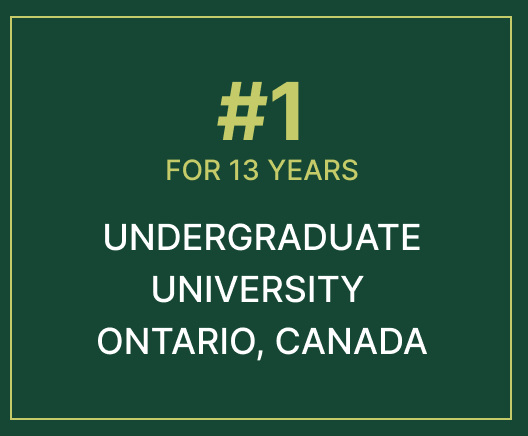
Begin your BBA journey with a world-class opportunity. Trent University, ranked Ontario’s #1 undergraduate Public University for 13 consecutive years and Canada’s #2 University for overall reputation, offers an exclusive 2+2 pathway in academic mentorship with Chitkara University. Start your BBA at Chitkara University in India, where you will study for two years under an applied Canadian curriculum before seamlessly transferring to Trent University in Ontario, Canada, to complete your degree. Your two years of Advanced Standing credits at Chitkara University are fully transferable to Trent’s School of Business, ensuring a smooth academic transition. During this period, you will receive Academic Mentorship from Trent’s distinguished faculty and a Conditional Offer of Acceptance from Trent upon admission.
By beginning your degree at Chitkara University, you pay only one-third of the international tuition fee while also saving significantly on boarding and lodging costs. Upon meeting transfer conditions, you will complete your final two years at Trent University, graduate with a four-year BBA degree from Canada, and open doors to global career opportunities.
Trent’s BBA program prepares you for a CPA or CHRP designation and serves as a strong foundation for an MBA. You will gain real-world professional experience through upper-year, for-credit placements and internships, community-based research projects, the Trent Business Students’ Association, and student business case competitions.
You will also benefit from mentorship and networking through Trent’s personalised, human-scale approach to teaching, where professors know you by name. Additionally, you will have access to the knowledge and expertise of a dedicated alumni community of business leaders and mentors, helping you build valuable connections for your future career.

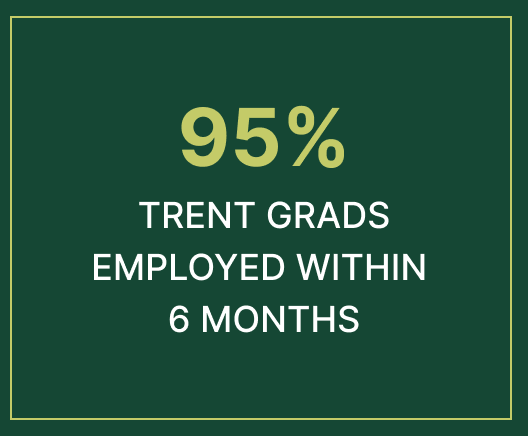
This program encourages students to roll up their sleeves and immerse themselves in the world of business. Unlock your potential, apply critical thinking skills, and gain hands-on career experiences that foster real-world connections. Our students are guaranteed meaningful, purposeful, and well-documented career-related experiences—ensuring they graduate with a strong foundation for success in the workforce.
Students who opt to transfer to Trent University Bachelor of Business Administration in Canada (subject to meeting transfer conditions) will take the following courses in the subsequent semesters to get the 4-year degree at Trent University, Canada.
Trent University has two campus locations: Peterborough, Ontario, and the Durham GTA campus in Oshawa, Ontario. Specialisation options may vary by campus, and a student’s primary campus will be determined upon application to Trent University.
Students continuing their BBA at Chitkara University in the third year can specialise in FinTech, Liberal Education, Digital Transformation & Strategy, Retail Management, Data Science & Artificial Intelligence, Supply Chain & Logistics Management, or Professional and Aviation Management. They will also have the opportunity to undertake a summer internship and graduate with a three-year BBA degree from Chitkara University.
Chitkara University and Trent University are continually striving to enhance their programs and delivery. The information in this framework is subject to change without notice.
Prepare for your future with valuable hands-on training alongside business influencers who can support you on your path to career success. For-credit placements and internships are available in various sectors across the Greater Peterborough, Durham, and GTA regions for students in multiple programs at Trent. Depending on the graduate’s focus and level of experience, possible career opportunities are:
You will save almost close to 1/3 of the international tuition fee for a similar program at TrentU, Canada in B.B.A when you will study first two years at Chitkara University. Our students have an option to transfer to TrentU after successful academic completion of their first two years with us and based on other conditions as laid in the “Transfer to Canada” section.
| Program | Fee Per Semester |
|---|---|
| Bachelor of Business Administration | Rs. 1,80,000/- |
For students transferring in the 3rd year to Trent University, Canada, please scan the QR code for details on fees for the 3rd and 4th years.

You can visit our website, download the application form, visit our admission office in Chandigarh, or speak to our representative. Once you meet the eligibility conditions below, you can submit the application form along with the required documents and application fee to receive your letter of admission.
Toronto is the largest city in Canada, with a population of over three million people. It contributes nearly one-fifth of Canada’s GDP and is the centre of the country’s financial community. It is rapidly emerging as one of the safest and fastest-growing commercial cities in North America and has recently seen an influx of American and multinational companies establishing their operations in Toronto, recognising it as the city of the future.
Outdoor enthusiasts will appreciate the region’s natural beauty, greenbelt, and extensive network of trails. You can enjoy sports facilities, premier shopping centres, and a thriving arts and entertainment scene. For students who want to be close to the action while experiencing the charm of a close-knit community, the Greater Toronto Area (GTA) is the ideal place to live, learn, and thrive.
You have the option to apply for and transfer to Trent University in Canada after completing two years of the Bachelor of Business Administration program at Chitkara University, provided you demonstrate academic success (with a minimum required CGPA of 7 on a scale of 10) and meet other statutory requirements.
Upon transfer, you will enter the third year of the BBA program with a specialisation at Trent University, with full Recognition of Prior Learning credits from your first two years at Chitkara University. You will then complete two more years of study at Trent University to earn a four-year BBA degree.
Additionally, you will be eligible to apply for a three-year post-study work permit upon successful completion of your program. However, in addition to meeting academic requirements in the first two years at Chitkara University, you must secure a study permit from Immigration, Refugees and Citizenship Canada (IRCC), the sole Canadian government authority responsible for granting visas.
International Student Permit Information
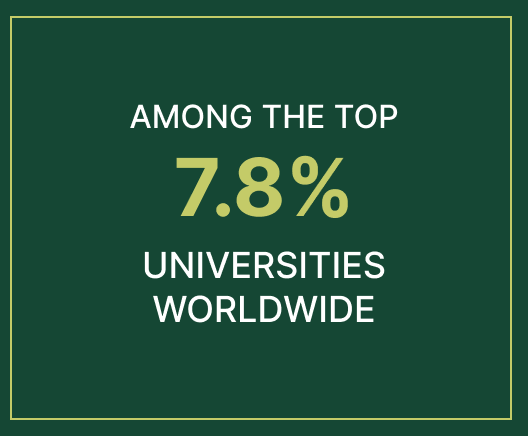
This is a globally aligned 2+2 Bachelor of Business Administration (BBA) degree, where students complete the first two years at Chitkara University in India and the final two years at Trent University in Ontario, Canada. Graduates receive a full BBA degree from Trent, one of Canada’s top-ranked universities.
This distinctive 2+2 international pathway enables students to begin their business degree in India at Chitkara University, benefiting from a curriculum aligned with Canadian standards and mentorship. After two years, eligible students transition to Trent University, Ontario’s top-ranked undergraduate institution, completing their BBA in Canada at a fraction of the cost of traditional international programs.
You can specialise in Finance, Human Resource Management, Entrepreneurship, Marketing & Consumer Culture, or Information Systems & e-Commerce. Campus-wise availability varies between Trent’s Peterborough and Durham GTA campuses.
You must complete 2 years at Chitkara University with a minimum CGPA of 7/10, achieve an IELTS score of 6.5 (no band less than 6.0), and meet Canadian visa requirements as per IRCC rules.
Yes, students benefit from academic mentorship by Trent University faculty during the first two years and experience a Canadian-style curriculum even before transferring to Canada.
By studying the first two years at Chitkara University, you save nearly 1/3rd of the total international tuition fee and avoid additional living expenses in Canada for those years.
Graduates gain access to internships and placements across Ontario with top employers like Ontario Power Generation, Innovation Clusters, and even the Canadian Olympic Committee—thanks to Trent’s strong co-op and alumni network.
Yes, upon graduation from Trent University, you are eligible to apply for a 3-year Post-Graduation Work Permit (PGWP), a significant advantage for international students pursuing a BBA degree in Canada.
While most students opt to transfer, you may also complete the entire program at Chitkara University and graduate with a 3-year BBA degree in India, with specialisations like FinTech, Data Science, Retail, or Aviation Management.
It combines affordability, global exposure, academic mentorship, and a clear path to a Canadian degree with work opportunities, making it a top choice for Indian students looking for a BBA degree in Canada with high ROI.
You can apply online through Chitkara University’s official admissions portal or visit the admissions office in Chandigarh. The process involves submitting your academic documents, completing the application form, paying the application fee, and attending a mandatory Personal Interview.
No separate entrance exam is required. Admission is based on academic merit, meeting the eligibility criteria, and successful completion of the personal interview with the academic panel.
Key documents required during the application process include the Class XII mark sheets, recent passport-sized photographs, and valid identification proof. Applicants must also provide proof of English language proficiency, such as IELTS or TOEFL scores. Additional program-specific documents may be required, as detailed in the respective application guidelines.
Yes, all applicants undergo a Personal Interview conducted by Chitkara University's academic team. The interview assesses your interest, aptitude, and readiness for global education.
If all documents are in order and the interview is successful, a provisional offer letter or a conditional letter of acceptance is typically issued within 7–10 working days.
No, a visa is not required at the time of applying. Visa requirements apply when you transfer to the partner university abroad, after completing the first two years at Chitkara University.
If your study visa to the USA/Canada/Australia is not granted, you can still complete your full degree at Chitkara University. Our curriculum is closely aligned with that of foreign universities (ASU/Deakin/GBP/Trent) standards, ensuring high-quality education even if the transfer does not happen. You’ll graduate with a recognised degree from Chitkara University and benefit from academic mentorship, global exposure, and career opportunities within India or abroad.
The tuition fee structure for global pathway programs at Chitkara University includes academic tuition, hands-on practical training, and access to advanced labs and learning resources. For the most accurate and updated fee details, along with information on scholarships or financial aid options, we recommend visiting our admissions page or reaching out to our team directly.
No, merit-based scholarships are not offered for engineering or global pathway programs. However, the university ensures a competitive fee structure.
Yes, students are encouraged to apply for education loans independently. Chitkara University provides full documentation support to facilitate the loan process.
No. While no fee waivers are available, Chitkara University's fee structure remains affordable and competitive compared to full-time international tuition.
Students transferring in Year 3 will need to pay the standard international tuition fees applicable at the partner university. These fees vary by course and university.
No, these costs are not included. Students must plan separately for accommodation, meals, visa processing, and travel, especially when transferring abroad.
Yes. All fees are subject to applicable taxes as per Indian government norms. Detailed breakdowns are available during admission or on the fee receipt.
Depending on the international partner university, students can choose from specialisations like Marketing and Consumer Culture, Human Resource Management, Entrepreneurship, Finance, Information Systems, and Digital Strategy. Each campus may offer slightly different options.
Yes. Most partner universities, like Arizona State University, Deakin University, York University, George Brown Polytechnic or Trent University, allow students to declare or switch specialisations in their 3rd year, based on interest, credits completed, and campus availability.
Absolutely. The curriculum is designed in collaboration with global academic partners to ensure students gain skills that meet international benchmarks in business, analytics, finance, and commerce.
Yes, the first two years at Chitkara University follow a mapped curriculum aligned with (ASU/ GBP/ Deakin/ York/ Trent) academic standards. This includes similar courses, credit structures, and teaching methodologies to ensure a seamless academic transfer. You'll also be mentored by international faculty and receive the foundational knowledge required to continue your studies abroad in Years 3 and 4 with full credit recognition.
The curriculum is experiential and includes both theoretical foundations and practical components like case studies, group projects, business simulations, and internships, especially at the international partner university.
The programs are primarily on-campus to maintain academic rigour and facilitate international credit transfer. However, some modules may involve blended learning or digital tools provided by the partner institutions.
Assessment is continuous and includes assignments, quizzes, presentations, mid-term exams, end-term evaluations, and project work, both at Chitkara University and the international campus.
While not mandatory in the first two years, internships and co-op placements are highly encouraged and often mandatory in the final years at the partner university abroad.
Yes. Partner universities like Trent or George Brown Polytechnic offer dedicated career services, co-op support teams, and industry networks that help students secure internships in sectors like finance, marketing, and analytics.
Yes. Students at Chitkara University can participate in summer internships, on-campus industry projects, and virtual placements with corporate partners, providing early industry exposure.
Many internships during Year 3 or 4 in Canada are for-credit placements, and some may be paid depending on the employer. Co-op opportunities often offer stipends.
Yes. Partner universities integrate for-credit internship modules into the curriculum, ensuring your practical learning adds value to your academic record.
From Year 1 at Chitkara University, students participate in guest lectures, alumni interactions, and industry-led workshops. Once abroad, they gain access to global business networks and mentorship from industry leaders.
Graduates of Chitkara University’s international business programs are well-positioned for careers in finance, marketing, consulting, entrepreneurship, analytics, and public administration, both in India and abroad.
Yes. Canadian universities like Trent or the George Brown Polytechnic provide career coaching, employer networking events, job boards, and resume/interview support through their career services departments.
Yes. After completing your BBA/B.Com degree in Canada, you are eligible to apply for a Post-Graduation Work Permit (PGWP) of up to 3 years, provided you meet IRCC requirements.
Alumni pursue roles such as Business Analysts, Financial Advisors, HR Specialists, Marketing Executives, Operations Managers, and even launch startups with support from incubators.
Yes. Degrees from partner institutions like Trent University and George Brown College are globally recognised and carry weight with MNCs, Indian startups, and global consulting firms.
Yes. Chitkara University’s Career Advancement Services team guides students throughout their journey, from internship preparation to final placement support, even after their return from abroad.
Yes. Many alumni have secured roles at Big 4 firms, Canadian government departments, tech companies, and global brands, thanks to their dual-campus exposure and global degree.
Chitkara University offers a vibrant campus experience with clubs, sports, hackathons, cultural fests, and industry-focused workshops that help students build social connections and practical skills while preparing for their international transfer.
Yes. Partner universities such as Trent University, Arizona State University, Deakin University, University of Windsor, and George Brown Polytechnic provide international students with access to academic support, career counselling, mental health services, housing assistance, and more.
Yes. Both Chitkara University and the partner universities abroad conduct structured orientation programs that help new students understand academic expectations, campus facilities, and peer engagement opportunities.
At Chitkara University, on-campus hostels and nearby PGs are available. Upon transfer, partner universities offer on-campus residence options and off-campus housing guidance for international students.
Yes, students are encouraged to participate in entrepreneurship cells, cultural clubs, volunteering, case competitions, and community outreach, enhancing their global learning journey.
Yes. Some programs include academic mentorship, guest lectures, and workshops by faculty from partner institutions, allowing early exposure to global academic perspectives.
Courses are taught by highly qualified Indian faculty trained in international pedagogy. Many are certified or mentored by experts from partner institutions to ensure global learning outcomes.
The programs adopt a blended, experiential teaching model with real-world case studies, group discussions, presentations, and continuous assessments, mirroring international academic styles.
Yes. Certain modules, mentorship sessions, and masterclasses are delivered by partner University faculty, particularly in Year 1 and 2 under the 2+2 model.
Yes. Chitkara University and its partner universities maintain a student-centric approach, encouraging regular faculty-student interaction, mentorship, and personalised academic guidance.
Class sizes are kept intentionally small to promote greater interaction, personalised feedback, and improved peer learning, typically 25–40 students per batch in most programs.
Yes. Students can undertake guided capstone projects, business simulations, and community-based assignments under the supervision of both Indian and international faculty.
Both Chitkara University and its global partners follow strict academic integrity standards, using tools like Turnitin, rigorous rubrics, and continuous assessments to maintain quality and fairness.
The 2+2 model allows you to begin your degree at Chitkara University and complete it at a prestigious global Partner university. It offers global exposure, international recognition, and significant cost savings in the first two years.
You will graduate with a single, internationally recognised degree from the partner university, awarded after successful transfer and completion of the final two years.
Yes. Once you graduate from a Canadian university, you can apply for a Post-Graduation Work Permit (PGWP) valid up to 3 years, subject to IRCC regulations.
Yes. All academic credits are pre-mapped and transferable, provided students meet academic performance and program-specific eligibility conditions for transfer.
Graduates of these programs become eligible to apply for PR through various Canadian immigration pathways, including Canadian Experience Class (CEC) and Provincial Nominee Programs (PNP), based on their work and study history.
Yes. Many students participate in business case competitions, research symposia, student exchange events, and startup incubators hosted by the international university or its partners.
Absolutely. These globally recognised bachelor’s degrees offer a strong foundation for international postgraduate admissions, including MBA, M.Com, MS in Business Analytics, and related programs in Canada, the US, or Europe.
Chitkara University offers smart classrooms, tech-enabled auditoriums, simulation labs, innovation centres, and high-speed campus-wide Wi-Fi, ensuring a seamless, modern learning environment aligned with international academic standards.
Yes. Students have access to dedicated business simulation labs, analytics labs, AI-ML labs, and digital marketing studios, tailored to their stream of study. These labs replicate real-world scenarios for practical learning.
Yes. Many international mentors and faculty from partner universities conduct lab sessions, design thinking workshops, and live project consultations during the first two years of study in India.
Absolutely. Depending on the program, students gain hands-on training in industry-relevant tools like Power BI, Tableau, Python, R, SAP, Salesforce, QuickBooks, and more, mirroring what is taught at the global partner universities.
Yes. The Centre for Entrepreneurship Education & Development (CEED) and other incubators support startups, idea pitching, and innovation, making it ideal for business and tech-oriented students.
Chitkara University has a fully digitised central library with remote access to EBSCO, JSTOR, Emerald, ProQuest, and Scopus, along with print resources and dedicated reading lounges.
Yes. Chitkara University’s infrastructure complies with NAAC, UGC, and global quality assurance standards, with several labs set up in collaboration with industry leaders and international partners.
Chitkara University is located in Rajpura, Punjab (near Chandigarh), well-connected by road, rail, and air. It is just 30–40 minutes from Chandigarh International Airport and major bus/train stations.
While direct airport pickup isn’t standard, the Admissions team can assist with travel planning and guidance. During transfer to partner universities, they usually provide arrival support and orientation services.
Chitkara University ensures 24/7 security, surveillance cameras, in-campus wardens, and emergency support systems to provide a safe, inclusive environment for both male and female students.
Yes, the campus is easily accessible by buses, cabs, and autos, with regular connectivity to Chandigarh, Mohali, Panchkula, and major nearby cities.
Yes, in and around the campus, students can access ATMs, grocery stores, medical services, food outlets, and salons, making day-to-day living convenient and student-friendly.
Yes. Its proximity to Chandigarh IT Park, Mohali’s innovation district, and key industrial zones ensures real-time access to industry mentors, internships, and placements.
Yes. Partner universities offer dedicated International Student Services (ISS) for airport pickup, housing assistance, local orientation, and adapting to the new environment.
Chitkara University offers a globally aligned curriculum, 2+2 pathways with top Global universities, high credit transfer acceptance, and world-class infrastructure, making it a pioneer in international education in India.
Yes. Degrees from George Brown Polytechnic , Trent University and York University are internationally accredited and widely recognised for postgraduate admissions, jobs, and migration purposes.
Through academic mentorship, mapped learning outcomes, international pedagogy, global faculty interactions, and outcome-based assessments that ensure a smooth transfer abroad.
Chitkara University offers a cost-effective international education through its global pathway programs. By beginning the course in India, students benefit from high-quality training, modern culinary labs, and academic resources at a more affordable cost before transferring abroad. This structure combines global exposure with financial efficiency. For the latest fee details and available scholarships, please visit our admissions page or reach out to our team.
Yes. Many alumni are now pursuing MS, MBA, or working at leading MNCs in Canada, the USA, and Europe, having begun their journey through Chitkara University’s global collaboration programs.
Yes. With a student-centric approach, classes are kept small, and students receive regular career mentoring, soft skills training, and international pathway support from academic advisors.
Yes. Chitkara University is UGC-recognised, NAAC A+ accredited, and regularly features in top national rankings (NIRF, QS I-GAUGE, ARIIA). Its global collaborations make it one of India’s leading internationalised campuses.
Yes. Chitkara University is UGC-recognised and NAAC A+ accredited, offering secure, CCTV-monitored campuses with 24x7 security, wardens, and medical emergency services. It is one of India’s most trusted universities for global programs.
Parents receive regular updates through parent-teacher interactions, performance reports, LMS access, and scheduled meetings. The university maintains strong communication between faculty and families to ensure student success.
Chitkara University provides end-to-end guidance on academics, documentation, visa counselling, and preparation for the transfer. Partner universities like Trent, Windsor, ASU, GBP, and Deakin also provide arrival and orientation services abroad.
By completing the first 2 years at Chitkara University, students save significantly, paying only about 1/3rd of international tuition fees. Post-transfer, graduates often secure global job placements or pursue higher education abroad, offering high long-term ROI.
Yes. The BBA, B.Com, B.E., and other degrees from partner universities in Canada, the USA, and Australia are globally accredited and recognised for employment, postgraduate admissions, and migration across major countries.
While merit-based scholarships are not available, students can independently apply for education loans, and Chitkara University provides all required documentation to support the loan process.
The university ensures holistic development with academic counselling, soft skills training, career guidance, peer mentoring, and dedicated student affairs teams to support emotional and academic well-being throughout the program.
This is a globally aligned 2+2 Bachelor of Business Administration (BBA) degree, where students complete the first two years at Chitkara University in India and the final two years at Trent University in Ontario, Canada. Graduates receive a full BBA degree from Trent, one of Canada’s top-ranked universities.
This distinctive 2+2 international pathway enables students to begin their business degree in India at Chitkara University, benefiting from a curriculum aligned with Canadian standards and mentorship. After two years, eligible students transition to Trent University, Ontario’s top-ranked undergraduate institution, completing their BBA in Canada at a fraction of the cost of traditional international programs.
You can specialise in Finance, Human Resource Management, Entrepreneurship, Marketing & Consumer Culture, or Information Systems & e-Commerce. Campus-wise availability varies between Trent’s Peterborough and Durham GTA campuses.
You must complete 2 years at Chitkara University with a minimum CGPA of 7/10, achieve an IELTS score of 6.5 (no band less than 6.0), and meet Canadian visa requirements as per IRCC rules.
Yes, students benefit from academic mentorship by Trent University faculty during the first two years and experience a Canadian-style curriculum even before transferring to Canada.
By studying the first two years at Chitkara University, you save nearly 1/3rd of the total international tuition fee and avoid additional living expenses in Canada for those years.
Graduates gain access to internships and placements across Ontario with top employers like Ontario Power Generation, Innovation Clusters, and even the Canadian Olympic Committee—thanks to Trent’s strong co-op and alumni network.
Yes, upon graduation from Trent University, you are eligible to apply for a 3-year Post-Graduation Work Permit (PGWP), a significant advantage for international students pursuing a BBA degree in Canada.
While most students opt to transfer, you may also complete the entire program at Chitkara University and graduate with a 3-year BBA degree in India, with specialisations like FinTech, Data Science, Retail, or Aviation Management.
It combines affordability, global exposure, academic mentorship, and a clear path to a Canadian degree with work opportunities, making it a top choice for Indian students looking for a BBA degree in Canada with high ROI.
You can apply online through Chitkara University’s official admissions portal or visit the admissions office in Chandigarh. The process involves submitting your academic documents, completing the application form, paying the application fee, and attending a mandatory Personal Interview.
No separate entrance exam is required. Admission is based on academic merit, meeting the eligibility criteria, and successful completion of the personal interview with the academic panel.
Key documents required during the application process include the Class XII mark sheets, recent passport-sized photographs, and valid identification proof. Applicants must also provide proof of English language proficiency, such as IELTS or TOEFL scores. Additional program-specific documents may be required, as detailed in the respective application guidelines.
Yes, all applicants undergo a Personal Interview conducted by Chitkara University's academic team. The interview assesses your interest, aptitude, and readiness for global education.
If all documents are in order and the interview is successful, a provisional offer letter or a conditional letter of acceptance is typically issued within 7–10 working days.
No, a visa is not required at the time of applying. Visa requirements apply when you transfer to the partner university abroad, after completing the first two years at Chitkara University.
If your study visa to the USA/Canada/Australia is not granted, you can still complete your full degree at Chitkara University. Our curriculum is closely aligned with that of foreign universities (ASU/Deakin/GBP/Trent) standards, ensuring high-quality education even if the transfer does not happen. You’ll graduate with a recognised degree from Chitkara University and benefit from academic mentorship, global exposure, and career opportunities within India or abroad.
The tuition fee structure for global pathway programs at Chitkara University includes academic tuition, hands-on practical training, and access to advanced labs and learning resources. For the most accurate and updated fee details, along with information on scholarships or financial aid options, we recommend visiting our admissions page or reaching out to our team directly.
No, merit-based scholarships are not offered for engineering or global pathway programs. However, the university ensures a competitive fee structure.
Yes, students are encouraged to apply for education loans independently. Chitkara University provides full documentation support to facilitate the loan process.
No. While no fee waivers are available, Chitkara University's fee structure remains affordable and competitive compared to full-time international tuition.
Students transferring in Year 3 will need to pay the standard international tuition fees applicable at the partner university. These fees vary by course and university.
No, these costs are not included. Students must plan separately for accommodation, meals, visa processing, and travel, especially when transferring abroad.
Yes. All fees are subject to applicable taxes as per Indian government norms. Detailed breakdowns are available during admission or on the fee receipt.
Depending on the international partner university, students can choose from specialisations like Marketing and Consumer Culture, Human Resource Management, Entrepreneurship, Finance, Information Systems, and Digital Strategy. Each campus may offer slightly different options.
Yes. Most partner universities, like Arizona State University, Deakin University, York University, George Brown Polytechnic or Trent University, allow students to declare or switch specialisations in their 3rd year, based on interest, credits completed, and campus availability.
Absolutely. The curriculum is designed in collaboration with global academic partners to ensure students gain skills that meet international benchmarks in business, analytics, finance, and commerce.
Yes, the first two years at Chitkara University follow a mapped curriculum aligned with (ASU/ GBP/ Deakin/ York/ Trent) academic standards. This includes similar courses, credit structures, and teaching methodologies to ensure a seamless academic transfer. You'll also be mentored by international faculty and receive the foundational knowledge required to continue your studies abroad in Years 3 and 4 with full credit recognition.
The curriculum is experiential and includes both theoretical foundations and practical components like case studies, group projects, business simulations, and internships, especially at the international partner university.
The programs are primarily on-campus to maintain academic rigour and facilitate international credit transfer. However, some modules may involve blended learning or digital tools provided by the partner institutions.
Assessment is continuous and includes assignments, quizzes, presentations, mid-term exams, end-term evaluations, and project work, both at Chitkara University and the international campus.
While not mandatory in the first two years, internships and co-op placements are highly encouraged and often mandatory in the final years at the partner university abroad.
Yes. Partner universities like Trent or George Brown Polytechnic offer dedicated career services, co-op support teams, and industry networks that help students secure internships in sectors like finance, marketing, and analytics.
Yes. Students at Chitkara University can participate in summer internships, on-campus industry projects, and virtual placements with corporate partners, providing early industry exposure.
Many internships during Year 3 or 4 in Canada are for-credit placements, and some may be paid depending on the employer. Co-op opportunities often offer stipends.
Yes. Partner universities integrate for-credit internship modules into the curriculum, ensuring your practical learning adds value to your academic record.
From Year 1 at Chitkara University, students participate in guest lectures, alumni interactions, and industry-led workshops. Once abroad, they gain access to global business networks and mentorship from industry leaders.
Graduates of Chitkara University’s international business programs are well-positioned for careers in finance, marketing, consulting, entrepreneurship, analytics, and public administration, both in India and abroad.
Yes. Canadian universities like Trent or George Brown Polytechnic provide career coaching, employer networking events, job boards, and resume/interview support through their career services departments.
Yes. After completing your BBA/B.Com degree in Canada, you are eligible to apply for a Post-Graduation Work Permit (PGWP) of up to 3 years, provided you meet IRCC requirements.
Alumni pursue roles such as Business Analysts, Financial Advisors, HR Specialists, Marketing Executives, Operations Managers, and even launch startups with support from incubators.
Yes. Degrees from partner institutions like Trent University and George Brown College are globally recognised and carry weight with MNCs, Indian startups, and global consulting firms.
Yes. Chitkara University’s Career Advancement Services team guides students throughout their journey, from internship preparation to final placement support, even after their return from abroad.
Yes. Many alumni have secured roles at Big 4 firms, Canadian government departments, tech companies, and global brands, thanks to their dual-campus exposure and global degree.
Chitkara University offers a vibrant campus experience with clubs, sports, hackathons, cultural fests, and industry-focused workshops that help students build social connections and practical skills while preparing for their international transfer.
Yes. Partner universities such as Trent University, Arizona State University, Deakin University, University of Windsor, and George Brown Polytechnic provide international students with access to academic support, career counselling, mental health services, housing assistance, and more.
Yes. Both Chitkara University and the partner universities abroad conduct structured orientation programs that help new students understand academic expectations, campus facilities, and peer engagement opportunities.
At Chitkara University, on-campus hostels and nearby PGs are available. Upon transfer, partner universities offer on-campus residence options and off-campus housing guidance for international students.
Yes, students are encouraged to participate in entrepreneurship cells, cultural clubs, volunteering, case competitions, and community outreach, enhancing their global learning journey.
Yes. Some programs include academic mentorship, guest lectures, and workshops by faculty from partner institutions, allowing early exposure to global academic perspectives.
Courses are taught by highly qualified Indian faculty trained in international pedagogy. Many are certified or mentored by experts from partner institutions to ensure global learning outcomes.
The programs adopt a blended, experiential teaching model with real-world case studies, group discussions, presentations, and continuous assessments, mirroring international academic styles.
Yes. Certain modules, mentorship sessions, and masterclasses are delivered by partner University faculty, particularly in Year 1 and 2 under the 2+2 model.
Yes. Chitkara University and its partner universities maintain a student-centric approach, encouraging regular faculty-student interaction, mentorship, and personalised academic guidance.
Class sizes are kept intentionally small to promote greater interaction, personalised feedback, and improved peer learning, typically 25–40 students per batch in most programs.
Yes. Students can undertake guided capstone projects, business simulations, and community-based assignments under the supervision of both Indian and international faculty.
Both Chitkara University and its global partners follow strict academic integrity standards, using tools like Turnitin, rigorous rubrics, and continuous assessments to maintain quality and fairness.
The 2+2 model allows you to begin your degree at Chitkara University and complete it at a prestigious global Partner university. It offers global exposure, international recognition, and significant cost savings in the first two years.
You will graduate with a single, internationally recognised degree from the partner university, awarded after successful transfer and completion of the final two years.
Yes. Once you graduate from a Canadian university, you can apply for a Post-Graduation Work Permit (PGWP) valid up to 3 years, subject to IRCC regulations.
Yes. All academic credits are pre-mapped and transferable, provided students meet academic performance and program-specific eligibility conditions for transfer.
Graduates of these programs become eligible to apply for PR through various Canadian immigration pathways, including Canadian Experience Class (CEC) and Provincial Nominee Programs (PNP), based on their work and study history.
Yes. Many students participate in business case competitions, research symposia, student exchange events, and startup incubators hosted by the international university or its partners.
Absolutely. These globally recognised bachelor’s degrees offer a strong foundation for international postgraduate admissions, including MBA, M.Com, MS in Business Analytics, and related programs in Canada, the US, or Europe.
Chitkara University offers smart classrooms, tech-enabled auditoriums, simulation labs, innovation centres, and high-speed campus-wide Wi-Fi, ensuring a seamless, modern learning environment aligned with international academic standards.
Yes. Students have access to dedicated business simulation labs, analytics labs, AI-ML labs, and digital marketing studios, tailored to their stream of study. These labs replicate real-world scenarios for practical learning.
Yes. Many international mentors and faculty from partner universities conduct lab sessions, design thinking workshops, and live project consultations during the first two years of study in India.
Absolutely. Depending on the program, students gain hands-on training in industry-relevant tools like Power BI, Tableau, Python, R, SAP, Salesforce, QuickBooks, and more, mirroring what is taught at the global partner universities.
Yes. The Centre for Entrepreneurship Education & Development (CEED) and other incubators support startups, idea pitching, and innovation, making it ideal for business and tech-oriented students.
Chitkara University has a fully digitised central library with remote access to EBSCO, JSTOR, Emerald, ProQuest, and Scopus, along with print resources and dedicated reading lounges.
Yes. Chitkara University’s infrastructure complies with NAAC, UGC, and global quality assurance standards, with several labs set up in collaboration with industry leaders and international partners.
Chitkara University is located in Rajpura, Punjab (near Chandigarh), well-connected by road, rail, and air. It is just 30–40 minutes from Chandigarh International Airport and major bus/train stations.
While direct airport pickup isn’t standard, the Admissions team can assist with travel planning and guidance. During transfer to partner universities, they usually provide arrival support and orientation services.
Chitkara University ensures 24/7 security, surveillance cameras, in-campus wardens, and emergency support systems to provide a safe, inclusive environment for both male and female students.
Yes, the campus is easily accessible by buses, cabs, and autos, with regular connectivity to Chandigarh, Mohali, Panchkula, and major nearby cities.
Yes, in and around the campus, students can access ATMs, grocery stores, medical services, food outlets, and salons, making day-to-day living convenient and student-friendly.
Yes. Its proximity to Chandigarh IT Park, Mohali’s innovation district, and key industrial zones ensures real-time access to industry mentors, internships, and placements.
Yes. Partner universities offer dedicated International Student Services (ISS) for airport pickup, housing assistance, local orientation, and adapting to the new environment.
Chitkara University offers a globally aligned curriculum, 2+2 pathways with top Global universities, high credit transfer acceptance, and world-class infrastructure, making it a pioneer in international education in India.
Yes. Degrees from George Brown Polytechnic , Trent University and York University are internationally accredited and widely recognised for postgraduate admissions, jobs, and migration purposes.
Through academic mentorship, mapped learning outcomes, international pedagogy, global faculty interactions, and outcome-based assessments that ensure a smooth transfer abroad.
Chitkara University offers a cost-effective international education through its global pathway programs. By beginning the course in India, students benefit from high-quality training, modern culinary labs, and academic resources at a more affordable cost before transferring abroad. This structure combines global exposure with financial efficiency. For the latest fee details and available scholarships, please visit our admissions page or reach out to our team.
Yes. Many alumni are now pursuing MS, MBA, or working at leading MNCs in Canada, the USA, and Europe, having begun their journey through Chitkara University’s global collaboration programs.
Yes. With a student-centric approach, classes are kept small, and students receive regular career mentoring, soft skills training, and international pathway support from academic advisors.
Yes. Chitkara University is UGC-recognised, NAAC A+ accredited, and regularly features in top national rankings (NIRF, QS I-GAUGE, ARIIA). Its global collaborations make it one of India’s leading internationalised campuses.
Yes. Chitkara University is UGC-recognised and NAAC A+ accredited, offering secure, CCTV-monitored campuses with 24x7 security, wardens, and medical emergency services. It is one of India’s most trusted universities for global programs.
Parents receive regular updates through parent-teacher interactions, performance reports, LMS access, and scheduled meetings. The university maintains strong communication between faculty and families to ensure student success.
Chitkara University provides end-to-end guidance on academics, documentation, visa counselling, and preparation for the transfer. Partner universities like Trent, Windsor, ASU, GBP, and Deakin also provide arrival and orientation services abroad.
By completing the first 2 years at Chitkara University, students save significantly, paying only about 1/3rd of international tuition fees. Post-transfer, graduates often secure global job placements or pursue higher education abroad, offering high long-term ROI.
Yes. The BBA, B.Com, B.E., and other degrees from partner universities in Canada, the USA, and Australia are globally accredited and recognised for employment, postgraduate admissions, and migration across major countries.
While merit-based scholarships are not available, students can independently apply for education loans, and Chitkara University provides all required documentation to support the loan process.
The university ensures holistic development with academic counselling, soft skills training, career guidance, peer mentoring, and dedicated student affairs teams to support emotional and academic well-being throughout the program.



Chandigarh-Patiala National Highway
Punjab 140 401
Unit No. A 201-202
Elante Mall Office Complex
Industrial Area Phase 1
Chandigarh 160 002


Unit No. A 201-202
Elante Mall Office Complex
Industrial Area Phase 1
Chandigarh 160 002
Chandigarh-Patiala National Highway
Punjab 140 401


