
Introduction
India’s robotics market hit USD 1.98 billion in 2025 and is on track to reach USD 7.38 billion by 2034 (IMARC Group). That kind of growth doesn’t happen without a specific type of engineer, one who can design the hardware, program the software, and wire the electronics all in one go. That’s exactly what the mechatronics engineering scope covers, and it’s why this field is now central to every serious conversation about India’s industrial future.
Quick Answer: What is Mechatronics Engineering?
Mechatronics engineering scope runs from designing industrial robots to programming autonomous vehicles and building AI-powered smart factories. It’s an interdisciplinary engineering field that combines Mechanical Engineering, Electronics, Computer Science, and Control Systems, giving graduates the range to work across practically every high-growth sector in India’s economy right now.
Mechatronics Engineering forms the backbone of latest modern robotics, autonomous vehicles, industrial automation and most advanced engineering solutions including smart manufacturing engineering solutions.
Understanding Mechatronics Engineering
Almost all of the engineering disciplines are specialised. Mechatronics is different from this, because Mechatronics is an integrated engineering discipline that designs intelligent and automated systems.
For example:
- Industrial robots: These consist of a mechanical part or parts, many sensors, an electrical part and software.
- Autonomous vehicles (cars, drones, underwater vehicles) comprising of mechanical parts (e.g. a chassis or structure) and the associated AI/software (path planning), and the electronics (e.g. power supply, etc).
- Smart production facilities (e.g. smart factories) – a number of products and systems such as robotics, IoT, automation and machine intelligence.
The Mechatronics engineer has the appropriate knowledge and skills to apply himself within various markets.
What Students Learn in Mechatronics Engineering
A Mechatronics Engineering program provides a balanced mix of mechanical, electrical, electronics, and computing subjects.
Core Subjects
- Engineering Mathematics
- Mechanical Systems Design
- Electronics and Circuits
- Sensors and Instrumentation
- Control Systems
- Microprocessors and Microcontrollers
- Robotics Engineering
- Embedded Systems
- Industrial Automation
- Manufacturing Processes
Advanced Technologies
- Artificial Intelligence
- Machine Learning for Automation
- Internet of Things (IoT)
- PLC Programming
- Human-Machine Interfaces
- Autonomous Systems
- Smart Manufacturing
- Digital Twin Technology
Practical Skills
- Robotics Programming
- CAD/CAM Design
- Automation System Design
- Data Analysis
- Problem Solving
- Project Management
These skills prepare graduates for careers in both core engineering and advanced technology sectors.
Why Robotics and Automation Are Growing in India
India ranked 6th globally in factory robot installations in 2025 according to the International Federation of Robotics, up from 7th the year before. The industrial automation market stood at USD 3.64 billion in 2025 and is forecast to reach USD 13.65 billion by 2034 (CAGR 15.82%). For anyone assessing mechatronics engineering scope, that trajectory is the single most important number to know.
Several factors are driving this growth:
- Expansion of smart manufacturing facilities
- Rise of Industry 4.0 technologies
- Growth of the electric vehicle sector
- Increasing use of industrial robots
- Adoption of AI-powered automation
- Government initiatives such as Make in India and Digital India
As organisations modernise their operations, demand for skilled robotics and automation professionals continues to rise.
Career Opportunities in Robotics & Automation
Mechatronics graduates have access to diverse and high-growth career opportunities.
Robotics Engineer
A Robotics Engineer designs, programs, and maintains a variety of robots for use in manufacturing, health care, logistics, and military applications.
Average Salary: ₹6–15 LPA
Automation Engineer
An Automation Engineer develops a system which enhances production efficiency and automates various processes to minimise human intervention in industries.
Average Salary: ₹5–12 LPA
Control Systems Engineer
A Control Systems Engineers designs and optimises control systems that can be used in various manufacturing plants or other industrial facilities.
Average Salary: ₹6–14 LPA
Industrial Robotics Specialist
Industrial Robotics Specialist – Install, maintain and integrate Industrial Robots in production environments.
Average Salary: ₹7–16 LPA
Embedded Systems Engineer
An Embedded Systems Engineer is involved in design and development of hardware and software components. They integrate these components into products and systems like robotics, automotive electronics and also help in development of products that fall under the Internet of Things (IoT) platform.
Average Salary: ₹6–14 LPA
Mechatronics Design Engineer
Mechatronics Design Engineers design intelligent machines and mechanical products that are integrated with electronic and computer controls.
Average Salary: ₹5–12 LPA
Manufacturing Automation Engineer
Design and implement solutions for manufacturing automation, in the frame of Industry 4.0.
Average Salary: ₹6–15 LPA
Autonomous Systems Engineer
Designing self-driving systems, such as drones, intelligent vehicles and other advanced robotic systems.
Average Salary: ₹8–18 LPA
Top Industries Hiring Mechatronics Engineers
Automotive Industry
Electric vehicles, autonomous technologies, and advanced manufacturing systems are creating strong demand for automation professionals.
Manufacturing & Smart Factories
Industry 4.0 initiatives require experts in robotics, automation, and intelligent production systems.
Aerospace & Defense
Advanced robotics and autonomous systems are increasingly used in defense and aerospace applications.
Healthcare & Medical Devices
Medical robotics and intelligent healthcare systems offer growing career opportunities.
Logistics & Warehousing
Automation and robotics are transforming supply chains and warehouse operations.
Electronics & Semiconductor Manufacturing
Automated production environments rely heavily on mechatronics expertise.
Mechatronics Engineering vs Mechanical Engineering
| Factor | Mechatronics Engineering | Mechanical Engineering |
| Focus Area | Robotics, Automation, Electronics & Software | Mechanical Systems & Design |
| Technology Exposure | High | Moderate |
| Industry 4.0 Alignment | Very High | High |
| Robotics Applications | Extensive | Limited |
| Automation Skills | Core Component | Supplementary |
| Career Scope | Robotics, Automation, Smart Manufacturing | Manufacturing, Design, Production |
Students interested in emerging technologies often find Mechatronics Engineering better aligned with future industry requirements.
Future Scope of Mechatronics Engineering in India
The mechatronics engineering scope in India is getting harder to overstate. The autonomous mobile robots segment alone reached USD 153.42 million in 2025 and is projected to hit USD 541.54 million by 2034 (IMARC Group). Add EV expansion, ISRO-driven space robotics, and Government PLI scheme allocations of INR 1.91 lakh crore across 14 sectors, and you have structural tailwinds that will sustain demand well past this decade. By 2026 and beyond, industries are expected to increase investments in:
- Industrial Automation
- Artificial Intelligence
- Smart Manufacturing
- Robotics Systems
- Electric Vehicles
- Autonomous Mobility
- IoT and Connected Devices
- Advanced Manufacturing Technologies
As India strengthens its position as a global manufacturing and technology hub, the demand for engineers capable of integrating mechanical, electronic, and digital systems will continue to grow.
Best Universities Offering Mechatronics Engineering
Students should choose programs that provide:
- Robotics Laboratories
- Automation Training
- Industry Certifications
- Internship Opportunities
- Industry 4.0 Exposure
- Research and Innovation Opportunities
Some notable options include:
- Indian Institutes of Technology (IITs)
- National Institutes of Technology (NITs)
- Chitkara University
Institutions offering industry-oriented engineering programs with strong practical learning components can help students build successful careers in robotics and automation.
Conclusion
The mechatronics engineering scope in India in 2026 isn’t a forecast anymore, it’s already playing out in factory floors in Pune, EV plants in Chennai, and warehouse robotics hubs in Delhi-NCR. Students who graduate from Chitkara University’s B.E. Mechatronics program with hands-on robotics lab time, 6–12 months of industrial training, and recruiters like Siemens, Mahindra, and Danfoss on campus aren’t just entering a job market. They’re entering one of the fastest-moving sectors in the country.
Ready to Build a Career in Robotics and Automation?
Hands-on Mechatronics Programs and Colleges offering Robotic and Automation Training with an Industry 4.0 focus to provide the best careers for students interested in Mechatronics Engineering programs to prepare for the top Mechatronics careers available in the industry today.
B.E. in Mechatronics Engineering – Why Chitkara University?
The Bachelor of Engineering in Mechatronics Engineering (4 years) program at Chitkara University enables students to develop the necessary skills to become part of the global workforce, particularly in the field of Robotics, Automation and Artificial Intelligence and related fields for smart manufacturing. Mechatronics Engineering is an interdisciplinary engineering field, comprising of Mechanical Engineering with elements of Electronics, Computer Science and Control Systems. A Mechatronics engineer can design, build and manage machines and complex systems that contain physical and mechanical parts, sensors, actuators, electronics and software components and systems.
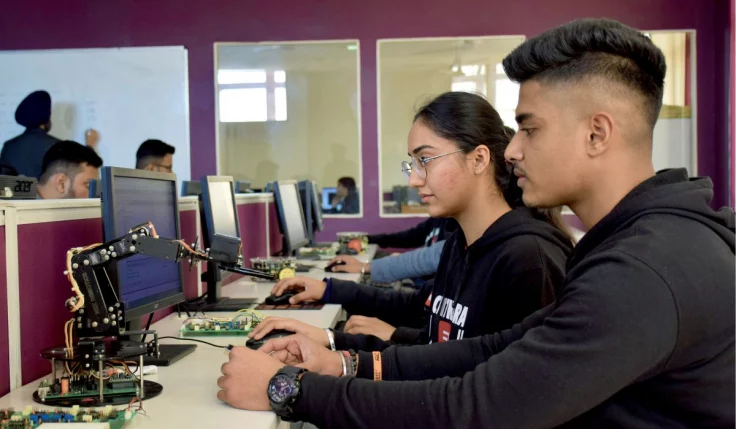
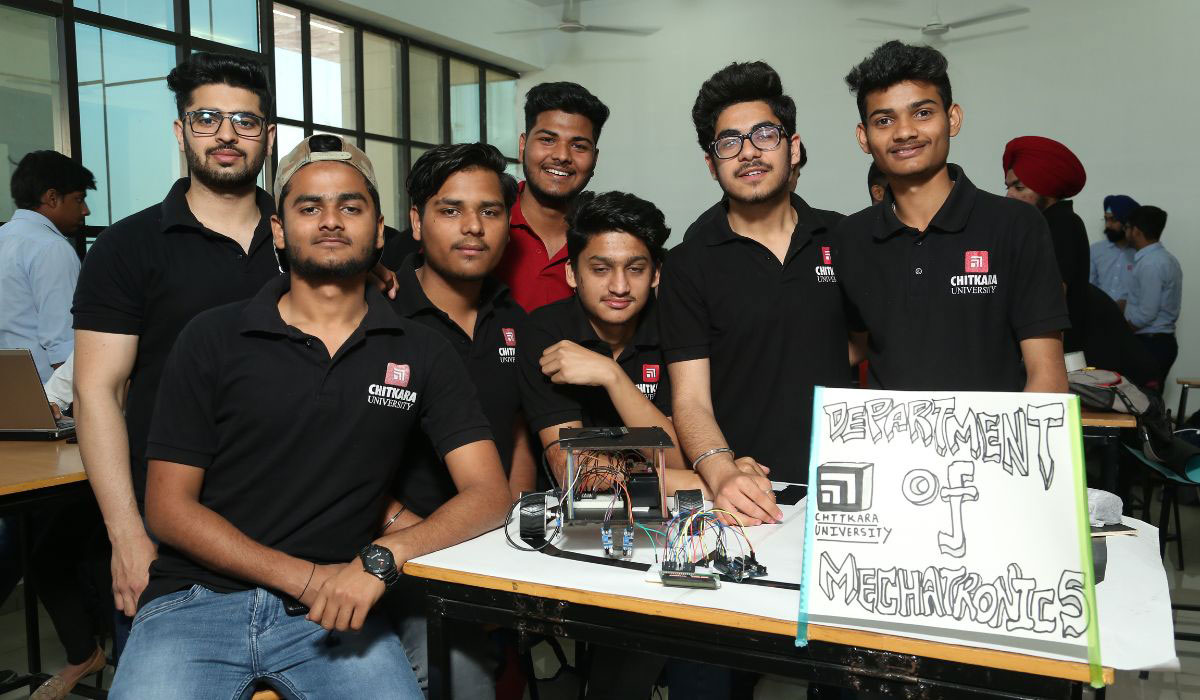
A practical approach along with Industry exposure is the hallmark of the B.E. Mechatronics Engineering program at Chitkara University. In the Labs of university students are exposed to the latest technologies in the field of Robotics, Automation, Hydraulics, Pneumatics, Embedded systems, Industrial Control systems etc. to name a few. The students are also given the chance to implement their knowledge and understanding in real life scenario through various industry projects. Last but not least 6-months to 1-year industrial training and exposure is given to the students in various industries across the country to make them industry ready to work in various sectors of industries.
There are many industries like manufacturing, automotive, telecommunication, green energy, healthcare technology and industrial automation that are recruiting Mechatronics Engineers as Robotics Engineers, Automation Engineers, Mechatronics Engineers, Systems Integrators, Electronics Design Engineers, AI & Robotics Consultants and Instrumentation Engineers. In Chitkara University, many top companies like Siemens, Mitsubishi Electric, Honda, Hyundai, JCB, Mahindra, Maruti Suzuki, Reliance Industries, Danfoss, Adani Group, Kirloskar etc. are recruiting Mechatronics Engineering students for campus placement. Also the scope of robotics and automation is increasing day by day and hence it offers excellent career prospects to students.