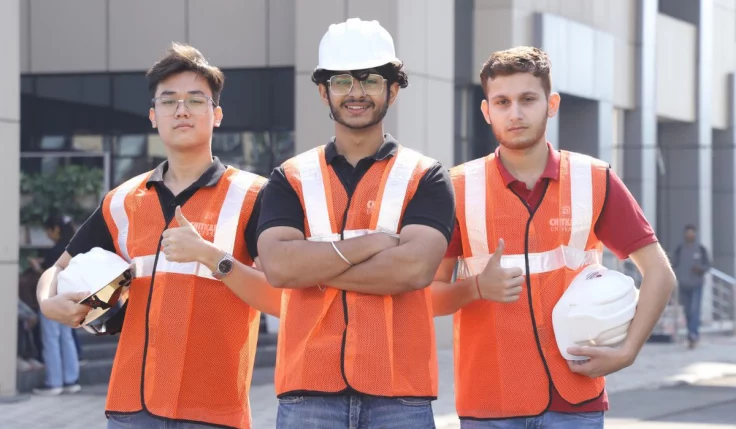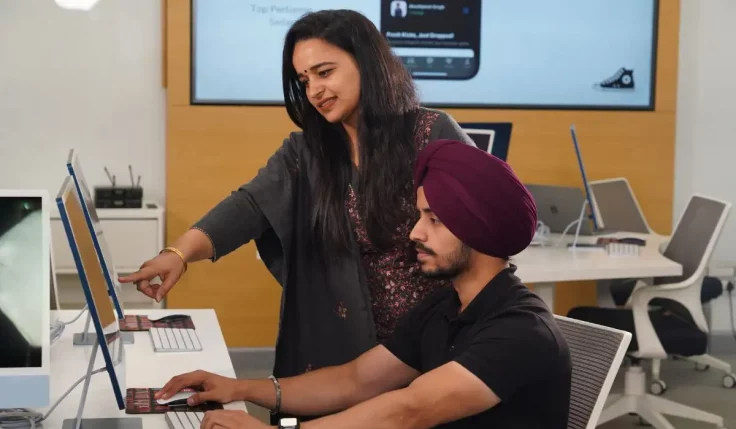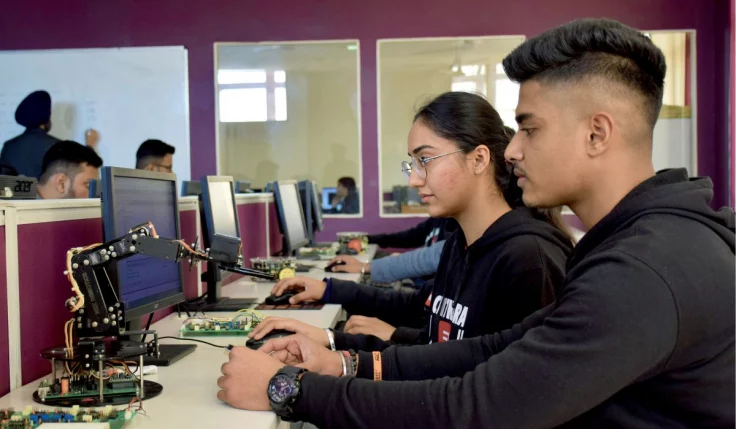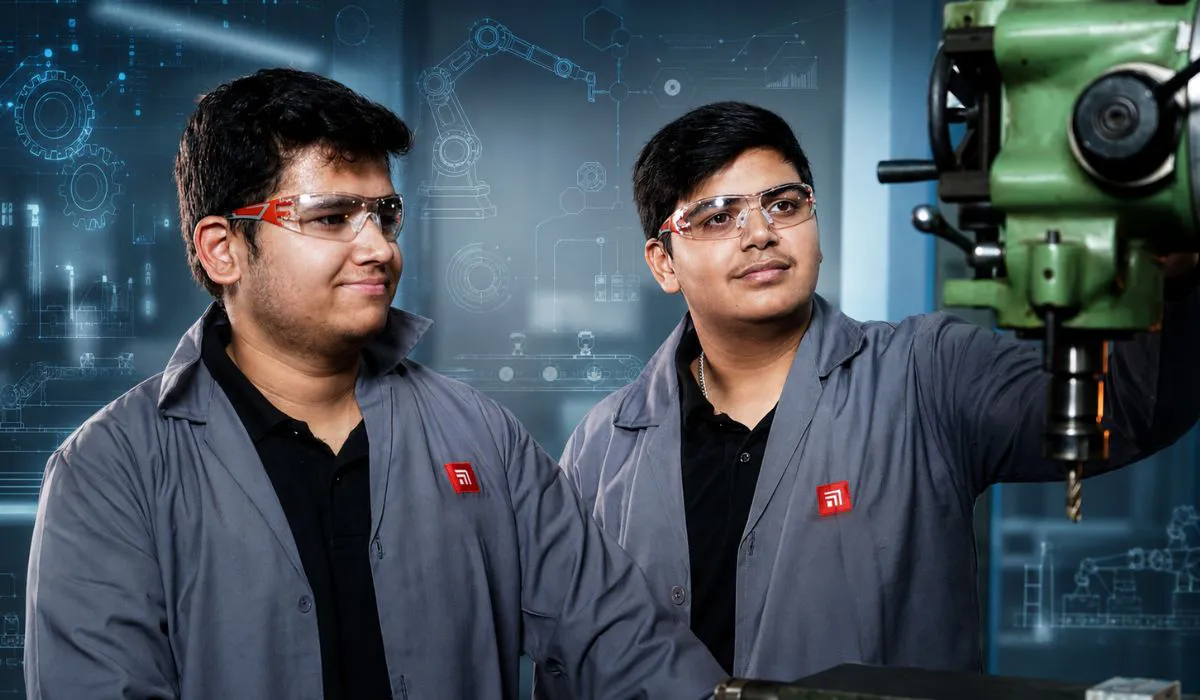

The field of Mechanical Engineering has gone through a sea change with the advent of automation, robotics and use of Artificial Intelligence (AI) in creating intelligent machines and systems to function in smart production environments that use automation, digital manufacturing tools and employ Industry 4.0 technologies. The smart production is fast creating multitude of jobs in India in automobile, aerospace, electronics, renewable energy, robotics and industrial automation sectors amongst others. Thus smart production is creating a plethora of jobs for young engineer who wishes to design and create production systems and work with the latest technologies in the field of Manufacturing Engineering.
Quick Answer: What is Smart Manufacturing?
Smart manufacturing or Smart Factory refers to a variety of different technologies.
- Artificial Intelligence (AI)
- Robotics
- Industrial Internet of Things (IIoT)
- Automation
- Machine Learning
- Data Analytics
- Cloud Computing
The core task of smart manufacturing systems consists in supporting, optimising and improving current processes and business using new technologies. This is to increase efficiency and to reduce costs worldwide. Smart manufacturing systems are the basic system of Industry 4.0 / The 4th Industrial Revolution.
Understanding Smart Manufacturing and Industry 4.0
First and foremost historical manufacturing was mostly carried out manually and were equipped with plenty of mechanical components. Now in worldwide industries new production systems are more and more operated automatically, in digital form and include intelligent elements. Some production processes are connected together, in order to obtain information in real time with the help of many sensors.
Industry 4.0 integrates:
- smart machines,
- automated production systems,
- intelligent robotics,
- digital simulations,
- predictive maintenance,
- and AI-driven analytics.
This transformation is creating a huge demand for professionals skilled in both mechanical engineering fundamentals and advanced digital technologies.
In India, initiatives such as:
- Make in India,
- Digital India,
- Smart Cities Mission,
- and Production Linked Incentive (PLI) schemes
are accelerating investments in manufacturing and industrial automation.
As a result, Industry 4.0 careers in India are expected to witness massive growth over the next decade.
Why Smart Manufacturing is Important for Mechanical Engineers
Mechanical engineers play a crucial role in:
- designing manufacturing systems,
- optimising industrial processes,
- managing automation,
- improving production efficiency,
- and integrating intelligent technologies into factories.
Modern manufacturing industries require engineers who can combine:
- mechanical systems,
- electronics,
- software,
- automation,
- and data analysis.
This interdisciplinary approach makes smart manufacturing one of the most future-ready engineering domains.
Skills, Subjects & Technologies Students Learn
Students pursuing smart manufacturing and mechanical engineering programs are exposed to both core engineering concepts and advanced technologies.
Core Mechanical Engineering Subjects
- Thermodynamics
- Manufacturing Processes
- Machine Design
- Fluid Mechanics
- Strength of Materials
- Production Engineering
- CAD/CAM Systems
Industry 4.0 & Smart Manufacturing Skills
- Robotics & Automation
- Industrial IoT (IIoT)
- Artificial Intelligence in Manufacturing
- PLC & SCADA Systems
- CNC Programming
- Industrial Data Analytics
- Digital Twin Technology
- Smart Factory Management
- Predictive Maintenance Systems
Software & Technical Tools
- AutoCAD
- SolidWorks
- MATLAB
- Python
- Siemens NX
- ANSYS
- CATIA
- PLC Programming Tools
These skills prepare students for modern manufacturing engineering jobs in India and global industries.
Career Opportunities in Smart Manufacturing
The demand for skilled engineers in smart manufacturing is growing rapidly across industries such as:
- Automotive
- Aerospace
- Electronics
- Renewable Energy
- Industrial Automation
- Robotics
- Heavy Engineering
- Consumer Goods Manufacturing
Top Job Roles
Automation Engineer
Designs and manages automated industrial systems.
Robotics Engineer
Develops robotic systems for manufacturing and industrial operations.
Manufacturing Engineer
Optimises production systems, machinery, and manufacturing processes.
Industrial IoT Specialist
Works on connected devices and smart factory systems.
Smart Factory Engineer
Manages intelligent production systems and digital manufacturing technologies.
Production Planning Engineer
Handles workflow optimisation and manufacturing efficiency.
Mechatronics Engineer
Combines mechanical, electronics, and automation systems.
Quality Control Engineer
Using AI and data analysis to monitor quality and to predict and prepare for inspections.
Digital Manufacturing Consultant
Helps industries adopt Industry 4.0 technologies.
Maintenance & Reliability Engineer
Focuses on predictive maintenance and equipment optimisation.
Salary Insights in Smart Manufacturing Careers
Salary packages in manufacturing engineering jobs depend on:
- technical skills,
- specialisation,
- software expertise,
- internship exposure,
- and industry demand.
Average Salary Range in India
| Job Role | Average Entry-Level Salary |
| Manufacturing Engineer | ₹4 – ₹7 LPA |
| Automation Engineer | ₹5 – ₹8 LPA |
| Robotics Engineer | ₹6 – ₹10 LPA |
| Industrial IoT Specialist | ₹6 – ₹12 LPA |
| Smart Factory Consultant | ₹8 – ₹15 LPA |
| AI Manufacturing Specialist | ₹10 – ₹20 LPA |
Professionals with expertise in:
- AI,
- robotics,
- automation,
- and data analytics
often secure significantly higher salary packages.
Smart Manufacturing vs Traditional Mechanical Engineering
| Traditional Mechanical Engineering | Smart Manufacturing Engineering |
| Focus on machines and systems | Focus on intelligent systems |
| Manual production processes | Automated smart factories |
| Limited data integration | Real-time data-driven decisions |
| Conventional manufacturing | AI & IoT-enabled manufacturing |
| Mechanical-only approach | Interdisciplinary engineering |
Smart manufacturing enhances traditional mechanical engineering with digital intelligence and automation.
Future Scope of Industry 4.0 Careers in India
The future of smart manufacturing in India looks extremely promising.
According to industry reports:
- India’s manufacturing sector is expected to become one of the world’s largest by 2030.
- Automation and robotics adoption is increasing across industries.
- Smart factories are becoming the new industry standard.
- AI-driven industrial systems are creating high-paying technical jobs.
Key Growth Areas
- Electric Vehicle Manufacturing
- Aerospace & Defence
- Semiconductor Manufacturing
- Renewable Energy Systems
- Industrial Robotics
- Smart Infrastructure
- Sustainable Manufacturing
Mechanical engineers with Industry 4.0 expertise will be highly valuable in these sectors.
Best Universities & Programs for Smart Manufacturing in India
Several universities now offer specialised engineering programs aligned with Industry 4.0 technologies.
Popular Programs
- B.E./B.Tech in Mechanical Engineering
- B.Tech in Smart Manufacturing
- Mechatronics Engineering
- Mechanical Engineering with AI & Robotics
- Industrial Automation Engineering
Universities Offering Future-Ready Engineering Programs
- Chitkara University
- IITs
Chitkara University’s Mechanical Engineering and Smart Manufacturing programs emphasise:
- automation,
- robotics,
- AI-driven manufacturing,
- industrial training,
- and industry collaborations.
Students gain practical exposure through:
- advanced labs,
- live projects,
- internships,
- and innovation-driven learning environments.
Conclusion
Smart manufacturing is the future of engineering. With the rapid growth of AI, robotics, industrial automation and connected factory, manufacturing engineering jobs will increasingly become more technology intensive, innovative and global in nature. As a result, there would be huge demand of Industry 4.0 careers in India. For a student of Mechanical engineering who is looking for jobs in manufacturing, it is a great time to join a future ready engineering program that focuses on smart manufacturing with hands on experience, industry exposure and mastery of technical skills required to design intelligent systems to produce in smart manufacturing ecosystem.
There are a variety of engineering programs available for smart manufacturing. These programs are designed for students who are interested in innovative methods of manufacturing, in automation of industries, and in transforming into intelligent production systems. These programs will equip students with practical knowledge, and also provide them with opportunities to work with industries. There are numerous careers available in smart manufacturing and there is huge demand of Industry 4.0 careers in India. Thus, these programs will enable the engineers to acquire future ready skills and can play a crucial role in shaping the future of manufacturing globally.
4-Year B.E. in Mechanical Engineering at Chitkara University
4-years duration B.E. Mechanical Engineering Program at Chitkara University is designed to provide state-of-the-art learning environment and exposure to industry as well as research and development. The main objective of the Mechanical Engineering is to develop Mechanical Engineers with necessary skills, knowledge, and abilities to apply engineering principles in solving problem associated with mechanical systems, mechanical design, and manufacturing processes. The Mechanical Engineering students develop ability to apply principles of mechanical engineering in a broad range of industries including automotive, aerospace, energy and power, manufacturing and many others. They acquire thorough knowledge of mechanical systems, product design, thermodynamic principles, and variety of manufacturing and processing techniques, including computer-aided design (CAD) tools and software packages typically used in the mechanical engineering. The students also acquire ability to apply theoretical knowledge and skills to real-life problems during industrial training period which ranges from 6‑months to 1‑year with Blue Chip organisations, as part of the curriculum.
The Mechanical Engineering program at Chitkara University focuses on imparting technical expertise to the students with exposure to the industry, through academic ecosystem and state of art laboratories and workshops. The program is designed to prepare students for specialisation in Automobile Engineering or Robotics, or Minor in Computer Science Engineering (CSE) from second semester, to design and develop mechanical systems and solutions to real life problems with the aid of CAD/CAE tools and to function as Mechanical Engineer in core engineering industry or IT sector. The program focuses on strong practical exposure and will compete in various events, will carry out innovation projects and will undertake industry related projects to make a mark in hands-on training and in national level technical competitions. The University has continued association with Mahindra BAJA SAE India to strengthen hands-on engineering education and national level technical competitions.
At Chitkara University, they focus on providing the students practical hands-on experience through various projects, assignments, case studies, learning through competitions as well as various industry workshops. The various projects and competition help students to apply their knowledge and also help them to enhance their skills in designing and developing products. SAE Formula Design series, SAE Baja events as well as Mahindra BAJA SAE India series are some of the events in which the students of Chitkara University participate. This helps them in gaining expertise in design and development using the latest technologies as well as provides them with practical hands-on experience. The Mechanical Engineering program at Chitkara University creates a niche for itself in academia due to the practical hands-on approach to learning. The Mechanical Engineering program at Chitkara University aims at producing graduates who can work in a variety of industries and also can work in a variety of roles within an industry. Some of the potential roles that a Mechanical Engineering graduate can pursue are: Mechanical Engineer, Manufacturing Engineer, Automobile Engineer, Aerospace Engineer, Production Engineer, CAD Designer / Draftsman and Plant / Maintenance Engineer. With strong industry connections, Chitkara University ensures that all its students are placed in best possible roles in leading companies from various industries including Automobile, Manufacturing, Energy Sector, Aerospace as well as Robotics and Automation sectors.