
AI & Wearable Technology in Physiotherapy: Quick Overview
-
Key Technologies: AI, Wearables, AR/VR, Motion Analytics
-
Used For: Diagnosis, rehab planning, real-time monitoring
-
Impact Areas: Sports injuries, neuro rehab, chronic pain
-
Student Focus: BPT curriculum, digital healthcare skills
-
Career Scope: Clinical practice, sports rehab, digital health
How Is AI Transforming Physiotherapy Practice?
Smarter Diagnosis Through Motion Analytics
AI systems perform real-time patient movement analysis through sensor and camera-based systems.
AI technology enables physiotherapists to:
-
Detects gait and posture irregularities during movement analysis
-
Identifies early signs of musculoskeletal disorders
-
Provides objective, measurable data for accurate clinical assessment
-
Reduces diagnostic errors through AI-assisted analysis
Personalized Treatment Plans Using Data
Physiotherapy treatment plans used to be created based on therapists’ experience and how patients responded to treatment.
The implementation of AI technology enables:
- Wearable devices and movement trackers generate large amounts of data which helps physiotherapists to understand their patients better.
-
Predicts recovery timelines using data-driven algorithms
-
Creates personalized exercise plans that adapt to patient progress, pain levels, and mobility scores
-
Supports faster, safer, and more effective recovery outcomes
Real-Time Feedback for Patients
AI-based platforms together with mobile applications lead patients through their exercises while providing them with real-time guidance. The system tracks:
-
Tracks range of motion and body alignment during exercises
-
Monitors exercise accuracy and repetition counts in real time
-
Provides instant feedback and corrections to ensure proper home exercise execution
What Is the Role of Wearable Technology in Physiotherapy?
The market has started to adopt wearable technology devices which include smart bands and EMG sensors and posture trackers and motion-sensing suits. The devices enable physiotherapists to monitor patient movements throughout the entire day instead of being restricted to clinic operating hours.
Traditional Physiotherapy vs AI-Enabled Physiotherapy
| Aspect | Traditional Physiotherapy |
AI & Wearable-Based Physiotherapy
|
| Diagnosis | Manual observation | Sensor & motion analytics |
| Monitoring | Clinic-based | Real-time & remote |
| Treatment Plans | Experience-based | Data-driven & personalized |
| Patient Engagement | Limited | App-guided & interactive |
| Outcomes | Variable | Predictive & measurable |
Key Benefits of Wearable Tech in Physiotherapy
-
Continuously tracks posture, gait, heart rate, and muscle activity in real time
-
Improves patient adherence through app-based reminders and alerts
-
Collects detailed data to support more effective, personalized treatment plans
-
Enables remote monitoring and tele-rehabilitation through wearable technology
The combination of AI-enabled smart suits with VR-based rehab tools and IoT sensors produces sophisticated wearables which provide therapy through smart and effective and interactive methods.
AI + Wearables: A Game-Changer for Musculoskeletal and Neurological Rehab
Wearable devices with AI technology enable physiotherapy to develop personalized treatment plans which match the specific requirements of each patient.
The combination of AI technology with wearable devices enables physiotherapy to achieve better results through individualized treatment methods.
These technologies show exceptional value in treating sports injuries and helping patients recover from strokes and managing post-surgical mobility and treating chronic pain and arthritis and spine conditions.
The system uses sensor data to create patterns which AI technology uses to generate treatment recommendations for both therapists and their patients. The hybrid system produces better treatment results.
What Skills Will Future Physiotherapists Need?
Students who want to join a BPT program need to understand how technology will transform the field of physiotherapy. The future physiotherapist will need to master traditional therapy methods while learning to use AI tools for assessment and working with digital health devices and understanding sensor-based biomechanics and using AI-assisted rehab apps and virtual simulations for musculoskeletal training.
Future physiotherapists need to acquire digital skills and data analysis abilities and AI system proficiency to maintain their position in the developing healthcare environment.
Why BPT Students Must Learn AI & Wearables
AI technology exists to boost physiotherapist abilities instead of taking their place.
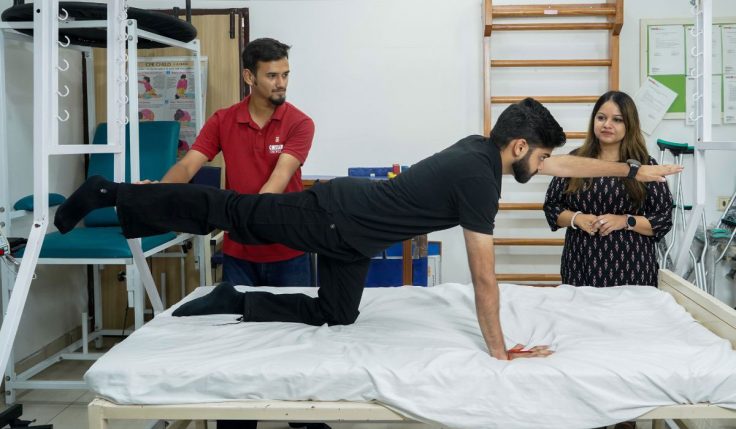
The current BPT curriculum includes biomechanics labs and wearable sensor training and AI-based movement analysis systems and digital health modules. Students who master these tools will achieve better career opportunities and provide superior medical services to their patients.
Conclusion
AI technology has begun to change the way wearable technology and traditional physiotherapy and wearable technology operate. The future of healthcare will use predictive methods to create personalized treatment plans for physiotherapy patients.
BPT students now have access to new career paths because of the technological progress that has occurred in physiotherapy practice. Students who learn technology first will become leaders who develop innovative rehabilitation methods and deliver advanced medical care to patients.
The Health Sciences programs at Chitkara University use Artificial Intelligence (AI) and augmented reality (AR) and virtual reality (VR) and wearable rehabilitation systems to transform physiotherapy education. The university teaches Smart Physiotherapy Technology and AI-based rehabilitation tools and motion-analysis systems throughout its entire curriculum. Students learn about AI applications in physiotherapy through the curriculum which teaches them to use AI for better diagnosis and clinical decision support and individualized treatment planning. Students who work with the Smart Computing track at Chitkara University can access AI-based healthcare innovations and healthcare analytics which helps them prepare for digital healthcare advancements.
The main emphasis at Chitkara University focuses on wearable technology physiotherapy devices and digital assessment tools which enable students to monitor patients in real-time and analyze data and sensor-based therapy. The university implements AI-powered platforms with AR–VR simulations and smart diagnostic tools in training modules to improve both clinical precision and student learning experiences. Modern technology integration will enable future physiotherapists to develop superior analytical abilities which will help them understand complete patient movement patterns and deliver evidence-based treatments. The university implements modern healthcare technologies to produce graduates who can succeed in clinical practice and sports therapy and wellness programs and digital healthcare environments.
The BPT program at Chitkara University provides students with an exclusive learning experience through its combination of clinical education and practical implementation. The 5-year BPT program consists of four academic years followed by a required one-year clinical internship which starts during the second year of study. The program follows international standards which allow graduates to receive the title “Dr.” because physiotherapists function as independent first-contact healthcare providers. The program teaches students through simulation labs and mannequin training and task-based education and evidence-based practice and real-world hospital and rehabilitation center experiences. The program teaches students to build clinical skills for patient-focused care through technological resources which leads to various career paths.
Also, read this blog post: Bachelor of Physiotherapy Degree (BPT): Course Duration, Fees & Career Scope in India
The university maintains strong relationships with Apollo and Medanta and Fortis and Nanavati and Centre for Sight and Deloitte and National Health Mission which provides its graduates with top-notch career placement opportunities. The university teaches students to combine traditional physiotherapy methods with AI technology and modern medical standards for developing their skills to direct healthcare services through technology.