
Are you a person with a scientific bent of mind and an ardent desire to help others? Then, enrolling for a BSc Nursing course will definitely provide you with a good start in your career. In this blog, we will go into the details of how to enroll in a Bachelor of Science in Nursing program when graduating from the science stream of 12th grade. We shall investigate the time it takes, the curriculum entailed in it, and the different job prospects provided.
BSc Nursing Course After 12th Science:
Any student who has passed the 12th grade in the science stream is eligible for a Bachelor of Science in Nursing. The undergraduate course would equip students with the necessary knowledge and skills in becoming successful nurses. In view of the fact that graduates need adequate equipping for a career in the healthcare industry, it combines academic learning and practical development.
BSc Nursing Course Duration:
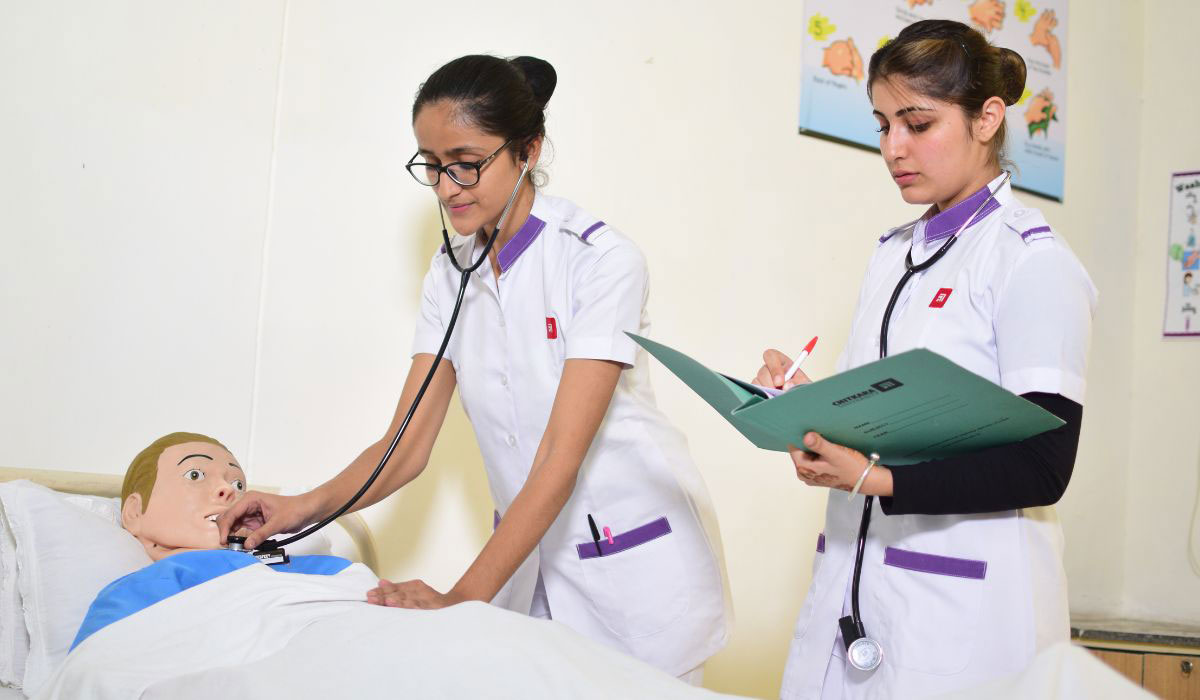
A Bachelor of Science in Nursing takes a duration of four years to complete. During these four years, students have to undertake intensive training in various nursing disciplines. They include studies on anatomy, physiology, pharmacology, nutrition, and psychology, among others. At class, they are provided with the theoretical part; for practical learning, however, they engage in internships at various hospitals and healthcare facilities.
BSc Nursing Course Curriculum:
The curriculum of a BSc Nursing course is designed to provide students with a comprehensive understanding of nursing practices and principles. Some of the key subjects covered in the course include:
- Anatomy and Physiology
- Microbiology
- Biochemistry
- Nutrition and Dietetics
- Pharmacology
- Nursing Foundation
- Medical-Surgical Nursing
- Obstetrics and Gynecology Nursing
- Pediatric Nursing
- Community Health Nursing
- Mental Health Nursing
- Nursing Research and Statistics
The combination of theoretical knowledge and practical training ensures that students are well-equipped to provide quality healthcare services upon graduation.
Career Opportunities:
Upon completing a BSc Nursing course, graduates have a wide range of career opportunities available to them. Some of the career paths that graduates can explore include:
- Staff Nurse in Hospitals
- Community Health Nurse
- Nursing Educator
- Nurse Administrator
- Nurse Researcher
- Military Nurse
- Home Health Nurse
- Critical Care Nurse
- Pediatric Nurse
- Psychiatric Nurse
These are just a few of the many career options available to BSc Nursing graduates. The demand for skilled nurses is high, both in India and abroad, making it a lucrative and rewarding career choice.
The Bachelor of Science in Nursing after the 12th in Science opens up a wide array of options in health care to students. Through a challenging curriculum and hands-on training, this class opens many possibilities to affect positive change in somebody’s life. If you have a great interest in the area of nursing and a dire desire to serve your community, then taking a Bachelor of Science in Nursing course is the best course for you.
Embark on a Rewarding Nursing Career with Chitkara University’s 4-Year B.Sc Nursing (Basic) Program
Chitkara School of Health Sciences offers a four-year B.Sc. Nursing (Basic) program at the undergraduate level. The Institute has been established with the specific purpose of training students in nursing and midwifery across a wide array of healthcare settings. This full-time program is spread over eight semesters. At the end of the four-year program, students shall be equipped with skills and knowledge for generalist nursing practice, including midwifery practice. This is evidenced by concentration on wellness, health promotion, illness management, and end-of-life care as provided in the curriculum, all intended to enable the attainment of critical competencies through practice first in state-of-the-art laboratories and then by training in carefully controlled simulations before being replicated in a hospital setting.
Admissions to the program are open only to those who have passed their XII examination with a minimum aggregate of 50%, wherein they would have taken Physics, Chemistry, and Biology compulsorily at the qualifying level. This program distinctly contains an element in the form of the six-month industrial training period. Through this, students gain hands-on work experience in the healthcare environment of the industry. Campus recruitment procedures are very good for such graduates; the placements range across some of the best hospitals in India.
Additional enhancement of the academic rigor and practical training in this program further takes place through a collaboration with Fortis Healthcare Limited, one of India’s leading integrated healthcare service providers. Students would get valuable clinical experience across the large network of healthcare facilities at Fortis and be suitably trained according to international standards. The B.Sc. Nursing (Basic) course is recognized by both the Indian Nursing Council and the Punjab Nurses Registration Council, thereby realizing the standards of good education.
Also, read this blog post: The Changing Face of Nursing: Diversity and Inclusion Trends 2024
They are also prepared enough at the point of graduation to take up most of the career opportunities that include Staff Nurse, Nurse Administrator, Community Health Nurse/Officer, Military Nurse, Midwife, and Nurse Educator. The very strong linkages between Chitkara University and the premier healthcare institutions and organizations, including AIG Hospitals, Apollo Hospital, Deloitte, Fortis, Medanta, and the World Health Organization—just to name a few—will raise their employment prospects significantly.
For a plethora of opportunities in a highly remunerative nursing career, Chitkara University provides an excellent academic base in the form of a B.Sc Nursing (Basic) program. Apply Now / Download the Brochure to know more about this prestigious course.