
A Paramedic training program helps students learn how to give patients medical care before they arrive at a hospital or during their time in the hospital. The role of a Paramedic or other Emergency Medical Professional is critical in many different health care settings, including ambulances, emergency departments, trauma centres, and others. Many paramedic training programs are short in duration and award students with the status of an Emergency Medical Technician (EMT), while others can be as long as a number of years to award a Bachelor’s degree in Emergency Care (Paramedic). Training a paramedic in India includes a combination of classroom studies and practical training, including actual clinical or on-the-job training. For example, the Healthcare Sector Skill Council defines the roles of various Emergency Medical Technicians in terms of giving emergency medical care to a patient who is suffering from a serious illness or injury and then transporting that patient to a health care facility safely.
Quick Answer: What Is a Paramedic Course?
A Paramedic training program is a Health Education program designed to train students in all aspects of Emergency care, first aid, patient assessment, basic life support and more within out-of-hospital environments such as accidents, heart attacks and other medical emergencies, plus patient transport.
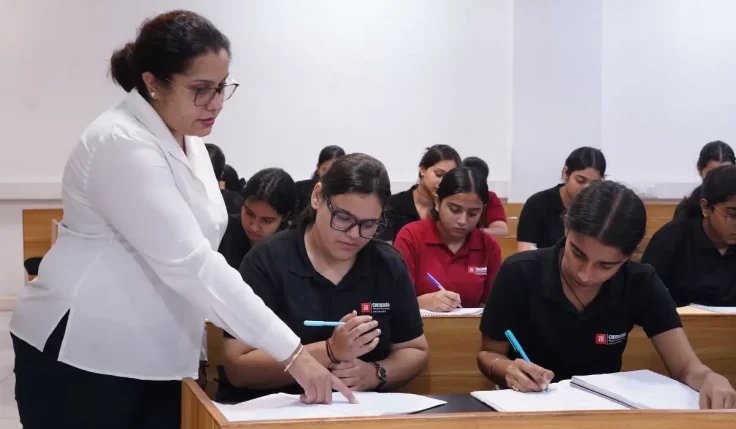
Some of these courses can be short-term and provide students with a certification within a few months, while others are undergraduate programs that last four years, such as the 4-year Bachelor’s in Emergency Care (Paramedic) program at Chitkara University offered within the School of Allied Health Sciences.
Emerging Paramedics could gain employment as Emergency Medical Technicians (EMT’s), Paramedics, Emergency Care Workers, as healthcare staff on an ambulance, or in a variety of other roles within the healthcare sector. Depending upon qualification, employer, experience, location and specific area of practice, salaries vary.
Types of Paramedic Courses in India
When referring to a paramedic course, there are a number of different qualifications that are offered. The main thing is to look for a course that is relevant to a student’s current status and future goals.
Emergency Medical Technician (EMT) Course
An EMT course is meant to teach students the fundamentals of emergency health care and for the EMT to give basic patient care before hospitalisation in an ambulance or in case of an emergency.
The Healthcare Sector Skill Council recognises the Emergency Medical Technician-Basic as a defined healthcare job role.
Advanced EMT / Paramedic Training
An Advanced EMT / Paramedic training goes beyond the basic emergency care and includes more in-depth clinical training. The HSSC recognises the EMT-Advanced as a defined healthcare job role and assigns it to NSQF Level 5 with 1,000 notional hours of classroom / skill-lab training and on-the-job training.
Bachelor’s Degree in Emergency Care
An undergraduate emergency care program could also be of interest if a more comprehensive undergraduate pathway is sought. The program includes a range of academic, practical as well as clinical training experiences.
Chitkara University offers a four-year degree in Emergency Care (Paramedic) as an allied health care program.
Paramedic Course Eligibility
The eligibility criteria for Paramedic qualifications vary from qualification to qualification and also from institution to institution.
The typical student joining an undergraduate paramedic program or emergency care program has completed Class 12 and has studied some Science subjects; the specific requirements can vary from university to university and even from program to program.
For Certificate and skills courses like EMT (Emergency Medical Technician), eligibility criteria could vary depending on the Qualification Framework of the particular training provider.
So it’s best to check current eligibility criteria for a particular University or Training Provider before applying for a course.
Typical eligibility may include:
Completion of Class 12 or equivalent
- Science background for many undergraduate healthcare programs
- Biology/Physics/Chemistry requirements where specified
- Meeting the minimum percentage prescribed by the institution
- Meeting any age or other admission requirements
Paramedic Course Duration
The paramedic course duration varies considerably depending on the qualification.
| Type of Course | Typical Duration |
| Short-term EMT/paramedic training | Several months |
| EMT-Basic skill qualification | Varies by training provider |
| Advanced EMT training | Varies by institution/framework |
| Bachelor’s in Emergency Care / Paramedic | Generally 4 years |
A four-year undergraduate program offers considerably more extensive academic and clinical exposure than a short-term certification.
For instance, Chitkara University’s current 2026 academic documentation lists Bachelor’s in Emergency Care (Paramedic) under its four-year allied healthcare programs.
What Do Students Learn in a Paramedic Course?
A good paramedic program combines medical knowledge, emergency response skills and practical experience.
Students may study:
- Human anatomy and physiology
- Emergency medical care
- First aid and basic life support
- CPR and AED procedures
- Trauma and accident management
- Patient assessment
- Airway management
- Oxygen therapy
- Vital-sign monitoring
- Emergency pharmacology
- Ambulance and pre-hospital care
- Disaster and mass-casualty management
- Infection prevention and control
- Patient transportation
- Communication and documentation
- Clinical and emergency-care procedures
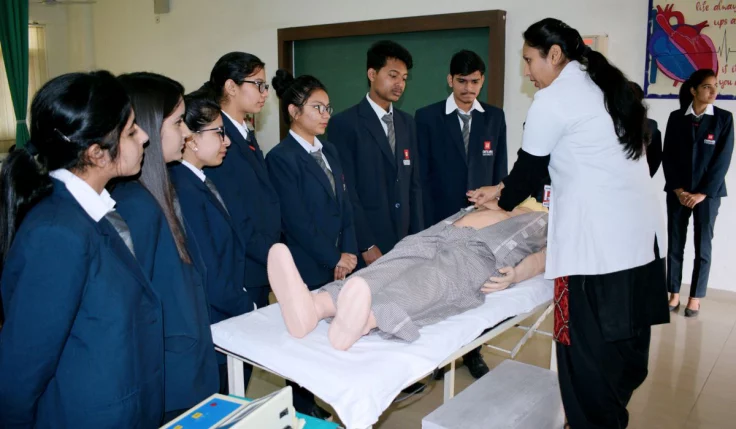
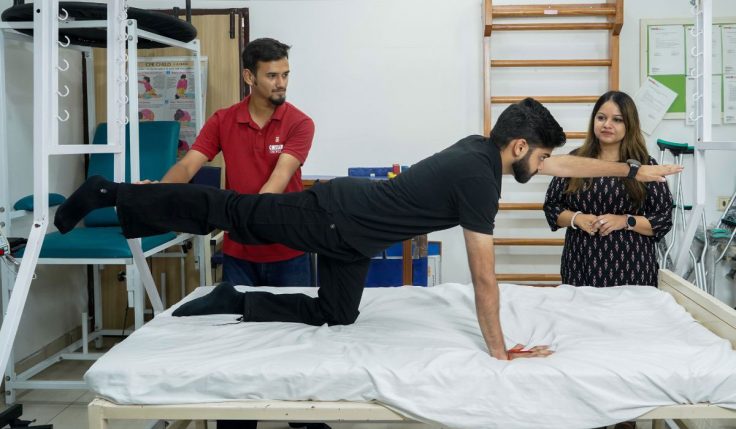
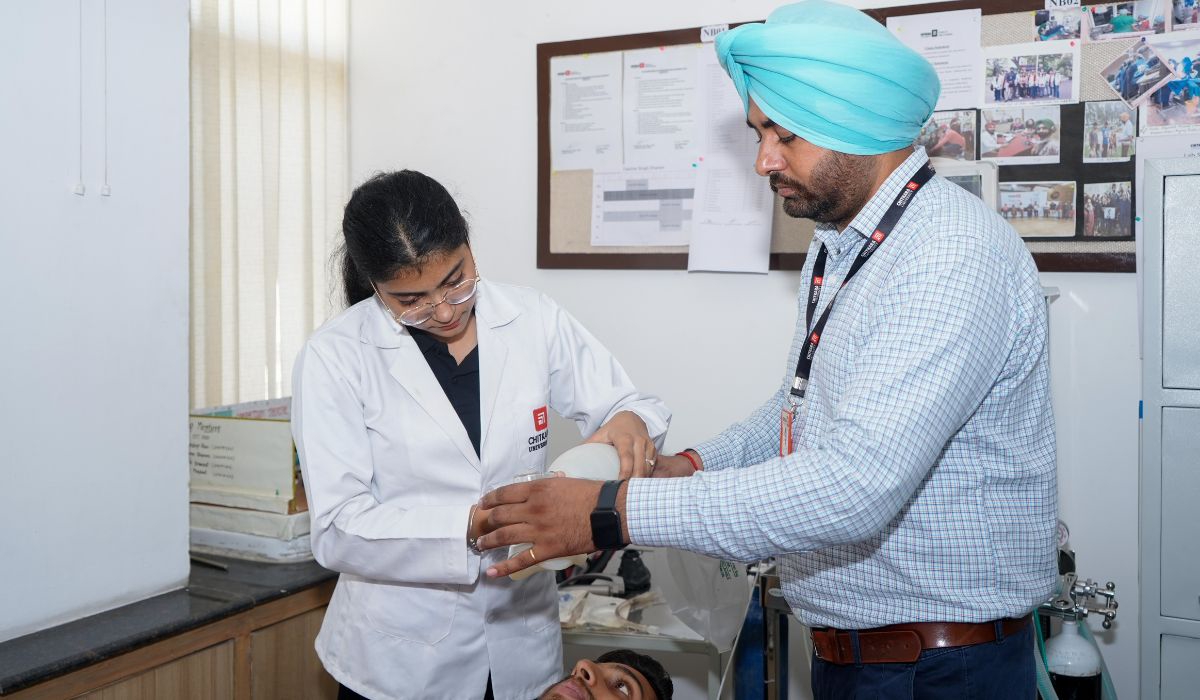
Practical training is particularly important because paramedic professionals need to apply their knowledge under pressure. HSSC’s EMT curriculum includes practical training, case studies, role play, emergency equipment and on-the-job/clinical training.
Skills Required to Become a Paramedic
Paramedics have skills beyond studying. Important skills are decision-making, communication, dealing with stress, teamwork, observation and fitness for handling emergency situations.
Paramedic Course Cost in India
The cost for a paramedic course depends upon qualification, college, place and facilities offered by it.
The cost of Short-term EMT certifications can be much less than a four-year degree. A 3-4 year Bachelor’s level program would be expected to cost more than a short-term certification, as in addition to the academic year, students are also expected to complete lab work, practical training and clinical work in various settings, including hospitals.
Students should look beyond tuition fees and compare:
- Tuition fees
- Laboratory and practical training facilities
- Clinical exposure
- Hospital affiliations
- Internship opportunities
- Accommodation and other charges
- Placement support
- Equipment and simulation facilities
Note: There is no fixed cost for the Paramedic course in India. You should refer to the current fee structure of the institution you are applying to.
Paramedic Salary in India
The paramedic salary in India varies by qualification, experience, location and employer. Freshers working as EMTs can typically earn around ₹2.3–₹2.9 lakh per year (₹19,000–₹24,000 per month), while experienced paramedics may earn ₹3–₹5 lakh+ annually. Senior or specialised professionals can earn ₹5 lakh or more per year.
| Experience | Indicative Salary |
| Fresher EMT | ₹2.3–₹2.9 LPA |
| 1–3 years | ₹2–₹4 LPA |
| Experienced Paramedic | ₹3–₹5 LPA+ |
| Senior/Specialised roles | ₹5 LPA+ |
These are indicative ranges, as salaries vary across employers and cities. Beyond starting pay, students should consider clinical exposure, practical training, hospital affiliations, certifications and career progression when choosing a paramedic course.
Career Scope After a Paramedic Course
The need for trained and competent staff in emergency health care will increase as more hospitals, emergency departments, ambulances, and trauma care centers are opened.
Roles available to graduates depend on the level of training completed as well as relevant work experience.
Emergency Medical Technician
Provides emergency medical assistance and supports patients during transportation to healthcare facilities.
Paramedic
Pre-hospital emergency care provided to patients and stabilisation of patients prior to and during ambulance transport to a healthcare facility.
Emergency Care Professional
Emergency Care Professional: Works within emergency care environments to support medical teams dealing with urgent cases.
Ambulance Healthcare Professional
Works as part of an ambulance or emergency response team.
Trauma-Care Support Professional
Supports emergency teams in trauma and accident-care settings.
Emergency Department Support Roles
Opportunities also exist for professionals in emergency departments of hospitals.
Paramedic Course vs Nursing Course
Although paramedics and nurses both work in healthcare, their training and responsibilities are different.
| Parameter | Paramedic Course | Nursing Course |
| Primary focus | Emergency and pre-hospital care | Comprehensive patient care |
| Work environment | Ambulances, emergency services, hospitals | Hospitals, clinics and community healthcare |
| Key strength | Rapid emergency response | Continuous patient care |
| Patient interaction | Often emergency-driven | Often continuous |
| Important skills | Emergency response, trauma care, stabilisation | Patient care, clinical procedures, nursing management |
| Career pathway | EMT, paramedic, emergency-care roles | Staff nurse and specialised nursing roles |
Students should choose according to their interests. Those who enjoy emergency response, rapid decision-making and high-intensity healthcare environments may find paramedic education particularly suitable.
Future Scope of Paramedic Courses in India
There is a growing need for emergency healthcare, as healthcare delivery becomes faster, trauma care is provided and access to emergency health care increased.
India’s Healthcare Sector Skill Council continues to endeavour to formalise qualifications for careers in emergency healthcare. The organisation’s 2026 training calendar, currently available for several states, details qualifications such as the Emergency Medical Technician-Basic, the Emergency Care Assistant and the Pre-Hospital Trauma Assistant.
There are good opportunities for students who have academic qualifications and also good practical skills to enter these healthcare careers.
As a future scope there will be greater opportunity for individuals familiar with technology-enabled emergency care, patient monitoring and tracking, digital healthcare and technology enabled ambulances and evidence-based practice in emergency care.
Best Universities and Programs for Paramedic Education
Here’s a note to prospective students looking at comparing institutions to study Emergency Health Care (the generic term that we use for the course). The name of the course is not all there is to consider when looking at a potential learning ecosystem for Emergency Health Care.
Key factors include:
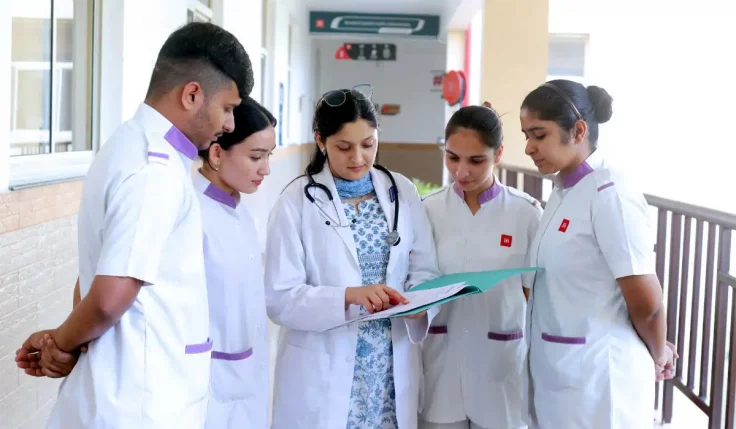
Clinical exposure Are students sent on clinical placements to real hospitals and emergency departments to gain experience?
Practical training How much simulated practice with realistic equipment will be provided?
Faculty expertise Experienced healthcare faculty can improve academic and practical learning.
Industry connections Strong connections to the hospitals and healthcare organisations in the institution’s network.
Internships Structured clinical or on-the-job training is valuable.
Career support Placement, human resources, employers, alumni network and other support structures to help place students in appropriate employment.
Curriculum relevance Does the course content reflect the current practice in emergency care?
Other allied health programs that you may be interested in are the Bachelor’s Degree in Emergency Care (Paramedic) program at Chitkara University. This is a 4-year program as documented in the University’s 2026 programme documentation.
Is a Paramedic Course a Good Career Choice?
A paramedic course can be a great health care career for people who are interested in entering health care and are able to function in a fast paced, emergency type of setting.
The role of a Paramedic is to be responsible, disciplined and able to maintain calm in situations. The ability to deliver practical competence in the field is paramount, and students would do well to research all courses in full, prioritising those that offer a great deal of practical hands-on learning as well as clinical experience.
The Paramedic course is of interest to students wishing to enter the Health Care Industry. As a job that combines medical knowledge, Emergency Work, Hi-Tech and Hands-On Patient Care, the Paramedic Education is a good starting point for students in Health Care.
Conclusion
A Paramedic course is a very practical route into a rapidly evolving area of health care. There are a number of routes to becoming a Paramedic, including Emergency Medical Technician (EMT) courses through to emergency care degrees at Bachelor level. The length and cost of a Paramedic course will vary, but it is best to look for recognised Qualifications and look for courses that provide clinical experience, practical training and support to help you gain employment as a Paramedic in a variety of settings, including hospitals, ambulances, trauma centres, and other emergency care organisations.
Paramedic Course at Chitkara University: Course Details, Eligibility, Fees and Career Scope
Bachelor of Emergency Medical Technologist (Paramedic) – 4 Year Degree Program is a 4 Year Degree program designed to educate students to deal with medical emergencies and trauma situations and prepare them to work as Emergency Health Care Workers in Hospitals, Ambulances, Trauma Care Centers and Disaster Management Situations. In the first two years of the program, students study basic medical sciences in detail. In the last two years of the program, students get practical experience of clinical skills in actual hospital and health care settings, trauma response and disaster management by means of simulated patient contact in a specially designed simulator lab, trauma care workshops, practical training in the field and actual work experience through structured internship in hospitals and health care services, ambulance services and disaster management units etc. Industry linkages are created to correlate the knowledge acquired in the classroom with the practical situation of emergency health care.
The Paramedic Course Eligibility is as follows – The student should have completed the 12th Class examination, with Physics, Chemistry and Biology as compulsory subjects. The candidate should complete 17 years of age on or before 31 December of the year of admission. The student is required to appear for a Personal Interview. The Paramedic Course is conducted over 8 semesters. The current fees for the Paramedic Course for the student commencing studies from the 1st Semester are INR 75,000/- (incl. of ETS/CAS charges) for the 1st & 2nd Semesters and INR 70,000/- for 3rd Semester onwards till 8th Semester. Hence, total program fees for the Paramedic Course would be approximately INR 5.70 Lakh (approx) only, which is subject to change as per university policy. Students of the program are provided with practical and experiential learning, exposure to professionals in emergency care and a chance to develop skills required to ensure the safety of the patient, efficient communication during emergency situations, trauma care in various situations and providing critical care in a high-stress environment.
The career scope of a Paramedic course is very wide in hospitals, ambulance services, emergency departments, trauma care centres, and in disaster management departments. After completion of the 4-year program, students can get placed in various roles such as an Emergency Medical Technician, Paramedic, Trauma Response Coordinator, Rescue Worker, Disaster Management Specialist, Emergency Care Coordinator, Ambulance Services Supervisor and many more. The university also provides the students placement assistance and helps the students in getting placed in best of the health care organisations and in emergency services across the country. Some of the listed recruiters for the university are AIG Hospitals, Apollo Hospital, Aster Hospital, Fortis, Medanta, Nanavati Hospital, National Health Mission, Dr Lal PathLabs and Pathkind Labs, etc. There is a tremendous need of trained emergency health care professionals in the country, and hence this program provides a great opportunity for students to build a career in critical care.