Introduction
Why Interior Design as a Career Option? A Career in interior design enables you to develop your creative skills, make acquaintance with different technologies and get familiar with human behaviour in space. To practice as an interior designer, one requires a degree in interior design, such as a B.Des in Interior Design. What does one do after completing a degree in interior design? What are the various options available to practice as an interior designer? What is the salary of an interior designer in India? What is the scope of interior design in India? We attempt to answer all these questions by outlining different career options available to a student who has completed a B.Des in Interior Design.
Quick Answer: What Can You Do After a B.Des in Interior Design?
A degree in B.Des in Interior Design enables the graduate to explore and work in various residential, commercial, hospitality, retail, healthcare and exhibition design sectors.
Common interior design career options include:
- Interior Designer
- Interior and Spatial Designer
- Residential Interior Designer
- Corporate Interior Designer
- Exhibition Designer
- Furniture Designer
- Visual Merchandiser
- Production Designer or Art Director
- Lighting Designer
- Space Planner
- Sustainable Design Specialist
They can be employed in interior design studios, architecture firms, real estate companies, hotels, restaurants, retail companies, etc. With due experience and expertise, one can even start his/her own interior design practice..
Understanding B.Des in Interior Design
A Bachelor of Design (B.Des) in Interior Design is an undergraduate degree program that enables students to develop interior environments through the Bachelor of Design degree program in Interior Design.
Interior design extends beyond the choice of furniture, colours, or dozens of decorative items. As a profession, Interior Design refers to the understanding of a space and its users, and incorporates materials, light, construction, technology and aesthetics to create a functional space.
The B.Des degree in Interior Design is primarily a theoretical degree, which is supported with studio-based learning and practical work. The students develop skills to research a design problem, to develop concepts and to create designs for spaces. They also develop skills to select materials and to create technical drawings and visualisations to communicate their design ideas.
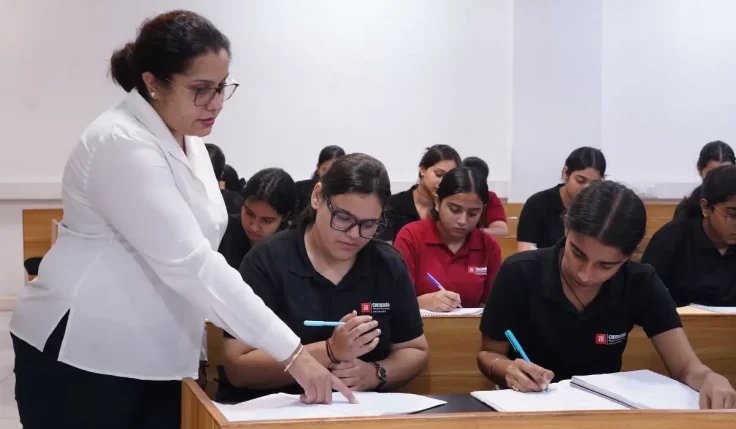
Chitkara University offers a four-year-long B.Des in Interior Design program. The program covers key areas of design such as design principles, space planning, materials and finishes, lighting design, construction methods and technologies for designing interiors, and sustainable design approaches. The program aims to inculcate design thinking and uses a combination of lectures and studio work to ensure that students are exposed to workshops, live projects, internships and industrial visits.
What Students Learn in B.Des Interior Design
The B.Des in Interior Design course covers creative, technical and practical skills and includes subjects such as:
- Design Fundamentals: Principles, composition and aesthetics.
- Space Planning: Functional layouts and user movement.
- Materials & Finishes: Properties and applications of interior materials.
- Lighting & Furniture: Lighting concepts, ergonomics and furniture design.
- Interior Construction: Methods and technical execution.
- Digital Design: CAD, BIM, 3D modelling, rendering and visualisation.
- Sustainable Design: Eco-friendly materials and responsible design.
- Design Theory: History and evolution of interior design.
Interior Design graduates will have acquired both creative and technical skills for practicing Interior Design professionally.
Skills Required for a Career in Interior Design
Many successful interior designers are creative, but also highly skilled with the inside information required to bring a design to life. Their creativity is coupled with lots of useful knowledge that enables them to solve design problems.
Important skills include:
-
Creative Thinking
- Residential: Personalised homes and living spaces.
- Workplaces: Flexible, collaborative and employee-focused offices.
- Hospitality: Hotels, resorts, restaurants and cafés.
- Retail: Brand-focused spaces and customer experiences.
- Healthcare: Functional, accessible and user-friendly healthcare environments.
- Sustainable Design: Eco-friendly materials and energy-efficient interiors
- Digital Design: Use of CAD, BIM, 3D modeller, renderer and digital fabrication.
- Hospitality design
- Workplace design
- Sustainable design
- Furniture design
- Exhibition design
- Spatial design
- Visual merchandising
- Set design
- 3D visualisation
- Design research
As creative thinkers, they develop unique design solutions and fulfil the needs of customers and users.
Spatial Understanding
The ability to creatively and technically arrange items such as furniture, people, and lighting within a space.
Technical Drawing and Digital Skills
The ability to use CAD, 3D models, renderings and other forms of visualisation to present and communicate designs.
Material Knowledge
Understanding of the different materials, their surface finishes, durability, maintenance and applications.
Communication
Interior designers deal with many different people, including clients, architects, contractors, and suppliers, to name a few.
Project Management
Design projects are delivered within set budgets and time frames and involve suppliers, vendors and a variety of materials and their execution.
Sustainability Awareness
With increasing focus on environmentally responsible construction and materials, sustainability is becoming a more prominent design consideration.
Career Opportunities After B.Des Interior Design
Many interior design graduates go on to find work in a variety of roles such as:
Interior Designer – Designs, plans and produces functional and aesthetically valuable interior spaces for houses, offices, hotels, showrooms, shops and other spaces and buildings.
Interior & Spatial Designer – Space planning, movement and user experience.
Residential Interior Designer – Creates interior spaces for homes and personal spaces, including apartments.
Corporate Interior Designer – Creates workspace layouts and designs meeting rooms, etc.
Hospitality Designer – Designer of Hotels, Restaurants, resorts, and Cafe spaces, taking into consideration Functionality and Experience.
Exhibition Designer – Creates spaces for exhibitions, museums, galleries and events.
Furniture Designer – Creates functional and beautiful furniture using appropriate materials for its production.
Visual Merchandiser – Creates visual displays and makes visual merchandising for stores and designs environments for customers to have best retail experience.
Production Designer/Art Director – Creates the setting & atmosphere for films, television, theatre & advertisements.
Chitkara University details some of these options for potential career paths for B.Des Interior Design graduates.
Interior Designer Salary in India
Salary for an interior designer in India depends upon experience, place of work, employer, portfolio, skills and specialisation.
Information from Indeed India’s average salary data for interior designers, updated 2 Sep 2026, reports the average base salary of an interior designer to be ₹23,685 per month based on 464 salary reports. Salary reported for an interior designer varies between ₹10,614/ month (lowest salary, how much they can earn) and ₹52,853/ month (highest salary, how much they are paid) depending upon the designer’s experience, the designer’s location and the designer’s employer.
Indicative salary progression
| Career Stage | Indicative Salary Range |
| Entry-level / Junior Interior Designer | ₹2.5–4 LPA* |
| Interior Designer with experience | ₹4–8 LPA* |
| Senior Interior Designer | ₹7–12+ LPA* |
| Design Manager / Specialist | Varies significantly |
Salaries are indicative and can differ greatly from the figures above depending on prior experience, portfolio, location, employer and area of specialism.
When you are searching for an interior designer salary in India, it is more important to consider the long term skill you are going to acquire versus the salary you are going to get in the very first offer letter. A strong portfolio, experience and specialised technical skills help an interior designer to grow in his or her career.
B.Des Interior Design vs Other Design Careers
Interior design is one of several design disciplines available to students after Class 12. Understanding the differences can help students identify the area that aligns with their interests.
| Design Field | Primary Focus | Potential Career Areas |
| B.Des Interior Design | Physical spaces and environments | Interior Designer, Spatial Designer, Exhibition Designer |
| B.Des Product Design | Products and physical objects | Product Designer, Industrial Designer |
| B.Des Communication Design | Visual communication and media | Graphic Designer, Brand Designer, Visual Designer |
| B.Des Fashion Design | Clothing and fashion products | Fashion Designer, Fashion Stylist, Product Developer |
| B.Arch | Buildings and architectural design | Architect, Architectural Designer, Urban Design |
Students who are particularly interested in spaces, materials, furniture, lighting and human interaction with physical environments may find interior design particularly relevant.
Future Scope of Interior Design
There are many growing sectors within the interior design scope such as:
Career Growth After B.Des Interior Design
The B.Des degree is a starting point for designers’ careers, not the end of it.
A possible career progression could look like:
B.Des Graduate → Junior Designer → Interior Designer → Senior Designer → Design Lead/Manager → Independent Designer or Studio Founder.
Graduates can also specialise in areas such as:
Some professionals even choose to proceed to postgraduate level in order to acquire more in-depth knowledge of certain aspects of design.
Conclusion: Building a Career in Interior Design
The Bachelor’s Degree in Interior Design can open up multiple career paths. Interior Designers can practice in residential, commercial, hospitality, retail, health care, exhibition and many other environments. They are creative and have a technical knowledge of building and problems solving, and have an insight into how people use spaces.
Beyond the role of an interior designer, graduates can look into various careers like Spatial Design, Furniture Design, Exhibitions, Visual Merchandising, Production Design for Hospitality, etc.
Interior designer salary in India varies based on designer’s experience in years, salary in city, designer’s employer and designer’s expertise in area of specialisation. The interior design scope is evolving with new applications in interior design emerging due to evolving lifestyles, changing workplace, increasing focus on sustainability and adoption of latest technologies.
The B.Des in Interior Design program is ideal for students who enjoy designing interiors and want to incorporate creative vision with technical skills in order to practice interior design.
Explore the B.Des in Interior Design at Chitkara University to understand its curriculum, eligibility, pedagogy and career prospects.
B.Des Interior Design at Chitkara University
The B.Des (4 years) degree in Interior Design aims at providing a holistic learning experience to students enabling them to design functional, aesthetic and meaningful interior spaces. We have developed curriculum which will help student to plan space, apply fundamentals of design, select materials and finishes, design furniture, apply principles of interior construction, apply principles of sustainable design and design to communicate. The interior design program aims at developing student’s knowledge and skills required to develop interior spaces of residential, commercial, hospitality, retail and public spaces.
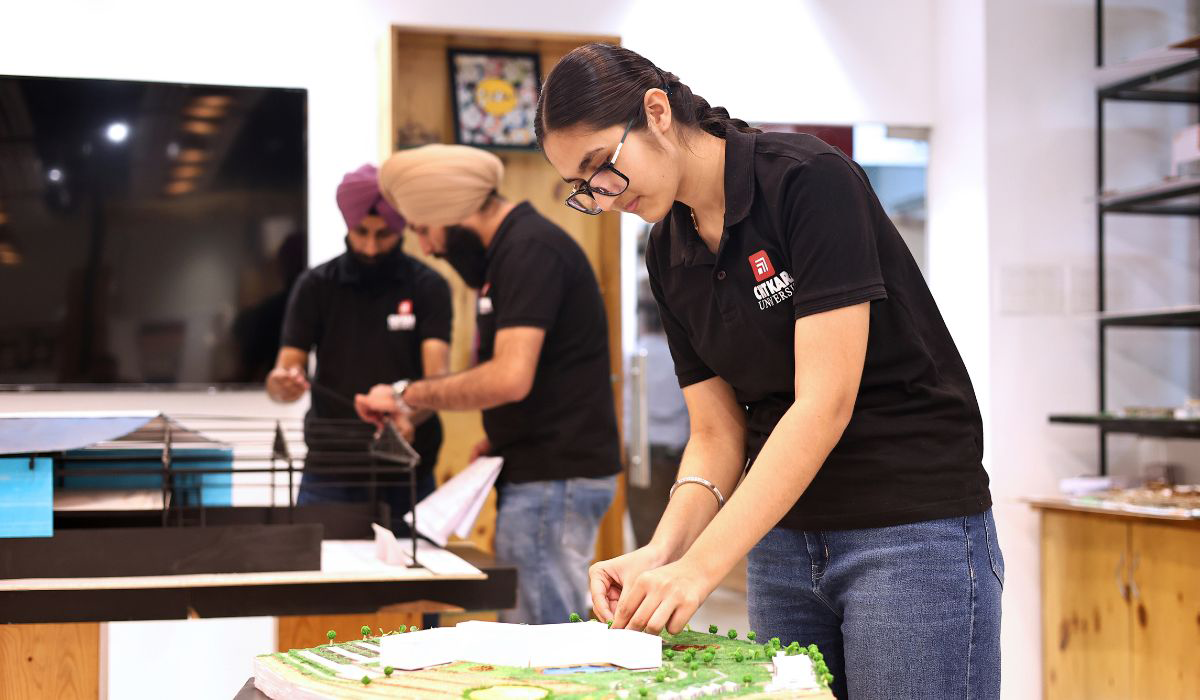
Hands-on experience is at the core of the Interior Design program and aid students to acquire skills necessary to work with various design tools such as AutoCAD, 3ds Max, Photoshop and SketchUp. The expertise is further enhanced by nurturing skills required in drafting, 3D modeling, rendering and other visual media. Furthermore, experiences gained in design studios, assignments, juries, workshops, guest lectures and industrial visits are aimed at developing Interior Designers with strong portfolios and skills, capable to work on real-life projects and understand the process of designing spaces, from conceptualisation to execution.
After completing the 4 years of Bachelor of Design degree program in Interior Design, the graduate can take up various interior design careers such as an Interior Designer, Interior and Spatial Designer, Residential or Corporate Designer, 3D Visualiser, Furniture Designer, Exhibition Designer, Design Consultant etc. The graduate can get employed in architecture and interior design firms, real estate companies, hotels, shopping malls, furniture companies, exhibitions companies and other design companies. The graduate can also opt for higher education or can start his/her own design practice after completing the Bachelor of Design degree program in Interior Design. For more details regarding eligibility, admission procedure, fees and placement etc. kindly visit the website of Chitkara University.