
Artificial Intelligence (AI) is no longer a distant futuristic idea — it has become a transformative force with a growing impact across industries worldwide. From improving healthcare diagnostics to enabling autonomous vehicles, AI is creating unprecedented opportunities for innovation and efficiency. With the global AI market expected to surpass $1.8 trillion by 2030 and India emerging as a leading hub for AI talent, understanding the scope of artificial intelligence is crucial for students, professionals, and businesses aiming to stay ahead in this rapidly evolving technological landscape.
Quick Summary: Future of Artificial Intelligence
Artificial Intelligence is transforming industries such as cybersecurity, healthcare, transportation, and data science. With increasing demand for AI specialists, programs like B.Tech in AI and Machine Learning offer high-impact career opportunities. India is poised to become a global AI talent hub due to its skilled youth and growing digital infrastructure.
The B.Tech with specialisation in Artificial Intelligence programme equips students to master machine learning, automation, and data-driven decision-making. Learners gain hands-on experience with essential algorithms and methodologies, preparing them for real-world AI applications across industries.
Artificial intelligence is the science and engineering of creating intelligent machines capable of tasks that traditionally require human intellect, such as perception, speech recognition, decision-making, and language translation. AI is a key discipline of computer science, shaping the future scope of technology and driving innovations across sectors.
Also Read: Artificial Intelligence: Empowering Today And Tomorrow
Scope of Artificial Intelligence
The scope of artificial intelligence extends beyond current applications like speech recognition, robotics, and language processing. Future AI innovations are expected in autonomous vehicles, predictive healthcare, smart cities, and sustainable energy solutions. Students and professionals who master AI today will gain access to one of the fastest-growing career domains globally.
Learning AI requires understanding machine learning, programming languages, and foundational sciences like physics, biology, and cognitive psychology. Chitkara University integrates these elements into its B.Tech AI and Machine Learning courses, enabling students to pursue lucrative opportunities in AI, data science, and robotics.
Career options in AI include AI engineers, data scientists, robotics specialists, cybersecurity analysts, and game programmers. Mastering at least one machine learning language or framework is highly beneficial for long-term career success.
Also Read: Artificial Intelligence: Redesigning Design?
Exploring Career Options Across Industries
AI in Science and Research
AI is revolutionizing research by processing massive datasets faster than human capabilities. In drug development, AI accelerates molecular analysis and predictive modeling. Biotechnology researchers employ AI to optimize microbial processes. The future of artificial intelligence in science promises even more groundbreaking discoveries.
AI in Cybersecurity: Future Scope & Job Opportunities
Cybersecurity relies heavily on AI to detect threats, analyze patterns, and support real-time decisions. Cognitive AI, coupled with machine learning and deep learning networks, improves threat detection over time. This makes AI an essential tool for organizations aiming to protect sensitive data in an increasingly digital world.
AI in Data Analysis
Machine learning algorithms enhance data analysis by identifying patterns and insights that human analysts might miss. AI tools are faster, scalable, and precise, enabling professionals to make data-driven decisions efficiently. Platforms like Google Analytics leverage AI to help webmasters optimize performance automatically.
AI in Transportation
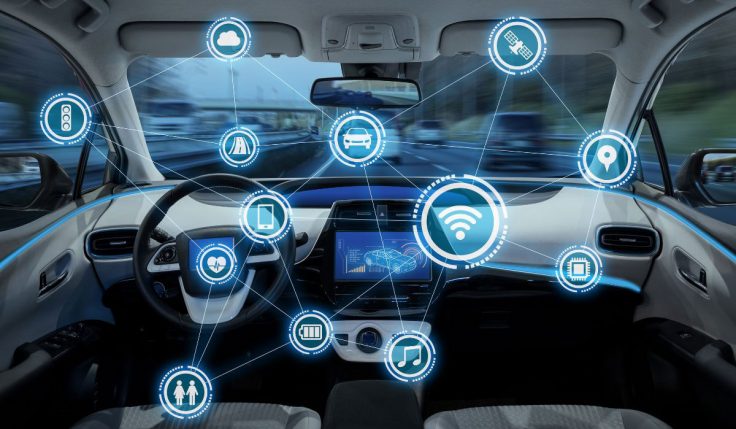
AI has long been part of transportation — autopilot systems for planes, ships, and spacecraft have existed since the early 20th century. Today, autonomous vehicles represent the next frontier, promising benefits such as reduced traffic accidents, lower emissions, and improved mobility. The future of artificial intelligence in transportation will reshape the way we move and commute.
AI in Home Assistance
Smart home assistants like Amazon Echo, Google Home, Apple Siri, and Microsoft Cortana showcase AI’s growing presence in households. These AI systems continuously improve voice recognition, perform tasks, and integrate seamlessly with daily life. As AI evolves, smart homes will become more intuitive and proactive.
Also Read: Top 5 Jobs After B.Tech in Data Science and Artificial Intelligence
Conclusion
India, with its large, skilled workforce, is uniquely positioned to lead in the AI revolution. The country has immense potential to contribute to global AI innovations in healthcare, smart cities, finance, and transportation. The future of artificial intelligence promises transformative impacts, and students, professionals, and businesses that embrace AI now will shape the next wave of technological advancement.