
Students often associate B.Tech in Electronics and Communication Engineering with printed circuit boards, wires, and soldering tools. While these basics remain essential, the field extends far beyond traditional circuit-level work. Today’s communication networks, smart devices, automation systems, space technologies, electric vehicles, and digital infrastructure are all driven by advancements in electronics and communication. As industries become more connected and technology-driven, the scope of ECE has expanded rapidly. It now plays a critical role in building intelligent systems, enabling high-speed connectivity, and supporting sustainable technological growth, making it one of the most progressive and future-oriented engineering disciplines.
B.Tech in Electronics & Communication Engineering: Quick Overview (2026)
-
Degree: B.Tech / B.E. in Electronics & Communication Engineering
-
Duration: 4 Years
-
Core Areas: Electronics, Communication, Embedded Systems
-
Emerging Tech: VLSI, IoT, 5G/6G, AI-enabled electronics
-
Career Scope: Telecom, Semiconductor, Automotive, IT, Defence
-
Internship: Mandatory (6–12 months)
-
Future Demand: Very High (India & Global)
The technical aspects of ECE course details require students to develop their knowledge base through a solid educational foundation.
The ECE course details follow a structured plan which combines essential electronics knowledge with state-of-the-art communication systems education. The first steps for students include studying circuit theory and analog and digital electronics and semiconductor devices. The students advance through their studies by learning about microprocessors and microcontrollers and embedded systems and signal processing and communication systems and control systems and network technologies.
The current ECE programs incorporate new fields which include VLSI design and IoT and wireless communication and 5G/6G technologies and robotics interfaces and AI-enabled electronics and smart sensor systems. The complete curriculum provides students with skills that enable them to work with multiple technologies instead of limiting them to one specific system which they can use in different industrial settings.
ECE Engineering Scope in India and Global Industries
The ECE engineering scope contains various responsibilities which become more complicated because of technological progress at different development stages. ECE professionals are integral to industries such as telecommunications, IT and software services, semiconductor manufacturing, defence and aerospace, automotive electronics, renewable energy, healthcare technology, and consumer electronics.
ECE engineers create communication networks and embedded systems while they develop satellite communication systems and medical imaging equipment and smart grid infrastructure which supports the operational systems of contemporary society. With the rise of automation, Industry 4.0, and connected ecosystems, Electronics and Communication Engineering careers are now central to innovation and national infrastructure.
ECE Course Structure & Subjects
-
Circuit Theory & Analog Electronics
-
Digital Electronics & Semiconductor Devices
-
Signals & Systems
-
Microprocessors & Microcontrollers
-
Embedded Systems
-
Communication Systems
-
VLSI Design
-
IoT & Wireless Communication
-
Control Systems & Network Technologies
Top Jobs After B.Tech ECE in 2026
One of the biggest advantages of ECE is the wide range of jobs after B.Tech ECE. Graduates can work as Electronics Design Engineers, Embedded Systems Developers, Communication Engineers, Network Engineers, VLSI Engineers, RF Engineers, IoT Specialists, and Technical Consultants.
ECE graduates who complete their core electronics work find success in software development and data analytics and cybersecurity and product management because their analytical abilities and problem-solving competencies serve them well. The government sector along with public sector undertakings and research organizations and hardware innovation start-ups based on deep-tech represent available career paths.
Higher Studies, Research, and Global Opportunities
The ECE engineering scope also extends strongly into higher education and research. Students who graduate from this program can enroll in M.Tech and MS and PhD programs which focus on communication systems and microelectronics and signal processing and robotics and AI-integrated electronics. The ECE program offers students exceptional international career prospects because it prepares them to work in semiconductor technology and telecommunications and advanced electronics manufacturing industries which operate worldwide.
Future Scope of B.Tech in Electronics and Communication Engineering
The future-oriented nature of Electronics and Communication Engineering careers makes them stand out from other career paths. The development of 5G and 6G communication systems and artificial intelligence and autonomous vehicles and electric mobility and space exploration and smart healthcare devices and sustainable energy systems requires extensive expertise from ECE professionals. The digital transformation of industries together with automation will create an ongoing need for more ECE professionals who possess specialized skills.
ECE vs CSE vs Electrical Engineering
| Feature | ECE | CSE | Electrical Engineering |
|---|---|---|---|
| Core Focus | Electronics + Communication | Software & Computing | Power & Electrical Systems |
| Hardware + Software | Yes | Mostly Software | Mostly Hardware |
| Emerging Tech | IoT, VLSI, 5G, AI hardware | AI, Data Science | Smart grids, EV power |
| Career Flexibility | Very High | High | Moderate |
| Industry Demand (2026) | Very High | High | High |
| Ideal For | Tech + communication lovers | Coders | Power & energy focused |
Also Read : Can Electronics & Communication Engineering Still Guarantee a Future-Proof Career?
Conclusion
The B.Tech in Electronics and Communication Engineering provides students with knowledge that extends beyond circuit studies because it leads to creative work and communication systems and technological advancement. The program provides complete ECE course details alongside a broad range of ECE engineering specialties and multiple career paths for B.Tech ECE graduates who want to advance their careers. Students who want to combine hardware with software and communication technologies will find ECE provides them with access to numerous career possibilities which will create meaningful changes in their professional lives.
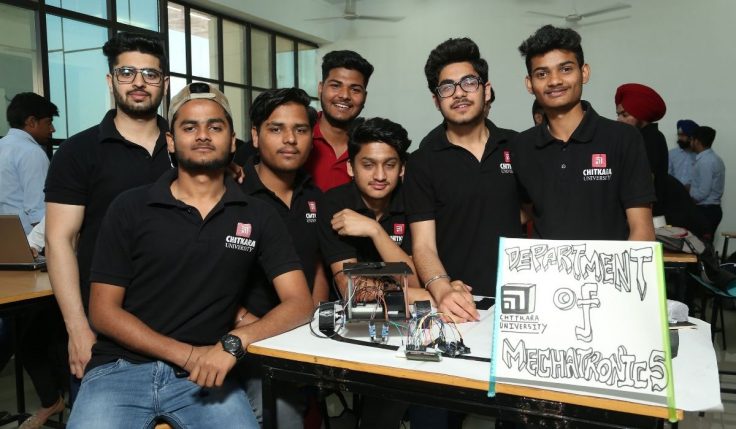
The 4-Year B.E. in Electronics & Communication Engineering (ECE) program at Chitkara University uses a curriculum which supports modern technological advancements and new industry requirements in electronics. The program received direction from inustry professionals who developed a curriculum which taught students basic technical abilities and modern skills required for success in the fast-changing high-tech industry of today.
The undergraduate program provides students with complete education to create and operate and maintain dependable electronics and communication systems. The curriculum includes fundamental subjects which include embedded systems and wireless and satellite communication and VLSI fabrication and optical communication and biomedical signal processing. The program provides students with experience working on modern technological systems which include autonomous vehicles and drones and robotics and automation and smart energy systems. The program enables students to develop practical skills with advanced industrial applications through their studies of telecommunications and automotive and healthcare and power electronics and mobile communication technologies.
The B.E. ECE program distinguishes itself through its combination of laboratory education with industrial training for students. Students must complete a 6-month to 1-year industrial training which forms an essential part of their curriculum to experience practical work environments and learn about industrial operations. Students gain access to state-of-the-art laboratories which enable them to work with industry-standard tools and software and equipment from global technology partners including Nvidia and Texas Instruments and Micron. The program enables students to develop their problem-solving abilities and innovation skills through hands-on work with industry-grade tools and software and equipment.
The program produces graduates who can enter various fulfilling careers across telecommunications and IT sectors and manufacturing and R&D fields and public and private sector institutions. The university provides students with excellent recruitment opportunities at their campus and job placement services that lead to positions at Fortune 500 companies. Students who graduate from this program can find work as Embedded Systems Engineer or Electronics Design Engineer or Telecom Engineer or Network Planning Engineer or Hardware Engineer or R&D Engineer. The B.E. in Electronics & Communication Engineering at Chitkara University provides students with industry-aligned learning and hands-on experience and future-oriented specializations which lead to meaningful engineering positions that matter worldwide.
FAQs
The program enables students to access top job opportunities because it runs campus recruitment which results in employment at Fortune 500 companies.