
Civil engineering in India is undergoing a major transformation driven by AI, automation, and smart infrastructure. As of 2025, India’s infrastructure sector is one of the fastest-growing globally, fuelled by the Smart Cities Mission, National Infrastructure Pipeline (NIP), and massive investments in highways, metro systems, and green buildings.
Key facts at a glance:
- Entry-level salary (core roles): ₹4–7 LPA
- Entry-level salary (AI/BIM specialised): ₹6–12 LPA
- Experienced professionals: ₹25–50 LPA and above
- Top recruiters: L&T, NHAI, Shapoorji Pallonji, DMRC
- High-demand skills: BIM, AI/ML, AutoCAD, Drone Technology
- Key growth sectors: Smart Cities, Green Buildings, Highways, Airports
- Government roles: NHAI, PWD, CPWD, Indian Railways
- Best programme: B.E. Civil Engineering with AI & ML — Chitkara University × L&T EduTech
Civil engineers who combine traditional domain knowledge with AI, Building Information Modeling (BIM), and smart infrastructure skills are among the most sought-after professionals in India’s construction and urban development sectors in 2026.
Is Civil Engineering a Good Career in India in 2026?
Yes. Civil engineering offers strong career prospects in India, particularly for graduates with skills in AI, BIM, and smart infrastructure. India’s National Infrastructure Pipeline targets ₹111 lakh crore in infrastructure investment, driving sustained demand for skilled civil engineers across highways, metro rail, airports, smart cities, and green building projects. Professionals specialising in AI and digital construction technologies command entry-level salaries of ₹6–12 LPA, with significant long-term growth potential.
Introduction
The term “civil engineering” once conjured images of blueprints, hard hats, and towering cranes. Today, it also means Python scripts, AI-powered design platforms, and digital twins of entire city grids. India’s infrastructure ambitions — from the Smart Cities Mission to the Bharatmala highway programme — are creating a generation-defining opportunity for civil engineers who can bridge the physical and digital worlds.
This guide covers everything you need to know: how AI is reshaping the field, what careers and salaries are available, government job opportunities, a head-to-head comparison with other engineering branches, and a close look at B.E. in Civil Engineering with AI & ML.
Overview: Civil Engineering in the AI Era
Civil engineering encompasses the planning, design, construction, and maintenance of infrastructure — from roads and bridges to entire smart cities. Traditionally a labour-intensive, manual discipline, the field is now being rapidly transformed by a suite of digital technologies that make infrastructure smarter, safer, and more sustainable.
Modern civil engineers now work with:
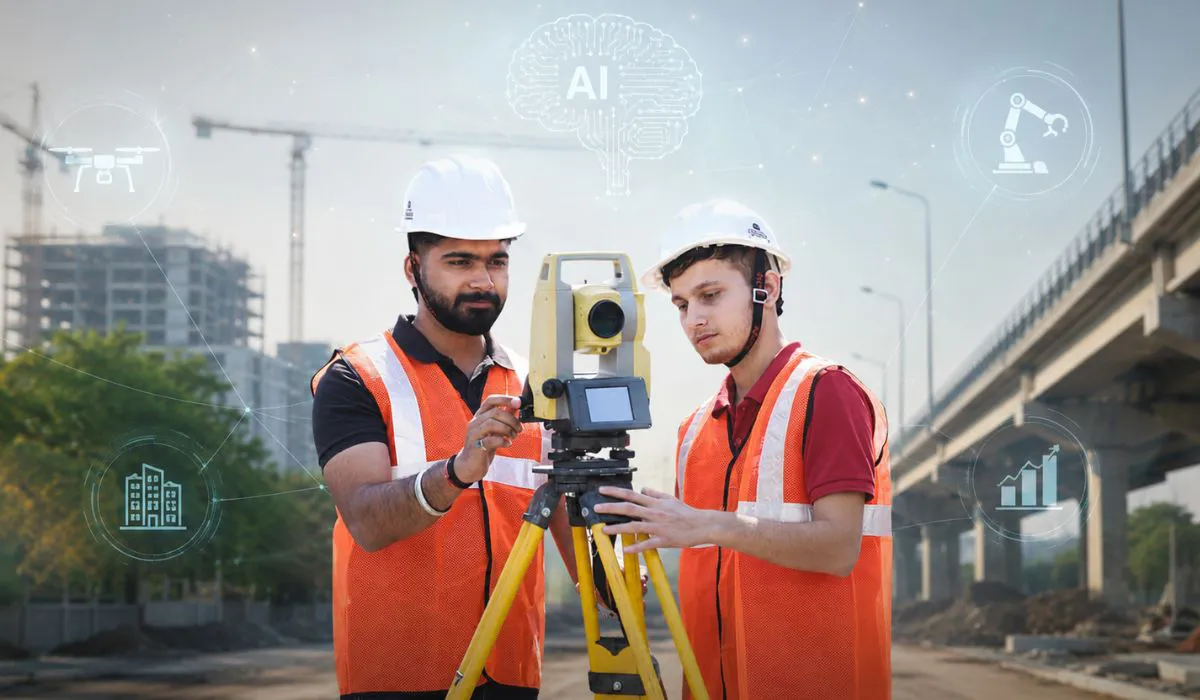
- AI-powered construction planning systems that predict project delays and optimise resource allocation
- Building Information Modeling (BIM) for 3D digital representations of projects
- Drones and robotics for site inspection and automated construction tasks
- IoT sensors for real-time structural health monitoring
- Digital twin technology for simulating and managing infrastructure lifecycles
- Sustainable design tools for energy-efficient, green buildings
- Data-driven urban planning platforms
This shift is significantly expanding civil engineering career opportunities for students and professionals across India.
How AI is Transforming Civil Engineering
Artificial intelligence is not replacing civil engineers — it is making them significantly more powerful. Here is how AI is being integrated across the construction and infrastructure lifecycle:
Smart Construction Planning AI software analyses project variables, predicts potential delays, and optimises resource allocation to improve efficiency and reduce cost overruns on large-scale infrastructure projects.
Predictive Maintenance Continuous IoT monitoring of bridges, tunnels, roads, and buildings detects structural anomalies before failures occur, reducing maintenance costs and improving public safety.
Building Information Modeling (BIM) BIM technology generates accurate 3D digital models of entire projects, enabling better design coordination, cost estimation, clash detection, and lifecycle management throughout construction.
Drones and Robotics Drones are increasingly used for site inspections, aerial surveying, and progress monitoring. Construction robots perform repetitive or hazardous tasks with precision, improving both safety and speed.
Sustainable Infrastructure Design AI algorithms optimise material usage, energy efficiency, and carbon footprint in building design and urban planning, helping India meet its net-zero construction targets.
Smart City Management AI manages real-time traffic flow, water distribution, and energy grids in urban environments — requiring engineers who understand both physical infrastructure and digital systems simultaneously.
Did You Know? The AI in construction market is projected to grow from $2.3 billion in 2024 to over $8.6 billion by 2029, creating massive demand for engineers who can work at this intersection.
Why Civil Engineering Has Strong Future Scope in India
India is one of the fastest-growing infrastructure markets globally. Massive investments in transportation, urban development, renewable energy, and smart cities are driving demand for civil engineers.
Smart Cities Mission
India’s Smart Cities initiative is increasing demand for intelligent urban infrastructure planning.
Infrastructure Expansion
Projects involving highways, metro rail, airports, ports, and industrial corridors require skilled civil engineers.
Sustainable Development
Green buildings and eco-friendly construction technologies are becoming industry priorities.
AI and Automation Adoption
Construction firms are increasingly using AI, automation, and digital project management tools.
These developments are continuously strengthening the civil engineering scope India offers.
Skills / Subjects / What Students Learn in Civil Engineering
Students pursuing Civil Engineering gain both technical and practical knowledge.
Core Subjects Include:
- Structural Engineering
- Construction Technology
- Geotechnical Engineering
- Transportation Engineering
- Environmental Engineering
- Surveying
- Concrete Technology
- Fluid Mechanics
- Highway Engineering
- Urban Planning
Future-Ready Technical Skills
- Building Information Modeling (BIM)
- AI and Data Analytics basics
- AutoCAD and Revit
- Project Management Software
- Construction Automation
- Drone Technology
- Sustainable Design Principles
- Smart Infrastructure Planning
Students with expertise in digital construction technologies will have a major advantage in the future job market.
Career Opportunities in Civil Engineering
The civil engineering future is expanding across multiple sectors including infrastructure, real estate, smart cities, transportation, renewable energy, and urban planning.
Top Career Options
| Job Role | Average Salary in India |
| Civil Engineer | ₹4 – ₹7 LPA |
| Structural Engineer | ₹5 – ₹10 LPA |
| Construction Manager | ₹6 – ₹15 LPA |
| BIM Engineer | ₹5 – ₹12 LPA |
| Project Engineer | ₹5 – ₹9 LPA |
| Smart Infrastructure Engineer | ₹7 – ₹14 LPA |
| Urban Planning Specialist | ₹6 – ₹12 LPA |
Professionals with AI, BIM, and project management expertise generally receive higher salary packages.
Government Job Opportunities for Civil Engineers
Civil engineering remains one of the few branches with exceptional government sector demand. Public sector roles offer job stability, pension benefits, exposure to large-scale national infrastructure projects, and clear career progression paths.
Major Government Recruiters:
- National Highways Authority of India (NHAI)
- Indian Railways
- Public Works Department (PWD)
- Central Public Works Department (CPWD)
- Delhi Metro Rail Corporation (DMRC)
- State Infrastructure Development Corporations
Graduates with strong fundamentals in structural engineering, transportation engineering, and geotechnical engineering are well-positioned for UPSC Engineering Services Examinations and state-level PSU recruitment. Knowledge of BIM and AI tools is increasingly an advantage even in government roles, as digitisation of public infrastructure accelerates.
Comparison Section: Civil Engineering vs Other Engineering Branches
| Parameter | Civil Engineering | Mechanical Engineering | Computer Science Engineering |
| Core Focus | Infrastructure & construction | Machines & manufacturing | Software & programming |
| Industry Growth | High | Moderate | Very High |
| Government Opportunities | Excellent | Good | Moderate |
| AI Integration | Growing rapidly | Growing | Very High |
| Future Scope | Smart infrastructure & cities | Automation | AI & software |
| Job Diversity | Infrastructure, urban planning, real estate | Manufacturing | IT & Tech |
Civil Engineering is becoming increasingly technology-driven with AI and smart infrastructure integration.
Future Scope of Civil Engineering in India: 2025–2035 Outlook
The civil engineering future in India is expected to grow significantly over the next decade. Several macro trends are converging to make this one of the most dynamic periods in the history of the profession:
Smart Cities AI-enabled urban planning and real-time infrastructure management will drive demand for advanced civil engineers who understand both physical systems and digital platforms.
Green Buildings India’s commitment to sustainable construction means LEED-certified and eco-conscious design is moving from a premium offering to an industry standard requirement.
Infrastructure Mega-Projects India’s National Infrastructure Pipeline, Bharatmala, Sagarmala, and airport expansion programmes will continue creating engineering roles well into the 2030s.
Construction Automation Robotics, prefabrication, and AI-driven site management are reshaping how projects are executed — and who leads them.
Digital Construction Technologies BIM adoption is becoming mandatory on government projects. Engineers who master it early will have a significant and lasting career advantage.
These trends are making civil engineering more innovative and future-oriented than ever before, creating exciting opportunities for the next generation of engineers.
Best Universities and Programs for Civil Engineering in India
Students interested in Civil Engineering can explore leading universities offering advanced and industry-focused programs.
Top Institutions Include:
- Indian Institutes of Technology
- National Institutes of Technology
- Delhi Technological University
- Chitkara University
Many universities now also offer specialisations in:
- Smart Infrastructure
- Construction Technology
- Urban Planning
- Sustainable Engineering
- BIM and Digital Construction technologies.
Also Read : Top Careers in AI & Future Technologies for Engineering Students in India (2026 Guide)
Conclusion
The world of Civil Engineering has undergone a sea change with introduction of AI, adoption of smart construction technologies and infrastructure which are sustainable in nature. Large investment by Government of India and all State Governments coupled with rapid urbanization will create immense demand of skilled civil engineers of highest caliber.
In, BIM, automation and digital construction will increasingly be used for designing and constructing of civil engineering projects future, civil engineering will be a very innovative and technology driven area of work. The tools of AI. The civil engineers of future will require a good grasp of conventional civil engineering knowledge and skills, and civil engineering projects. They will have plenty of opportunities in the area of infrastructure, smart cities, energy from renewable sources and in construction companies all over the world.
The civil engineering scope India has to offer is tremendous, given the current industry scenario, Government investments in Infrastructure and adoption of latest technologies in construction.
B.E. in Civil Engineering with AI & ML: Shaping the Future of Smart Infrastructure at Chitkara University.
At Chitkara University where 4 year B.E. program in Civil Engineering with AI & ML is offered in partnership with L&T EduTech. The focus of the program is on helping students design intelligent infrastructure-both existing and new-using latest technologies of AI & ML, automation and smart technologies. With the latest advances in Health monitoring of structures, optimum usage of resources and development of urban infrastructure using AI and automation, the modern Civil Engineers are required to work in an environment of planning in construction industry. The innovative and forward-looking B.E. program in Civil Engineering with AI & ML, at Chitkara, combines knowledge of Civil Engineering discipline with AI, ML and digital technologies to evolve intelligent infrastructure for sustainable future.
Emphasizing on Experiential Learning and Emerging Technologies, the industry-ready 4 year program also equips students with technical expertise to apply civil engineering knowledge to real-world infrastructure challenges. At Chitkara University, the team of highly reputed academic staff comprising of faculties, industry experts and researchers include names of National and International repute. The pedagogy is aligned towards the learning outcomes of core civil engineering disciplines like- Structural Analysis, Transportation Engineering, Geotechnical Engineering, Hydraulics & Water Resources and Construction Management. Students also learn the programming languages like Python, C++, MATLAB, application of AI & ML using TensorFlow and OpenCV and Building Information Modeling (BIM) through various Internet of Things (IoT) integration platforms including usage of drone technology in construction and intelligent construction systems, amongst others. The interdisciplinary approach includes the study of application of AI in managing traffic, energy and water in real time for development of smart cities and other advanced applications in structural health monitoring, generative design, material optimisation and automated construction site management etc. The students will get hands-on experience of working in AI-powered construction systems during mandatory 6 months to 1 year industrial training with organizations like Larsen & Toubro, Shapoorji Pallonji Group, JSW Steel and many other blue-chip organizations in the industry.
The future of Civil Engineering holds tremendous promise in terms of plethora of Infrastructure Projects relating to Smart Cities, Sustainable Development and Intelligent Transportation. As urbanization is increasing and Urban Planning is adapting to new and innovative methods and techniques incorporating AI & ML for improved and efficient Management of Resources, and Urban Planning Chitkara University aims to create employable engineers in the field, by designing academic curriculum and delivering the same through practical oriented approaches and hands-on experiential learning using latest technological advancements and industry relevant infrastructure, thereby creating successful and innovative civil engineers. Program aims to train students and make them ready to work as successful AI/ML Engineer for Infrastructure, Digital Twin Specialist, Structural Health Monitor, BIM Specialist, Construction Project Manager, Smart Infrastructure Engineer, Environmental Engineer and much more, the strong placement eco system of the university with 2000+ recruiter pan India including 500 odd Fortune 500 MNCs, state of the art infrastructure including various COE, specialized labs for experiential learning and industry interaction, and various global connectivity including intern, exchange programs and faculty development programs are some of the factors that would propel civil engineering graduate to salaries increase in future with average salaries for placement in hand for civil engineering graduate having increase to 4.5 LPA- 8 LPA, with students specializing in AI, Automation and Digital Infrastructure expected to command salaries at entry point of 6- 12 LPA and growing to 25- 50 LPA and above as experience grows.