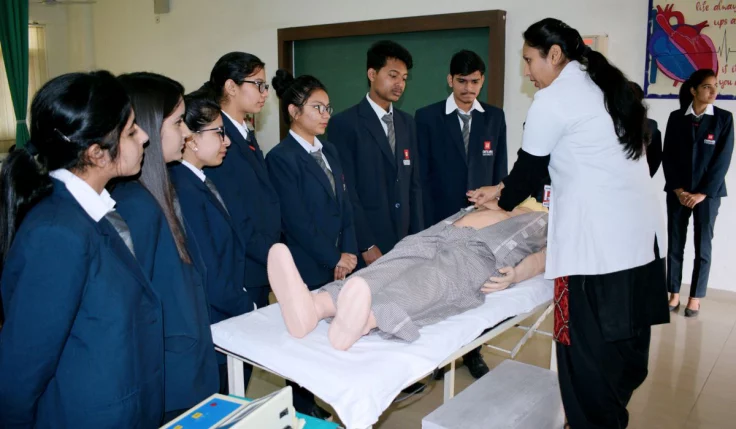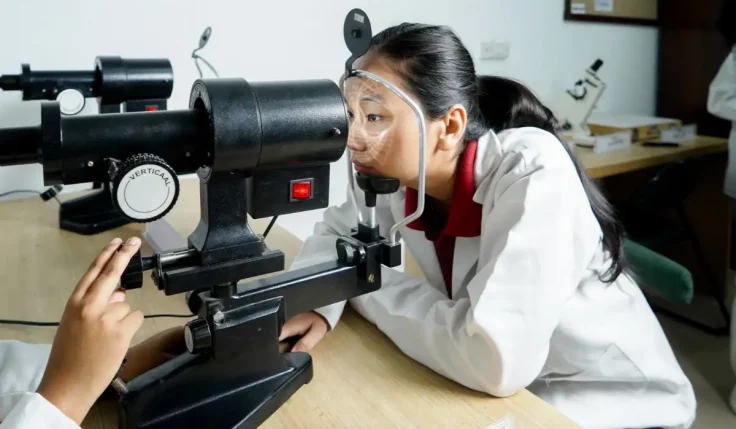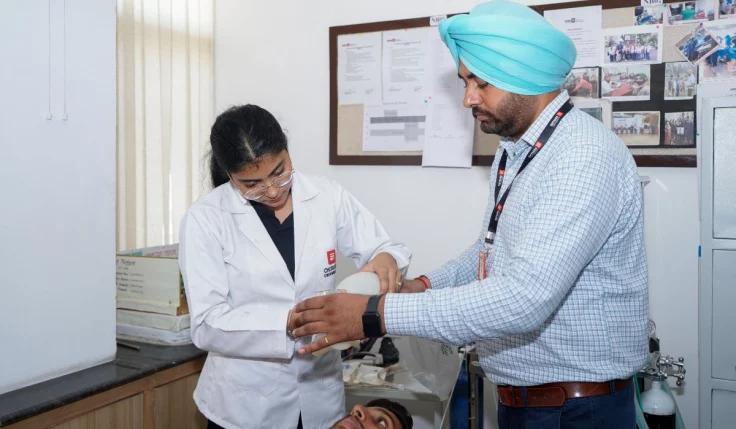
Laboratory science is the bridge that connects theoretical knowledge with practical applications. While the textbooks and lectures offer a foundation of scientific concepts and theories, it is in the laboratory where all of these ideas come to life.
In this blog, we will see the essentials of laboratory science exploring its importance and the transition from theory to practice. In addition, we will also see the skills required to excel in the dynamic field. Keep reading to learn more about the essentials of laboratory science.
The Significance of Laboratory Science
Laboratory science is pivotal to ensuring scientific progress as it is the realm where the hypotheses get tested, experiments are conducted and new discoveries are made. The laboratories are equipped with the best equipment that allows scientists to observe, measure, and analyze phenomena at the micro and macro levels.
Laboratory science offers hands-on experience which is considered crucial for many reasons.
- Validation of Theories: Experiments validate the theoretical concepts. A theory can remain hypothetical until it is fully tested and proven in the laboratory setting. This process is important for scientific development.
- Innovation: The laboratories are the birthplace of innovation. Many groundbreaking discoveries from the structure of DNA to the development of vaccines are made because of meticulous laboratory work.
- Skill Development: Laboratory work improves a wide range of skills including critical thinking, problem-solving, and technical proficiency. These skills are important for scientific research and are also transferable to many other fields.
- Collaboration: Laboratories also bring together scientists from many different disciplines fostering a collaboration of advanced scientific ideas and interdisciplinary research. With effective communication of results and methodologies, the aspects of laboratory science become even more prominent.
From Theory to Practice In Laboratory Science
The transition from theory to practice in laboratory science involves many key steps mentioned below.
Strong Theoretical Background: There must be a deep understanding of the theoretical background. This includes understanding the principles, laws, and models related to the laboratory experiments. For instance, the graduates must understand the principles of chromatography before they can perform a chromatographic separation.
Planning the Experiment: There should be detailed planning of the experiment. This mostly involves formulating clear hypotheses, designing the experiment, selecting suitable methods and materials, and also considering potential variables and controls.
Safety and Ethics: The students must learn to adhere to the safety protocols and ethical guidelines as the laboratory work involves handling hazardous materials and organisms so a strong focus must be on the safety procedures and ethical considerations for preventing accidents and ensuring integrity.
The Experiment: This is where the theory is put into actual practice. Laboratory science requires precision and attention to detail. There must be the right use of equipment, accurate measurement, and meticulous documentation at this stage.
Data Analysis: After conducting the experiment, the next step is to analyze the data with complete accuracy. This mostly involves statistical analysis, interpreting the results, and drawing suitable conclusions. Data analysis also helps in understanding whether or not the hypothesis is correct or not.
Reporting: The last step is to communicate the findings of the test. The findings are communicated in the form of lab reports, research papers, and presentations. Clear and concise reporting is important for sharing results with the scientific community.
Skills for Laboratory Science
To succeed in a career in laboratory science, many skills are important. Let’s have a look at them below.
Technical Proficiency: The professionals must be familiar with the laboratory instruments and techniques including pipetting, microscopy, spectroscopy, and molecular biology techniques.
Analytical Thinking: The ability to analyze complex data, find patterns, and draw meaningful conclusions is a core skill in laboratory science. Analytical thinking is considered essential for interpreting experimental results and solving problems.
Attention to Details: Laboratory work requires meticulous attention because even small errors can often lead to significant deviations in the results which is why precision is key.
Time Management: Efficient time management is important in a laboratory setting where many tasks and experiments can be conducted simultaneously. The laboratory students must be able to prioritise tasks and manage their time effectively to improve their productivity and ensure the timely completion of experiments.
Communication: Effective communication is important for documenting experiments including writing reports and presenting the findings. What’s more, clear communication also facilitates collaboration with colleagues and the wider scientific community.
Adaptability: The laboratory science also teaches new techniques, equipment, and methods for carrying out experiments. Science is evolving constantly and laboratory scientists should be willing to learn and embrace new advancements.
Pursue Bachelor in Medical Laboratory Science at Chitkara School of Health Sciences
A program such as the Bachelors in Medical Laboratory Science is a healthcare professional course that is concerned with the diagnosis, treatment, and prevention of diseases with the use of chemical, haematological, immunologic, microscopic, and bacteriological diagnostic analysis. The program ensures that it imparts knowledge of the collection, testing, documentation, and reporting of samples.
The major subjects taught in this program include Applied haematology, Clinical Biochemistry, Diagnostic Molecular Biology, Advanced Diagnostic Techniques, Analytical techniques, Basic and Clinical Microbiology, and Diagnostic Cytology and Pathology, etc. At the Chitkara School of Health Sciences, graduates are trained to become successful diagnostic professionals by offering them cutting-edge knowledge in the field of medical lab science which ensures clinical rotations and hands-on learning under supervision for performing diagnostic testing in a laboratory.
Also, read this blog post: How Medical Laboratory Science Connects Medicine
In case you are someone who likes science and is looking for an opportunity to help physicians and patients with your knowledge then this program is ideal for you. As a certified medical laboratory technologist, you will find a wide range of career opportunities in hospitals, labs, clinics, industrial research labs, forensic labs, molecular biotechnology labs etc.
Laboratory science is the cornerstone of scientific discovery as it can transform theoretical knowledge into practical applications leading to advancements that can impact various fields from medicine to environmental science. Going from theory to practice in this field involves a systematic approach including understanding theory, planning, and conducting experiments, analyzing data, and effectively communicating results.
If you wish to thrive in the field of laboratory science then pursue a program such as the Bachelors in Medical Laboratory Science to learn a combination of technical skills, analytical thinking, attention to detail, etc. As we continue to push the boundaries of science, the role of laboratory science remains ever-critical, driving progress and shaping the future.